There’s something quite satisfying about getting more than you expect. It’s the same principle that makes value-driven bakkies such an enduring part of South African life – when the price is fair and the product delivers, the brand earns its place in the driveway. That’s precisely what Peugeot is banking on with the Landtrek.
Developed as part of a joint venture between Peugeot and Chinese manufacturer Changan, the Peugeot Landtrek first debuted globally in 2020, and made its way here a year later. While it may not carry the lineage of Hilux or Ranger, the French-Chinese double cab arrives with its credentials: bold styling, a high-tech interior, and genuine workhorse ability. Stellantis – Peugeot’s parent company – has made no secret of its plans for southern Africa, and the Landtrek is a cornerstone of that ambition. Not only is the bakkie now part of the French brand’s local offering, but production plans for a local assembly facility are also well underway, further cementing its long-term presence.
For the past month, we’ve had the Landtrek 1.9TD Double Cab 4Action 4×4 in the **Driven long-term fleet. And while a month isn’t enough time to answer every question, it’s been more than enough to form some firm impressions.
WHAT MATTERS MOST
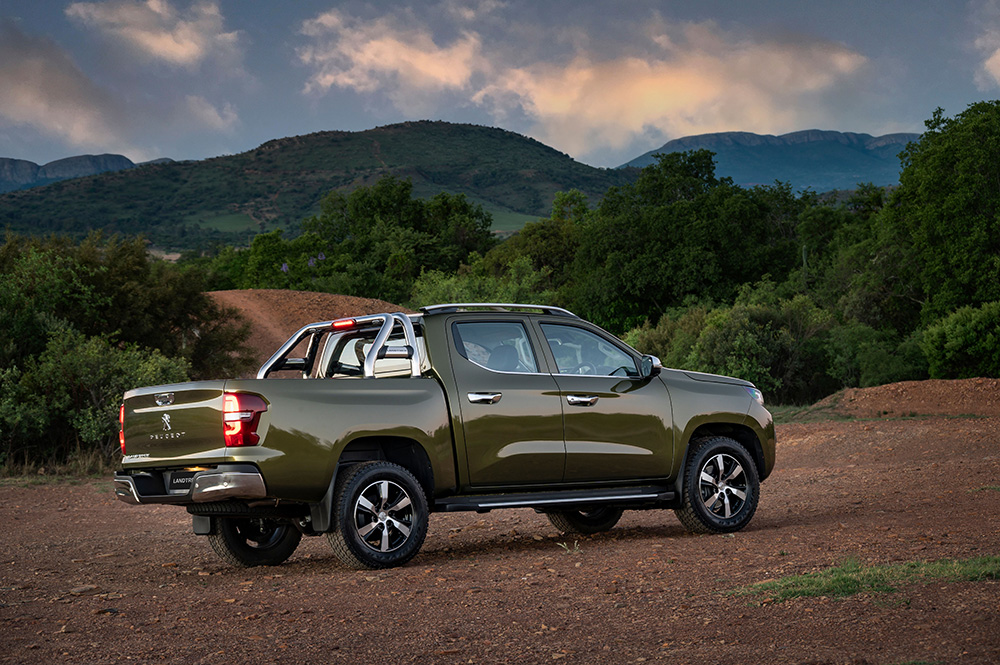
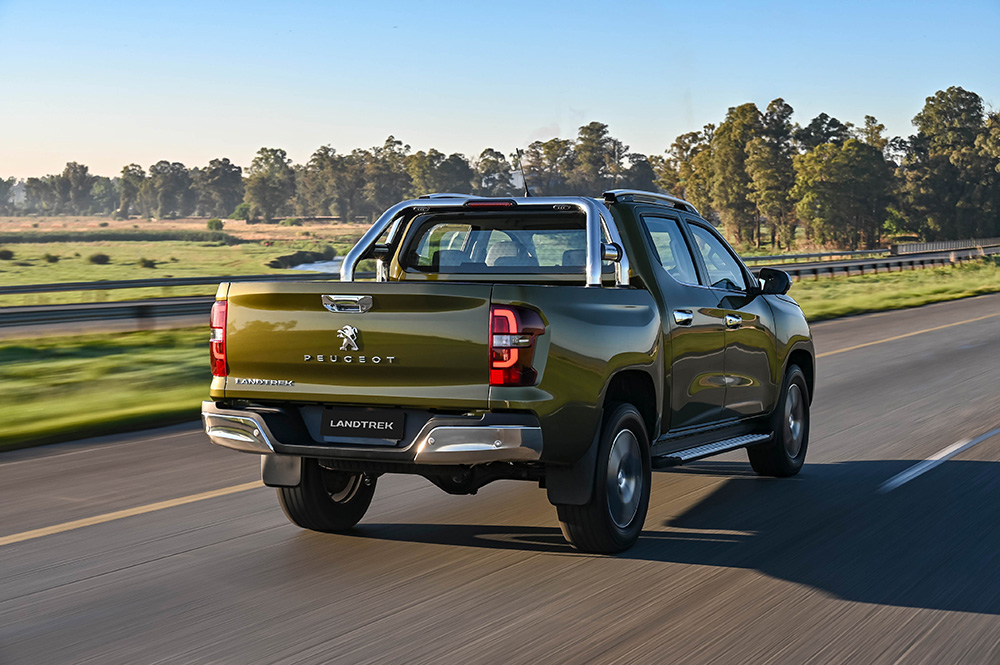
In the metal, the Landtrek strikes a confident pose. The chrome-laden grille, full LED lighting, and 18″ alloys give it a premium look that wouldn’t seem out of place among more expensive rivals. There’s a robustness to the design – the flared wheel arches and elevated bonnet line add presence – but it’s the overall finish that surprised us most.
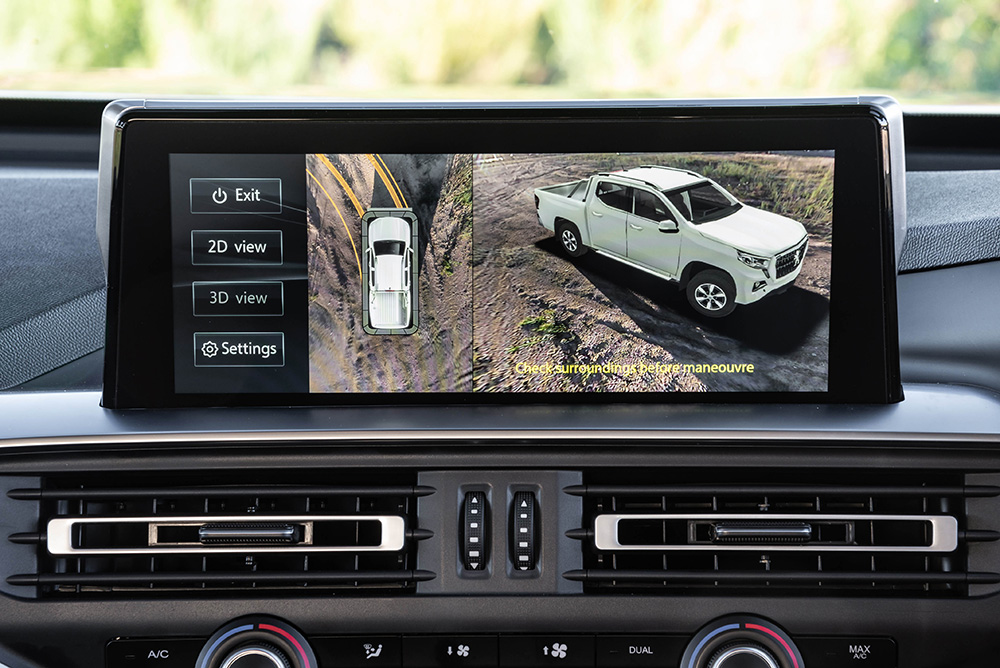
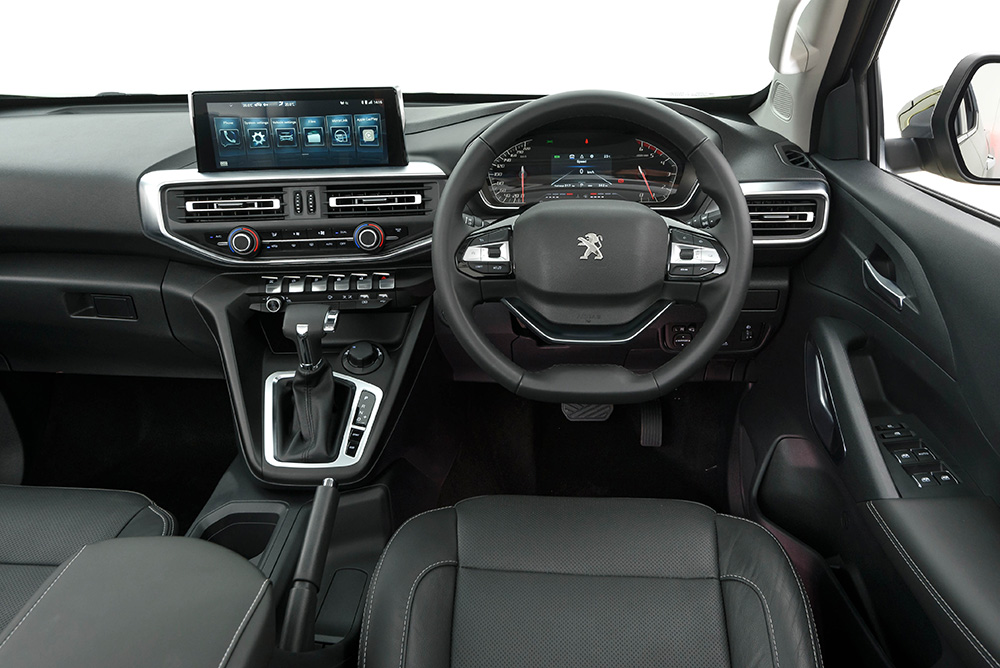
The cabin, meanwhile, is more SUV than utility vehicle. Leather seats, a 10″ HD touchscreen with Apple CarPlay and Android Auto, and a 360-degree camera all contribute to a tech-forward driving environment. Even the physical switchgear – inspired by aviation – feels a cut above the usual bakkie fare. Peugeot has clearly aimed to overdeliver on spec, and it shows.

LIFE IN THE LANE
While much of the month was spent in and around the suburbs (navigating traffic and running errands), it’s already clear where the Landtrek’s strengths and challenges lie.
Let’s start with fuel consumption. Peugeot claims a combined figure of just over 9.0 l/100 km, but in our first four weeks of stop-start driving, we achieved 10.9 l/100 km. Given the lack of long-distance trips so far, we’re optimistic that this figure will drop once we stretch its legs on the open road.
Performance-wise, the 1.9-litre turbo-diesel produces 110 kW and 350 Nm, which on paper sounds decent enough. In practice, the engine does require some patience. There’s notable turbo lag on pull-away, and overtaking manoeuvres require a bit of planning. Fortunately, flicking the six-speed automatic gearbox into “Sport” mode makes a real difference, sharpening throttle response and making highway cruising more effortless. It’s not built for high-speed dashes, but it can certainly hold its own once up to speed.
WORKHORSE WITH A BONUS
Of course, a bakkie isn’t just about commuting. It needs to carry, tow, and tackle rugged terrain. The Landtrek’s (illuminated) load bin is the largest in its class according to Peugeot – and it has already earned its keep during our test period. From running to the dump with bags of garden debris to collecting large household items, living with the Landtrek is as easy as pie. It’s practical and has ample usable bin space with low side walls that make loading less of a backbreaker.
Off-road capability, meanwhile, is more than just a badge on the tailgate. With selectable 4H and 4L modes, a rear differential lock, and ground clearance of 235 mm, the Landtrek is well-equipped for dirt-road adventures. We haven’t yet ventured too far off the beaten track, but initial gravel-road performance showed confident body control and good mechanical grip.
A FEW ROUGH EDGES
No vehicle is without its quirks, and the Landtrek is no exception. The rear suspension, while fine under load, can feel unsettled when unladen, especially over speed bumps or poorly maintained roads. And while the cabin is generally well assembled, some of the interior plastics don’t quite match the visual premium of the design.
Another minor gripe is the throttle response when moving from a standstill. That delay between foot and forward momentum (exacerbated by the turbo lag) takes some getting used to in town traffic. It’s not a deal-breaker, but it is something to keep in mind if you’re used to the sharper responses of rival bakkies with bigger engines.
Still, zoom out and the Landtrek’s strengths come into focus. It’s not trying to outgun the big-name players on brute force or long-standing loyalty. Instead, it’s quietly carving out a space for buyers who want solid capability, upmarket features, and standout styling – all at a competitive price point. At just over R737,900, the 1.9TD 4Action 4×4 delivers genuine value in a segment where prices often creep beyond R800k without adding much extra kit.
The broader implication is even more interesting. With local assembly plans underway, Peugeot’s commitment to the region is clear. If the Landtrek continues to prove itself not just as a product, but as a brand ambassador, it could give Stellantis a serious foothold in the highly competitive one-tonne bakkie market.
LAST WORD (FOR NOW)
In its first month with us, the Peugeot Landtrek has proven to be more than just a handsome newcomer. It’s a well-specced, thoroughly capable workhorse with a surprising level of polish. While it may still need to win over some brand sceptics, early signs suggest it has the tools to do just that.
We’ll be keeping the Landtrek in the Driven long-term garage for the next few months, putting it through its paces on longer journeys, tougher loads, and varied terrain. But so far, Peugeot’s bakkie is making a convincing case for a bigger role on South African roads.
Report by BERNIE HELLBERG JR | Images © STELLANTIS SOUTH AFRICA