As a road-legal, limited-run evolution of the D7X-R race car that dominated the stock production class in the Dakar rally raid this year, the Defender Dakar revived the Land Rover brand’s early dominance in this world-renowned event – still recognised as the toughest off-road event on earth – as a Range Rover was the first car (coming in fourth overall) to finish the inaugural Paris-Dakar Rally 47 years ago.
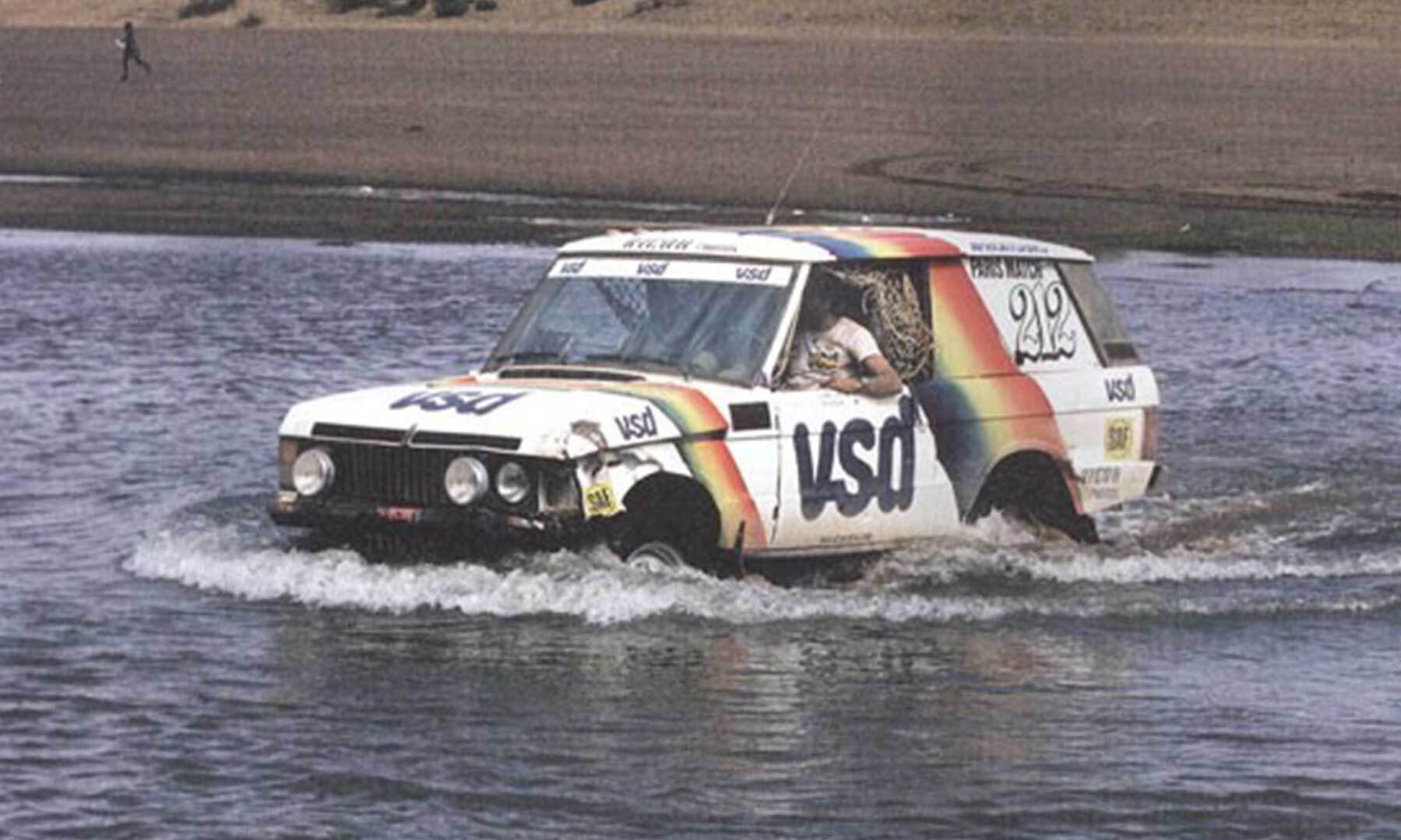
The 1979 event saw 182 competitors in cars (including 13 Range Rovers), on motorcycles, and in trucks, set off from Paris on a 10,000 km journey to Dakar, the capital of Senegal. A near-standard white Range Rover with factory-fitted Rostyle alloy wheels, a clamshell bonnet painted matt black and covered in sponsor decals, and crewed by Frenchmen Alain Génestier, Joseph Terbiaut, and Jean Lemordant was the first car across the line in Dakar.
In 1980, Frenchmen Christophe Neveu and Rémy Bourgoin finished fifth overall in a roofless Range Rover, followed by Claude Bourgoignie, Jean-Pierre Tasiaux, and Maurice Gierst in an example with no windows or doors, and Christine Beckers in one with fabric doors. Over the years, a variety of Series IIIs and Defenders were also entered, most of them V8-powered, but none achieved the Range Rovers’ success.
In 1981, an Overfinch-adapted Range Rover (then known as Schuler), with a five-speed gearbox and other high-performance components, again was the first car to finish in Senegal, piloted to victory by Frenchmen René Metge and Bernard Giroux. Privately entered Range Rovers finished fourth in 1982, third in 1983, second in 1984, sixth in 1985, eighth in 1986, second in 1987, third in 1988 and ninth in 1990. In its peak year, 1985, 40 Range Rovers entered the Dakar.
Report by FERDI DE VOS | Image © JLR