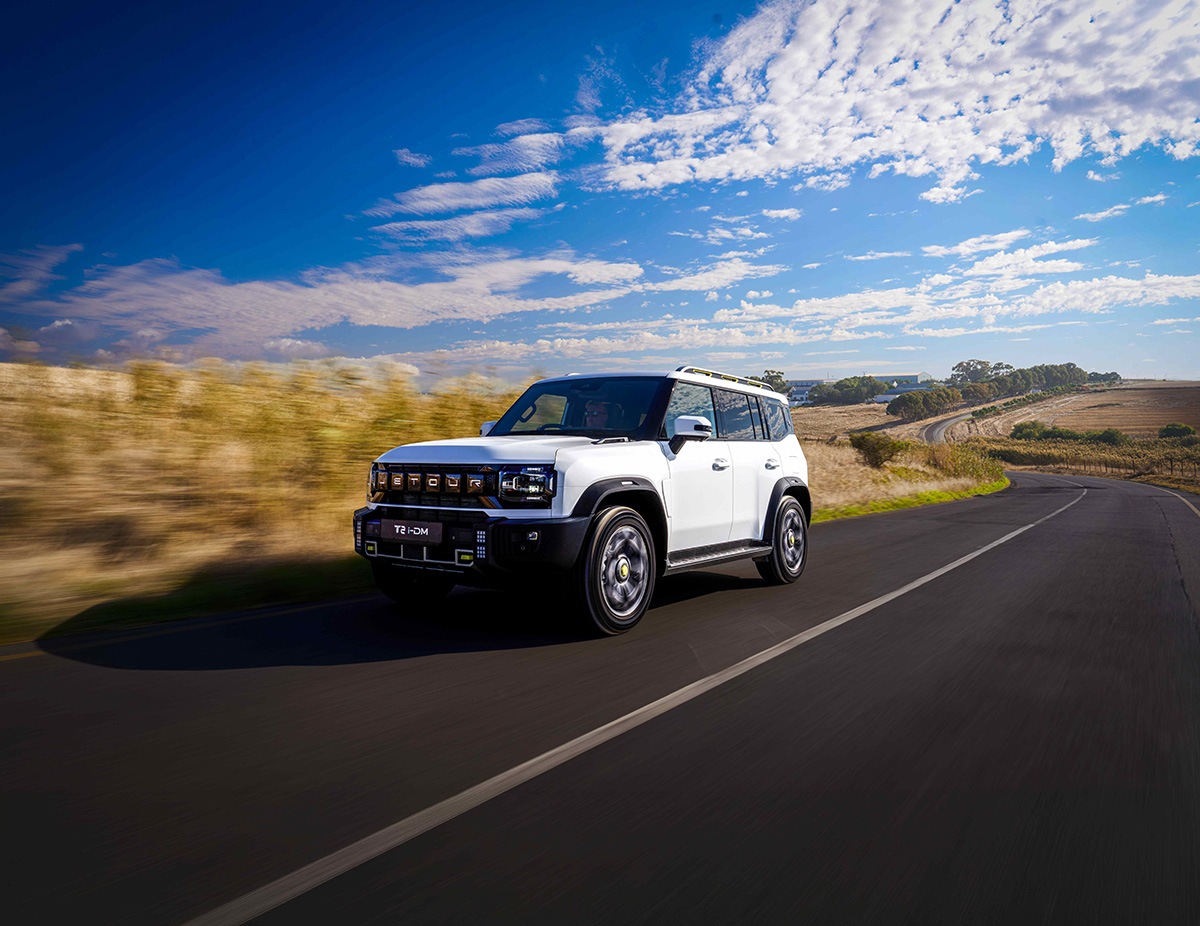
The Jetour T-Series has taken South Africa by storm. Since its launch in late 2025, nearly 5,000 units of the boxy “Defender pretender” have been sold locally, and the T2 made history this year as the first Chinese vehicle to win the prestigious South African Guild of Mobility Journalists’ South African Car of the Year (COTY) title.
Although the Jetour T2’s popularity was recently tainted by controversy over its approved payload rating, initially set at a very low 300 kg, but now revised to 475 kg by Jetour South Africa after consultations with its Chinese head office and the National Regulator for Compulsory Specifications (NRCS).
In our view, the ratings debacle is a storm in a (Chinese) teacup, and while not yet fully resolved, T-Series owners have not much to worry about, given the state of law enforcement (or rather, the lack thereof) in South Africa. Following its COTY win, Jetour has introduced the i-DM Plug-in Hybrid version of the T2 (and the T1) locally.
Interestingly, these plug-in variants, named the Traveller C-DM in China, proudly carry the Shanhai (meaning “Mountains and Seas”) badge, yet they are front-wheel drive only, losing the XWD (all-wheel-drive) system found in the petrol-driven T2. An all-wheel-drive PHEV derivative (with three electric motors) is available overseas but not (yet) locally.
LESS OF AN OFF-ROADER
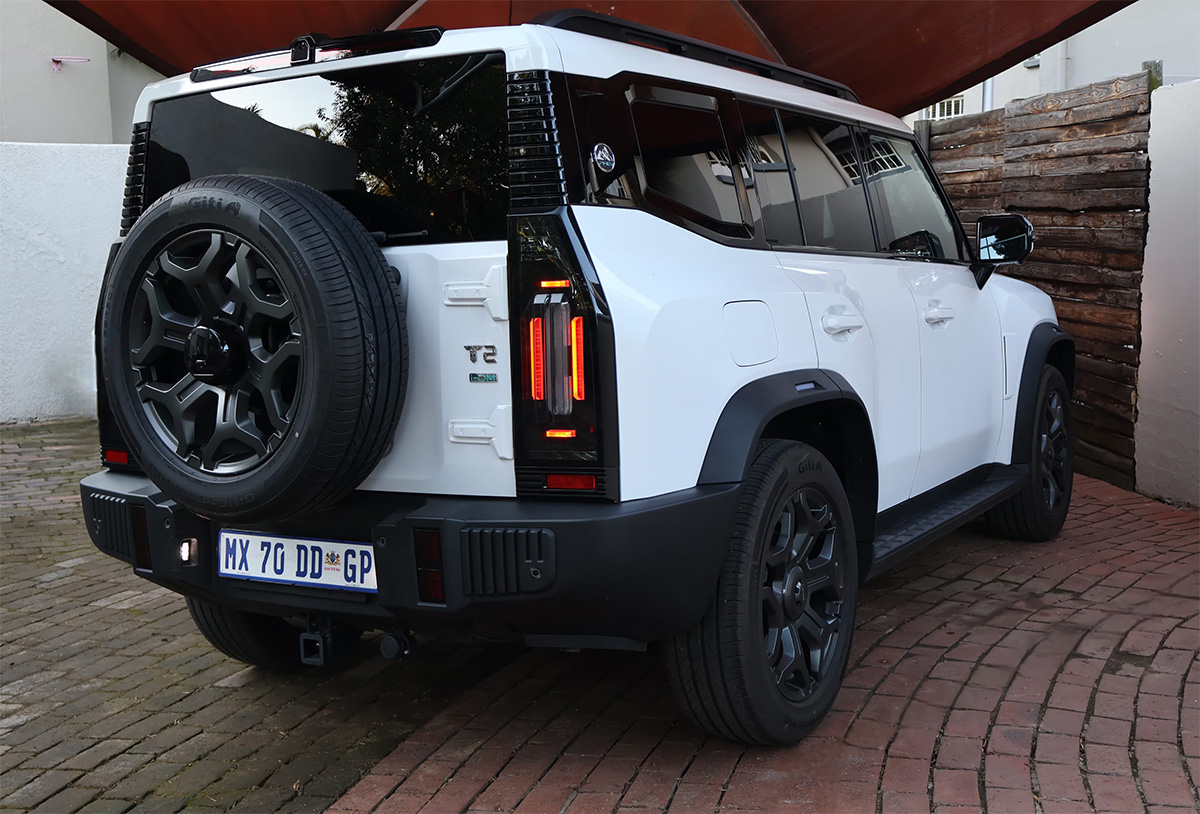
This is somewhat of an anomaly, given the boxy SUV’s adventure vehicle credentials, and while the i-DM version shares the T2 XWD’s more off-road oriented 255/55 R20 tyres and 20” rims (as well as a full-size spare mounted on the tailgate), it is even less of an off-roader than its petrol-driven counterpart.
Its 18.4 kWh lithium-iron-phosphate battery pack makes the PHEV over 220 kg heavier than the standard T2 2.0T petrol model. Ground clearance is also 25 mm lower than the T2 2.0T XWD’s (190 mm versus 215 mm), further limiting its already modest off-road capability. However, its ride quality on tar compares well with the best-in-class.

POWERFUL, YET FRUGAL
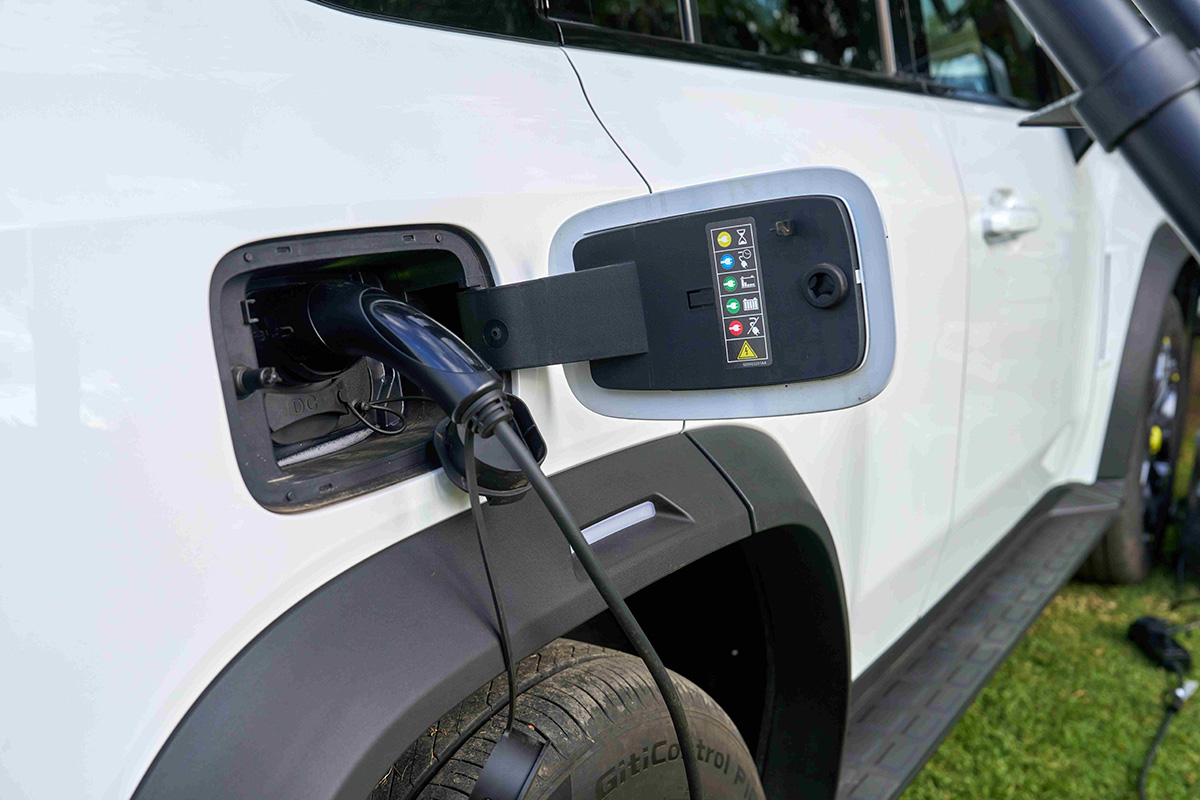
The T2 i-DM plug-in hybrid is substantially more powerful than its petrol stablemate – its powertrain with dual electric motors delivering a combined system output of 265 kW of power and 610 Nm of torque, compared to the standard Jetour’s 180 kW and 375 Nm.
This gives it significantly faster acceleration (8.9 seconds from 0-100 km/h) due to the linear delivery of electric torque to the front wheels, and a top speed of 200 km/h. However, we did find hesitations in the synchronisation between the petrol engine, the electric power sources, and the normally smooth three-speed dedicated hybrid transmission, leading to slight jerkiness, and this was exacerbated under heavy acceleration.
Although Jetour claims combined fuel consumption of just 1.3 l/100 km and CO₂ emissions of as low as 30 g/km, and a range of up to 90 km in pure electric driving mode, the figures we attained were quite a bit higher – around 6.1 l/100 km on extended journeys.
Still, it was much better than the up to 10 litres/100 km achieved with the petrol model, and translated to a reach of about 1,000 km on a single tank (70 litres) of fuel. With DC fast charging, the battery pack can be recharged from 30% to 80% in about half an hour, while AC charging from 30% to 100% takes approximately three hours.
INSIDE STORY
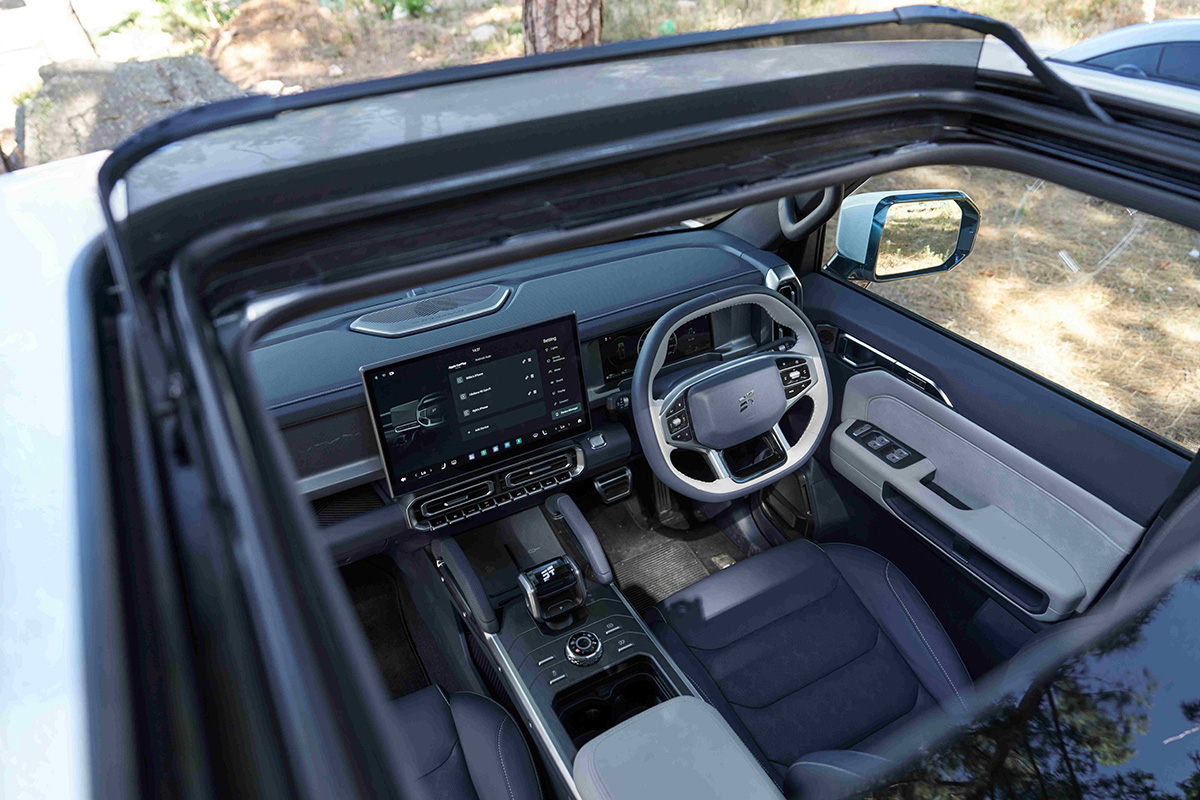
Like its petrol siblings, the interior of the Jetour T2 i-DM is thoughtfully designed and different from the cookie-cutter layout found in most Chinese SUVs, featuring comfortable, ventilated seats, premium trim and advanced technology, including a 15.6″ touchscreen infotainment system, a 10.25″ digital instrument cluster, and wireless Apple CarPlay and Android Auto.
Other smart technology includes voice control functionality, remote engine start, keyless entry with push-button start, wireless smartphone connectivity, a DVR recorder, rain-sensing wipers, a premium 12-speaker Sony sound system with subwoofer, dual-zone climate control, and multi-colour ambient lighting.
Competing against rivals such as the Jaecoo J7 1.5T SHS PHEV (R689,900), Haval H6 GT PHEV (R799,900), the seven-seat Chery Tiggo 9 PHEV (R839,900), GWM Tank 300 (from R649,900 upwards), the Toyota RAV4 HEV, and the newly introduced Haval H71.5T PHEV (from R734,900), the flagship T2 is well-priced at R779,900, and this includes a comprehensive warranty package.

LAST WORD
Although less of an adventurer, the Jetour T2 i-DM is an efficient voyager, offering lower running costs and significantly reduced fuel consumption, while retaining the convenience and long-distance capability of a conventional petrol-powered car.
That said, given this T2 model’s neutered ruggedness, the somewhat more affordable (R689,900), marginally less powerful and slightly demurer T1 i-DM model, in my view, may make more sense when considering a hybrid SUV in this price bracket.
Report by FERDI DE VOS | Images © JETOUR SOUTH AFRICA