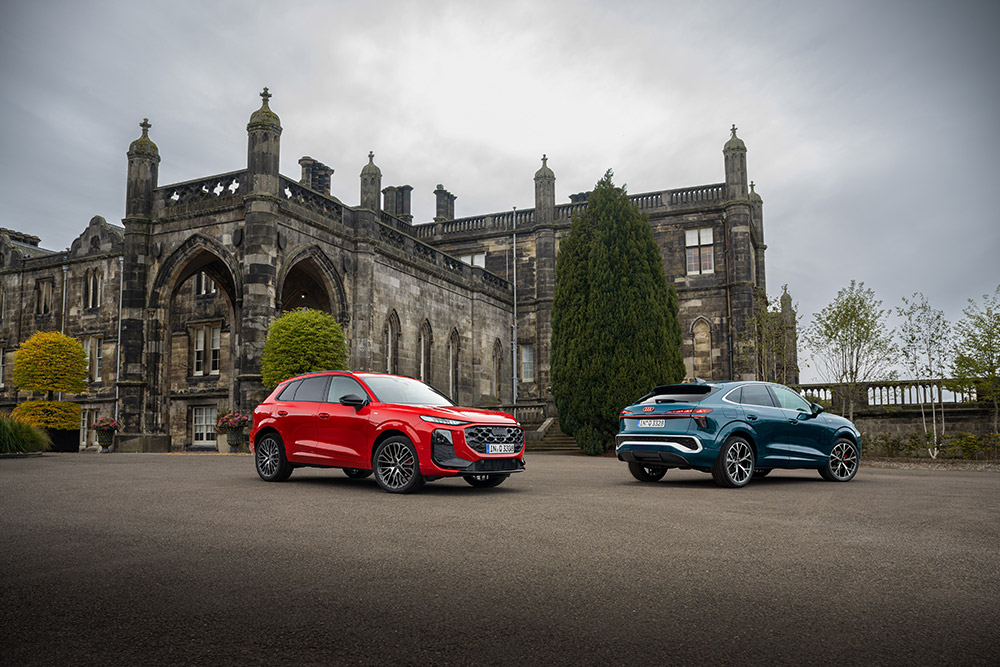
ROMA REPLACEMENT
Ferrari Amalfi
Images © FERRARI
The new front-mid-engine Ferrari Amalfi V8 coupé replaces the Roma in the Prancing Horse line-up with a design that stems from a fluid and minimalist approach, featuring sculpted volumes and clean surfaces that express modernity and dynamism.
Introduced in Amalfi, Italy, recently (where else?), the new 2+ coupé berlinetta redefines the concept of contemporary Grand Tourer sportiness by combining high performance, versatility, and refined aesthetics, according to Ferrari. The front of the Amalfi is dominated by a large air intake and a long, sculpted bonnet that houses a recalibrated twin-turbo F154 V8 engine, delivering 470 kW and 760 Nm.
The bespoke powerplant, also used in the 296 GTB, Purosangue and 12Cilindri, is coupled with the highly acclaimed Ferrari eight-speed dual-clutch transmission and delivers outstanding performance: zero to 100 km/h in 3.3 seconds, zero to 200 km/h in 9.0 seconds, and a power-to-weight ratio of 2.29 kg/hp, the best in its class.
EVOLVED STYLING
Devoid of a traditional grille, the Amalfi is distinguished by a floating body-coloured wing above a dark recessed band, discreetly integrating sensors and headlights. The lower splitter completes the composition, emphasising the visual width and sportiness of the whole. The wedge-shaped theme running along the side, together with the lighting units integrated into technical cuts (reminiscent of the Jaguar F-Pace), contributes to a contemporary aesthetic.
The compact rear is defined by a strong wrap-around character line, a wide diffuser and a rear screen that merges with the spoiler profile, creating a distinctive stylistic signature. An active mobile wing, with three configurations – low, medium and high downforce – is harmoniously integrated into the rear.
Highlighting the car’s personality, the launch colour, Verde Costiera – a brilliant and vibrant teal green inspired by the reflections of the sea along the Amalfi coast – enhances the sculpted surfaces.The Amalfi’s cabin boasts a dual-cockpit layout, with a new steering wheel featuring physical buttons and the return of the iconic start button.
The digital instrument cluster and 10.25” horizontal central display have an advanced human-machine interface designed to engage both driver and passenger, and the infotainment system is fully connected, with Apple CarPlay and Android Auto as standard, paired with wireless smartphone charging.
A Burmester premium audio system is optionally available, and extensive use of carbon fibre and contrasting stitching adds exclusivity to the cabin, while the 2+ configuration allows the rear seats to be used to significantly increase the car’s practicality, enhancing cargo capacity, and making it ideal for trips with children.
REFINED DYNAMICS
The vehicle dynamics of the Ferrari Amalfi represent a significant evolution in the landscape of front-engined 2+ coupés, having been refined with the introduction of a brake-by-wire system, an ‘ABS Evo’ control system designed for all surfaces and conditions in all Manettino modes, and recalibrated steering for even more precise and progressive response.
Active aerodynamics, featuring the new integrated rear mobile wing, ensure stability in all driving conditions. In terms of safety and driver assistance, the Amalfi is equipped with a comprehensive suite of next-generation ADAS systems. All systems are configurable via the instrument cluster menus and integrate seamlessly with the car’s electronic architecture.
Positioned to compete with challengers like the Aston Martin Vanquish and Bentley Continental GT and available for roughly R5,5 million (without options and customisation), the new Amalfi is now available in Europe, and a few will likely find their way to South Africa before the end of the year…

FLEXIBILITY FOR THE WIN
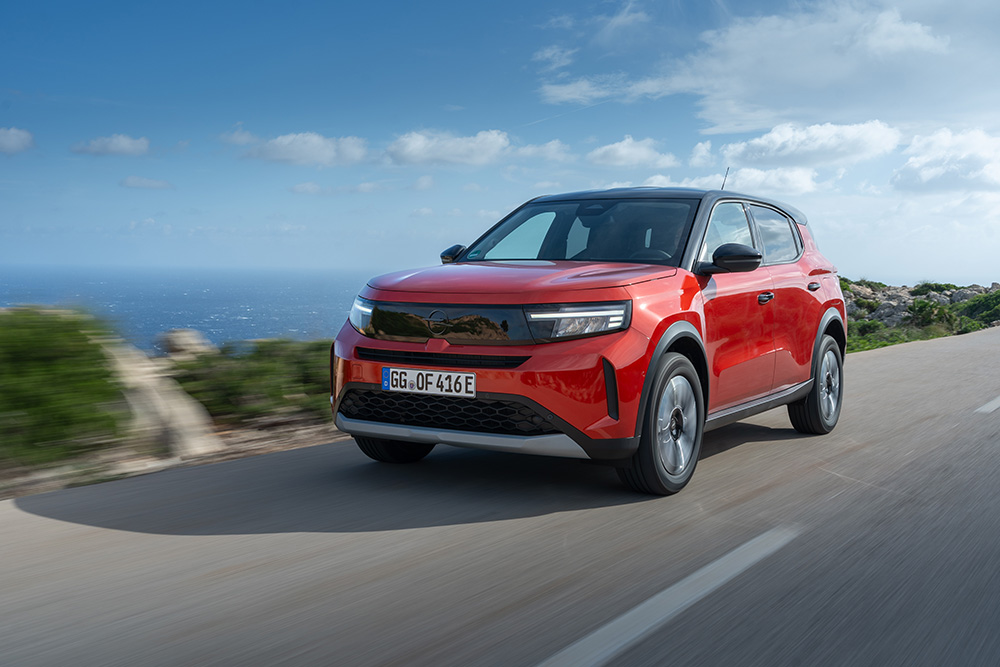
Opel Frontera
Image © STELLANTIS
The recently introduced Opel Frontera, successor to the short-lived Crossland and the Meriva MPV, is en route to South Africa and is slated for local introduction early next year, according to an announcement from the company at Stellantis Week 2025.
Available overseas with the choice of a full-electric (EV) powertrain or a mild-hybrid (MHEV) 48 V combination consisting of a 1.2-litre three-cylinder turbo petrol engine and a 21 kW electric motor with “electrified” six-speed dual-clutch transmission, it is expected that the latter model, with a total system output of 81 kW, will be the only variant to be introduced locally.
Fitting in below the Grandland, the Frontera measures 4,385 mm in length, 1,849 mm in width, and 1,635 mm in height (about the same size as the Toyota Corolla Cross) with a claimed luggage capacity of 450 litres, which can be expanded to 1,600 litres by folding down the 60:40 split rear backrest.
For the MHEV model, Opel claims fuel consumption of 5.2-5.3 l/100 km and CO2 emissions of 119-120 g/km. Two trim levels are offered, a base spec model and the GS, both featuring amenities such as a 10″ infotainment touchscreen with sat-nav, and a rear-view camera, and in GS guise, the Frontera will also be offered with a seven-seat layout. The two additional seats can be folded down individually, so that the greatest possible flexibility is retained.
To further enhance the flexibility of the Slovakia-built Frontera, practical accessories will be available for all requirements, whether for longer or shorter distances. The broad portfolio includes roof boxes in different sizes as well as roof racks and transport bags. More information on the new Frontera line-up will be made available closer to the local launch date.
Also at Stellantis Week, French manufacturer Citroën confirmed the Basalt crossover coupe, developed primarily for the Indian and South American markets and essentially a sportier version of the C3 Aircross, featuring coupe-inspired body styling and a lower roofline, will be made available locally early in 2026. Sharing its Stellantis “Smart Car” platform with the Frontera, the Basalt is offered in India with either a 1.2-litre normally aspirated petrol engine delivering 60 kW and 115 Nm, coupled with a manual transmission, or a turbo version of the same engine, offering 81 kW and 205 Nm, mated to a six-speed automatic gearbox.

SHARPER AND BOLDER
Mazda CX-5
Images © MAZDA UK
The third-generation Mazda CX-5, unveiled in July, features a refined version of the Japanese manufacturer’s Kodo design language, intuitive technology and an optimised 2.5-litre Skyactiv petrol engine. Retaining the basic shape of its predecessor, the new version features a new stacked headlight design, updated taillights, and Mazda lettering on the tailgate, marking a bold evolution of the company’s best-selling SUV, set for local introduction sometime next year.
The new CX-5 has a wider, more sculpted front fascia with a wider grille, slimmer headlights and a new daytime running light signature. On the side, the CX-5 features cladding on the wheel arches and bottom of the car, according to Mazda, modelled after a Japanese woodworking principle called “Kigumi.”
The rear fascia sports slimmer taillights inspired by the CX-90 model, and the traditional logo has been replaced with Mazda lettering as seen on the tailgate, and dual exhaust outlets.
The radically revised interior has a simplified layout and a driver-first concept approach utilising fewer physical controls. Key features include a new centre console with enhanced storage and, on higher trims, a panoramic sunroof. The new 12.9” or 15.6″ centre display delivers smartphone-style interaction with customisable menus.
A 10.25″ digital instrument cluster (the largest touchscreen display offered in a Mazda product) and streamlined steering wheel controls help ensure essential information is delivered clearly in the top models. Entry-level variants feature a 12.9″ touchscreen mounted higher on the dashboard.
Higher grades have a 12-speaker Bose sound system, and the range-topping Homura grade has an ambient lighting system with seven colour choices. The three-spoke steering wheel has been redesigned with Mazda lettering, and advanced voice recognition allows the driver to operate vehicle functions, including the air conditioning, audio, and navigation systems.
Unlike the previous model, the new CX-5 is not available with 2.0-litre Skyactiv-G turbocharged petrol and diesel engines. However, the 2.5-litre Skyactiv-G petrol engine is carried over, now paired with Mazda’s M Hybrid 24-volt mild hybrid system and a brake-by-wire system. Producing 104 kW and 238 Nm of torque, the front-wheel drive variant can accelerate from zero to 100 km/h in 10.5 seconds.