AN OFF-ROAD ICON IS BACK
Mitsubishi Pajero

When Mitsubishi discontinued the Pajero in 2021, the company attributed the demise of its flagship SUV – and arguably its best-known and most revered nameplate – to declining global sales, an ageing vehicle design, high manufacturing costs, and severe corporate financial pressures.
Sure, the fourth-generation Pajero, introduced in 2006 with underpinnings dating back to 1999, was by then nearly 15 years old, the Japanese company faced massive financial losses (leading to the closure of the Pajero manufacturing plant in Sakahogi) and underwent major restructuring. Even so, it soon became clear that binning the Pajero was a huge mistake.
Realising this, Mitsubishi decided to use the sixth-generation Triton pickup, first introduced in 2023, as the basis for reintroducing the Pajero. Utilising a heavily modified version of the Triton’s ladder-frame platform, the new fifth-generation Pajero was first officially teased in May this year before making its global debut in Tokyo recently.
Now, after a five-year hiatus, the completely redesigned new Pajero cross-country SUV – to be built in the Mitsubishi Motors production facility in Thailand and destined for over 100 countries globally, including South Africa – is ready to reclaim its position as the brand’s flagship while embodying the next chapter for the Mitsubishi brand.
LEGENDARY HERITAGE
First introduced in 1982, the Pajero was developed as a cross-country, four-wheel-drive vehicle that combined authentic off-road performance and reliability with passenger-car-like comfort. The Pajero quickly became a favourite with outdoor enthusiasts and enjoyed great success in the local market.
With total production across the previous four generations exceeding 3.29 million units, the Pajero has earned its right as one of Mitsubishi Motors’ most iconic models. The Pajero legend was cemented into automotive folklore when it began competing in the Dakar Rally, the world’s most demanding off-road motorsport event, in 1983. In the Dakar Rally, the Pajero went on to secure 12 victories, including seven consecutive wins.
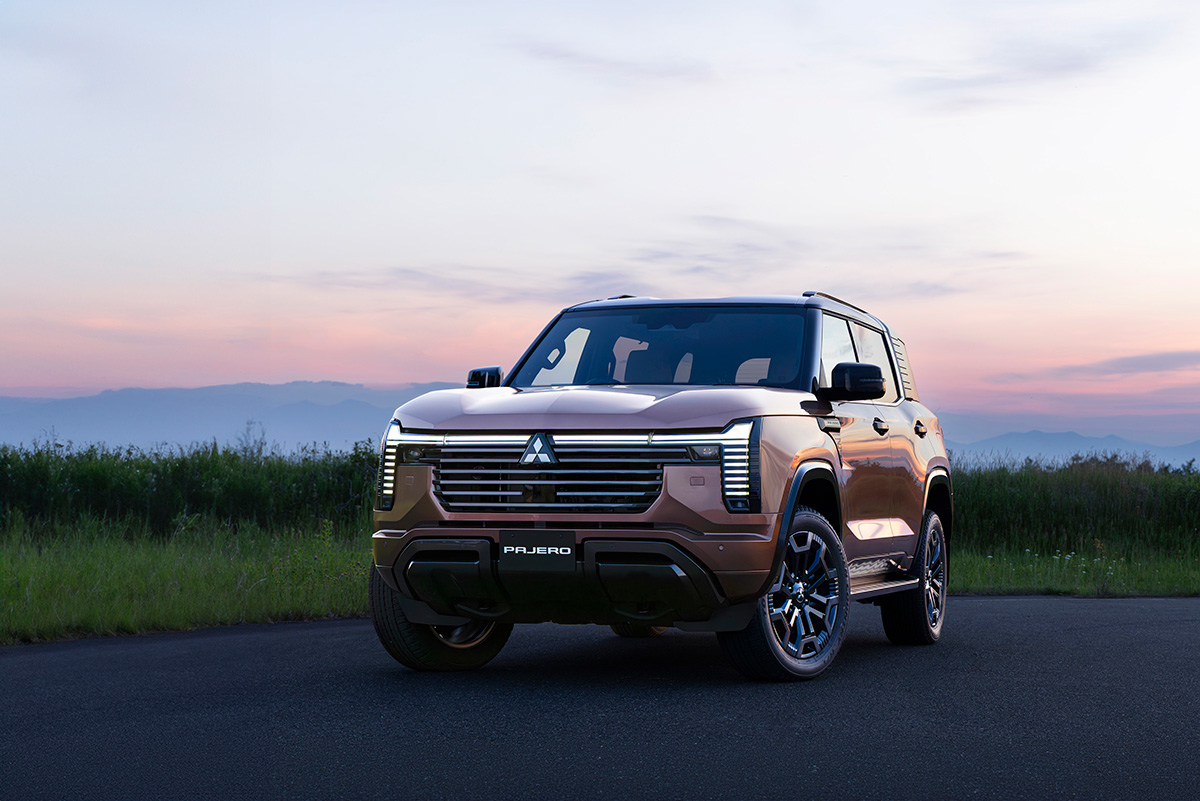
This performance earned the Pajero a reputation for unparalleled off-road performance, handling stability, and proven durability, and helped it earn the trust of customers worldwide. Guided by Mitsubishi’s “Grand Charisma” design concept with cues from the Triton and Destinator, the new Pajero builds on the bold, upright proportions and horizontal design theme of the first-generation model.
The new generation flagship evolves the design further with powerful fenders and sculpted body surfaces to enhance its commanding presence. According to Mitsubishi, the frontal design is inspired by Kendo, a traditional Japanese martial art that emphasises discipline and composure.
Two distinctive grille designs are available: a horizontal-bar grille that reflects the precision of Japanese craftsmanship and a honeycomb grille that evokes streamlined beauty and strength, and the headlights adopt a distinctive T-shaped design.
Inside, a horizontally oriented instrument panel, inspired by that of the first-generation Pajero, has a monolithic display integrating two highly visible 14.3″ screens and heritage-inspired graphics, including the Multi Meter display – bringing the iconic triple-meter cluster into the modern era.
Driving information such as altitude, compass heading, temperature, vehicle pitch and roll angles, and AYC control status can be accessed at a glance, and the Smartphone-link Display Audio system supports wireless smartphone connectivity, mapping, music, and other compatible smartphone apps, while optimised interior packaging and seating arrangements ensure a spacious cabin.
HIGH-PERFORMANCE SUSPENSION AND DRIVETRAIN
Mitsubishi’s renowned Super-Select 4WD-II system is bolstered by Super-All Wheel Control to deliver high levels of all-round capability, and the new Pajero will be powered by a 4N16 evolution 2.4-litre diesel engine with a wide-range, single variable geometry turbocharger (VGT) delivering 150 kW and 480 Nm of torque, coupled with a new eight-speed automatic transmission (8AT) with sport mode.
Unlike its predecessors, the new Pajero is built on a highly rigid ladder frame with expanded use of high-tensile steel. Its suspension features an independent double-wishbone front setup and a newly developed five-link rigid axle at the rear.
Seven drive modes are available (Normal, Eco, Gravel, Snow, Mud, Sand, and Rock) and it has 230 mm of ground clearance, an approach angle of 30.4 degrees, a ramp breakover angle of 22.6 degrees and a departure angle of 25.8 degrees, as well as a myriad of advanced safety and driver assistance technologies (including MI-PILOT). The new Pajero is expected to be introduced in South Africa next year.

SHOOTING STAR LANDING SOON
Subaru Outback
Subaru’s all-new seventh-generation Outback is expected in South Africa soon, bringing a bold new design, a thoroughly revised interior, and a turbocharged Wilderness derivative to the local range.
The Outback has long appealed to those who want the comfort of a family car combined with confident gravel-road capability. This mix of everyday practicality and all-wheel-drive capability remains essential to the new model, though its look marks a clear departure from its predecessor.
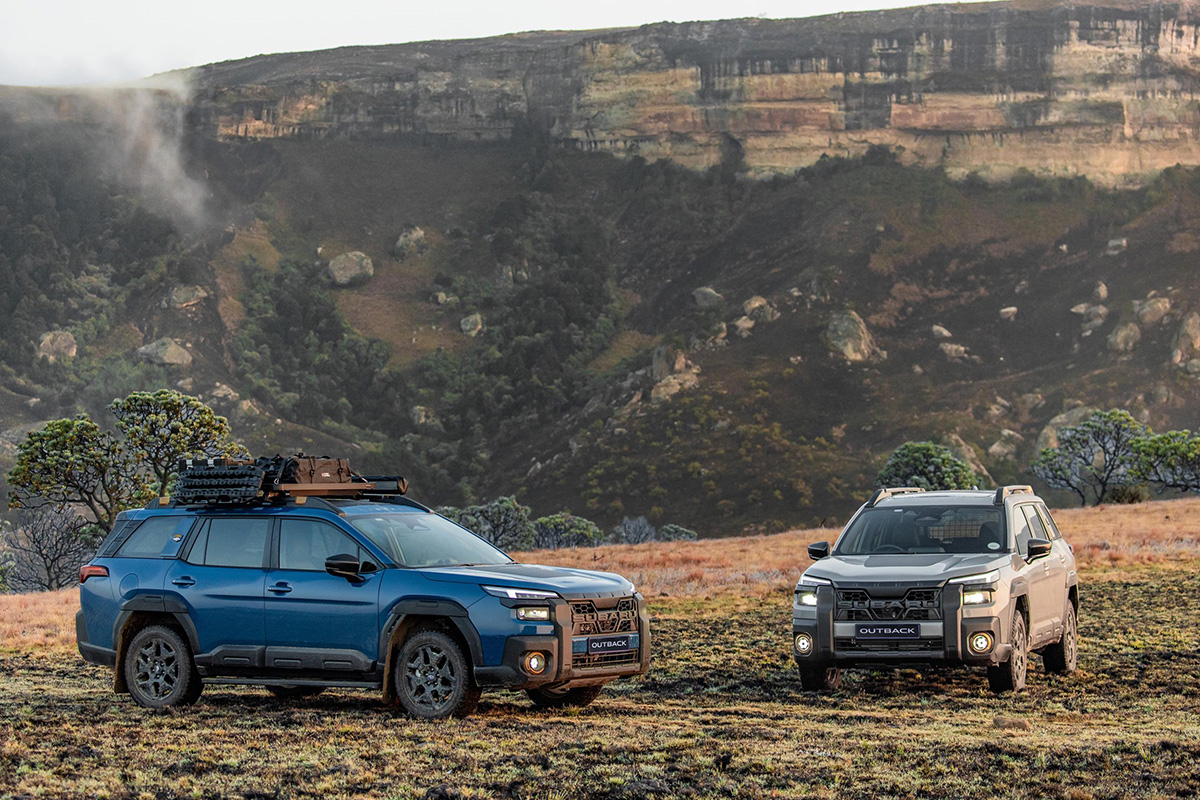
A more upright profile and prominent new grille give the Outback a stronger SUV presence. The Wilderness takes this a step further, with protective cladding and distinctive exterior detailing offering an early indication of what buyers can expect.
South African buyers will have a choice of two derivatives: the 2.5 Premium and 2.4 Wilderness. The Premium is powered by a naturally aspirated 2.5-litre four-cylinder Boxer engine producing 137 kW and 254 Nm of torque, while the Wilderness steps up to a turbocharged 2.4-litre Boxer developing 194 kW and 382 Nm.
Both engines are paired with Subaru’s Lineartronic CVT, and Symmetrical All-Wheel Drive is standard on both trims. The Wilderness also features dual-function X-Mode for additional assistance on challenging surfaces, making it particularly appealing for owners whose travels regularly take them beyond tarred roads.
According to Subaru Southern Africa, the new Outback will appeal to longstanding Subaru owners while giving new buyers a reason to get to know the brand. The cabin has received a substantial update, with a new 12.1” touchscreen complemented by a 12.3” digital instrument cluster.
Wireless Apple CarPlay and Android Auto allow occupants to access familiar navigation, music, and communication functions, and the five-seat layout and split-folding rear seats retain the flexibility that makes the Outback well-suited to family travel.
The new Outback has already earned a Top Safety Pick+ award from the US Insurance Institute for Highway Safety (IIHS), further strengthening its safety credentials ahead of its local arrival. Local models will feature Subaru’s EyeSight Driver Assist Technology, with systems such as adaptive cruise control and pre-collision braking supporting the driver on daily journeys and longer trips.
The new Outback will come standard with Subaru Southern Africa’s recently introduced five-year/105,000 km maintenance plan, alongside a five-year/150,000 km vehicle warranty. Customers wanting longer-term cover can extend the maintenance plan to seven years/150,000 km. Local pricing and detailed specifications for each derivative will be announced closer to the local introduction.

RANGE EXPANDS WITH RANGE EXTENDER
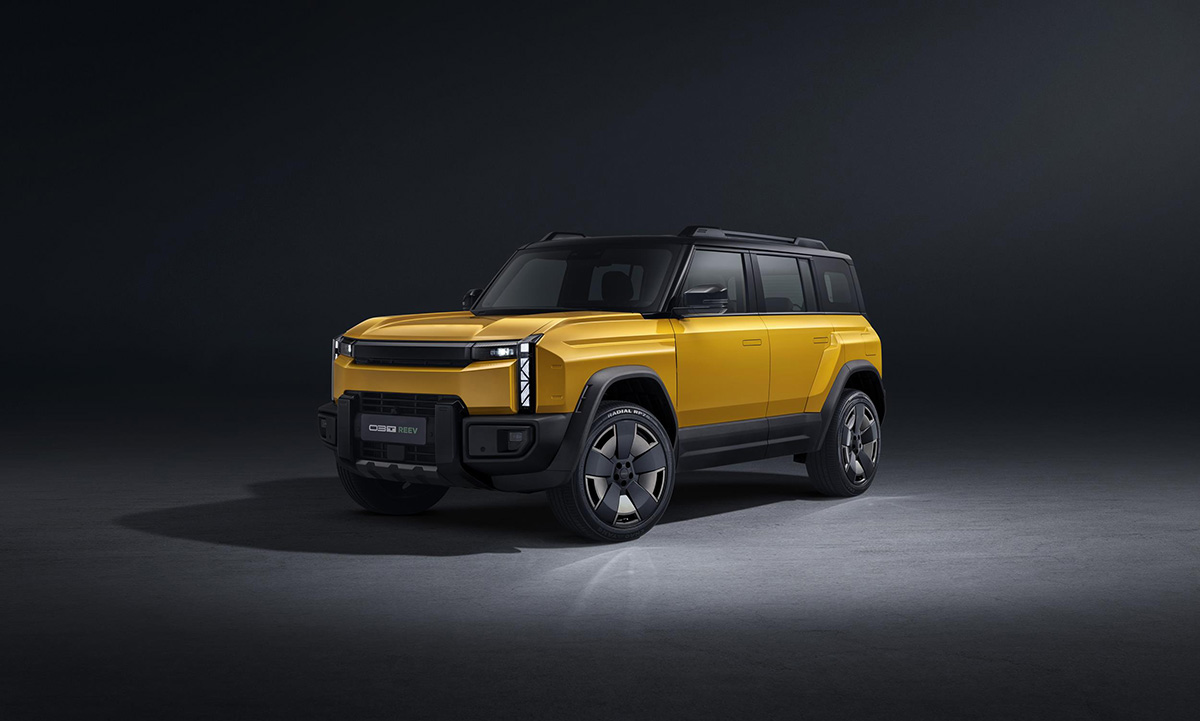
iCaur 03T REEV
Following hot on the wheel tracks of the all-electric 03T and V23, and with rumours of the arrival of the bigger V27 circulating, iCaur will expand its local footprint in South Africa with the pending arrival of the 03T REEV (Range-Extending Electric Vehicle).
Bringing range-extended electric capability to its boxy compact SUV line, the 03T REEV pairs an electric motor with a turbocharged 1.5-litre petrol engine functioning strictly as a generator. While the motor powers the rear wheels directly, the petrol motor kicks in to top up the battery on the go—giving drivers the advantage of everyday zero-emission commuting without range anxiety on long-distance trips.
Power is delivered by a rear-mounted electric motor delivering 185 kW and 300 Nm of torque, and iCaur claims a zero-to-100 km/h sprint time of 7.9 seconds and a top speed of 170 km/h. With a 33.67 kWh lithium iron phosphate battery pack, the 03T REEV has a claimed all-electric range of 190 km (NEDC), and with the petrol range extender engaged, total driving range climbs to around 800 km.
Charging flexibility is built in, supporting both AC and DC fast charging. On AC power, the system accepts up to 6.6 kW, while DC fast charging enables a 30–80% charge in around 20 minutes under optimal conditions. Vehicle-to-load (V2L) functionality is also included, turning the car into a mobile power source for external devices.
The 03T REEV keeps the muscular design, blocky proportions, and flared arches of its fully electric sibling. Like the BEV, it also uses an all-aluminium body with torsional stiffness of 31,812 Nm/deg. The five-seater SUV rides on 19″ wheels with power delivered to the rear axle.
Inside, local models will feature a 15.6” touchscreen infotainment hub, a 9.2” digital driver display, and an eight-speaker iCaur sound system. Standard features include wireless Apple CarPlay and Android Auto, a 50 W wireless phone charger, and four-zone voice command technology.
Cabin comfort is elevated with leather upholstery and ventilated, power-adjustable front seats. On the safety and assistance front, the SUV packages adaptive cruise control, autonomous emergency braking, lane-keep assist, forward collision warning, and a 540-degree panoramic camera view. Local pricing, exact launch dates, and finalised South African specifications will be confirmed closer to the official launch.
Report by FERDI DE VOS