It has been a Renault best-seller in Europe ever since its debut in 1980, but in South Africa, the Trafic people-mover, now making a comeback to local shores, is still quite unknown despite having an on-and-off presence for nearly twenty years.
The Renault Trafic Passenger derivative was first introduced in South Africa in 2006 as a single model, joined by rebadged offshoots such as the Nissan Primastar and Opel Vivaro before it quietly disappeared from the market over a decade ago.
In 2022, the Trafic – now in its third generation (it was launched in Europe in 2014 and also saw platform-sharing with Opel and Nissan) – returned to our shores as a commercial van. This range has been continuously updated over the last decade, and the people-carrier version has now made a comeback in an expanded line-up consisting of three variants.
Interestingly, the Trafic’s return coincides with the discreet demise of its joint venture sibling, the Opel Zafira Life, and its arrival – as flagship in the diamond brand’s line-up – also introduces the first Renault model to exceed the R1-million price tag locally.
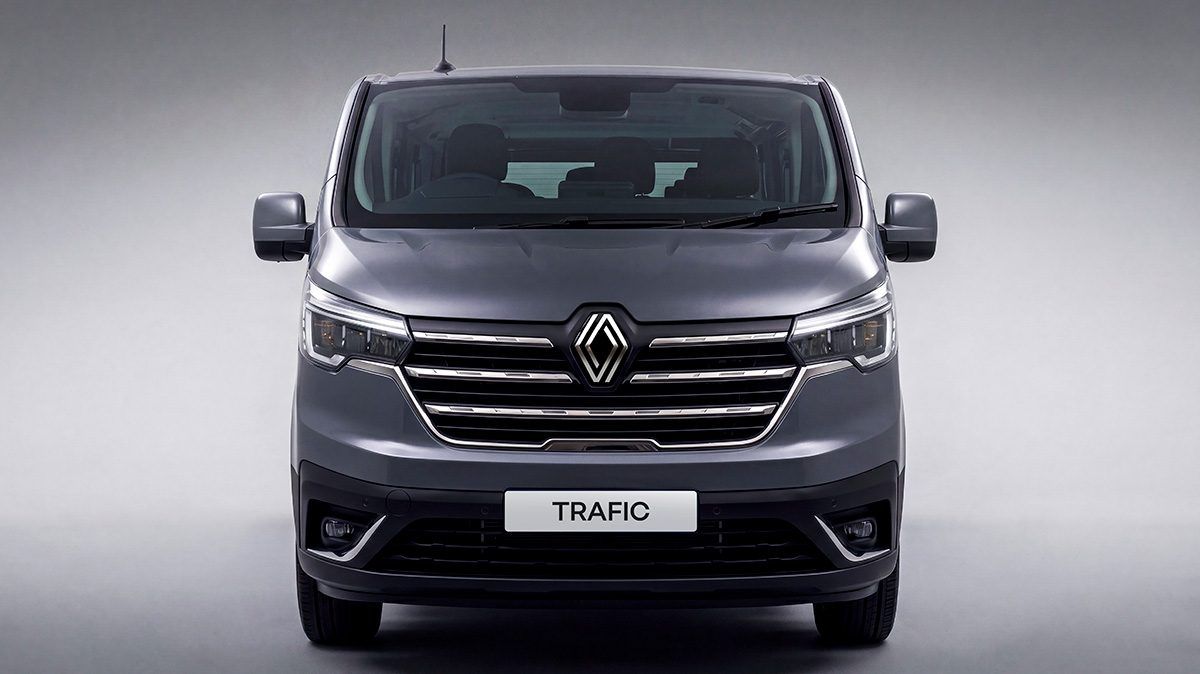
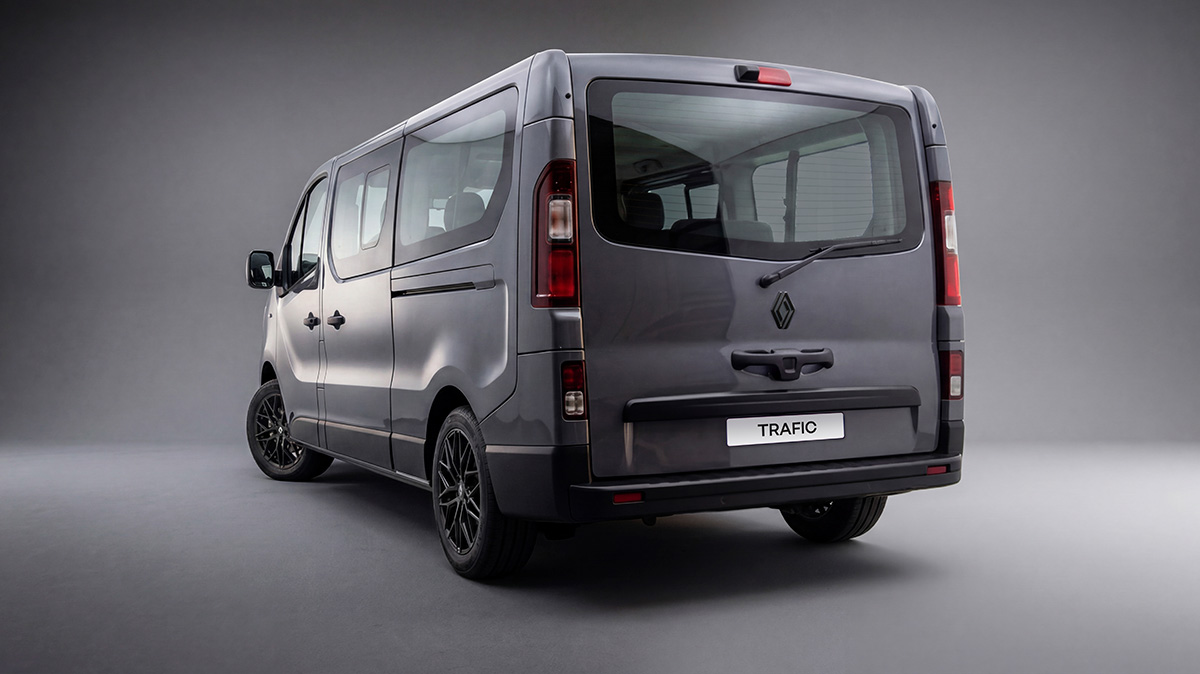
Last facelifted six years ago, the Phase II Trafic Passenger comes with an extended wheelbase and length (400 mm longer compared to the panel van), a nine-seat layout in a 3-3-3 configuration, and the choice of an upward-opening rear lid or optional barn-style doors.
The Trafic offers 1,890 litres of luggage space with all seats in use, up to 3,570 litres with the third row seats down, and 6,000 litres with the second row also folded away. The second and third row of seats can be removed entirely, and the dual side sliding doors are manually operated.
TRIM LEVELS
The three trim levels comprise Evolution, Evolution+, and Techno+ models, with the entry-level Evolution offering auto on/off LED headlights, electric side mirrors, fabric seat upholstery, a height-adjustable driver’s seat and leather-wrapped steering wheel, aircon vents for the second and third row, six airbags, a reverse camera, rear parking sensors, cruise control and 16” steel wheels with covers.
The Evolution+ adds faux leather upholstery and 16″ alloy wheels, and the Techno+ comes with amenities such as push-button start, keyless entry, tyre pressure monitor, rain sense wipers, a heated driver’s seat, unique faux leather upholstery, folding electric mirrors, front parking sensors, Blind Spot Monitoring, Hill Start Assist and black 16″ alloy wheels.

CABIN FOIBLES
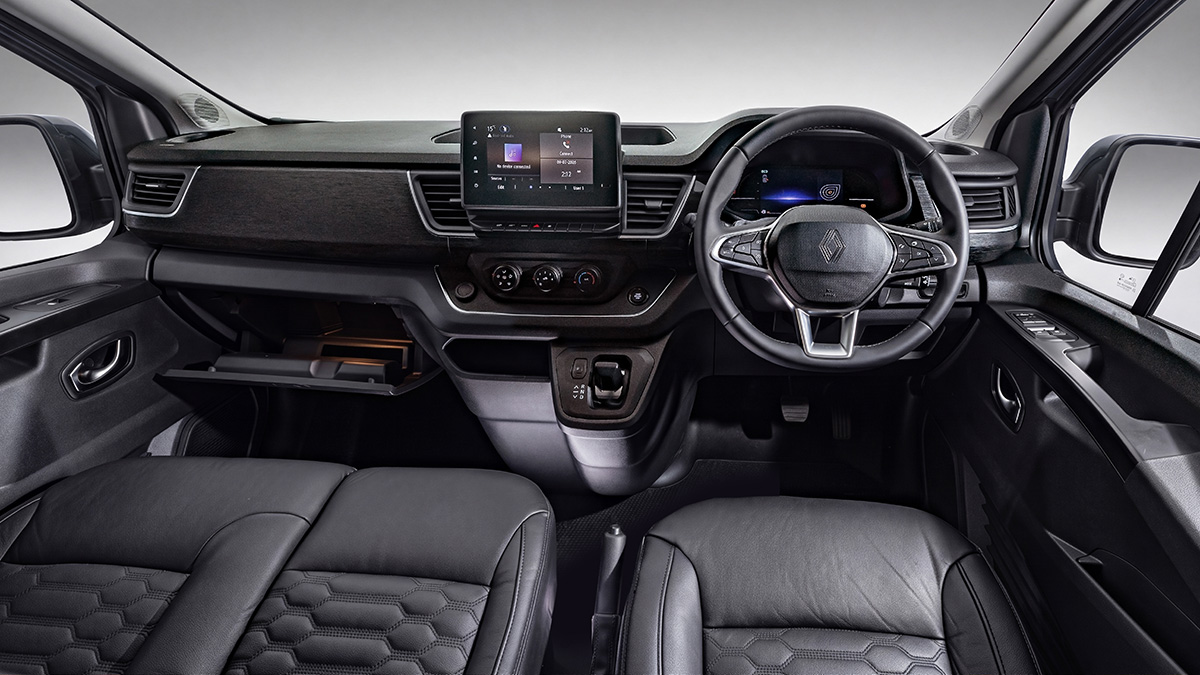
In latest guise the Trafic sports a new grille and bumper, the new Renault logo and LED headlights, and inside it is updated with a 7” digital instrument cluster and 8” infotainment display on all versions, the toggle switch gear selector found in the latest Captur and Duster, and in the top model Techno+, a wireless smartphone charging pad
Available colours are conservative, consisting of white, red, silver, and two shades of grey, and cabin ergonomics are somewhat eclectic, with entry to the third row only possible by dropping the backrest of the second-row outer left-hand seat, and heating is for the driver seat only. Also, at the price, one would expect electric slide-door control on the top model.
At least the dashboard and steering wheel include physical switches for climate control, but the dash trim and faux leather seat upholstery (apparently locally sourced) in the Techno+ displays somewhat tacky, and although roomy at the back, the ill fitment and quality of the roof lining trim is below par compared to its class competitors.
OUTSTANDING DRIVETRAIN
However, on the launch route loop from OR Tambo International Airport to the Cradle of Humankind and back, the Trafic’s turbodiesel-only drivetrain proved outstanding. The proven 2.0-litre dCi, producing 125 kW and 380 Nm of torque, was eager and quiet, delivering strong performance with the EAG9 nine-speed auto transmission, with paddle shifts on all derivatives, shifting smoothly and almost undetected.
The Trafic’s refined drivetrain (now with a 17-litre AdBlue tank to comply with Euro 6-emissions) alleviates the driving experience, and although ride quality is acceptable – thanks to the 16″ rubber and a long wheelbase – the Renault’s overall solidity and handling on the road is let down by a chassis that is starting to show its age.
Renault claims a combined fuel consumption of 7.2 litres/100 km and a tow rating of 2,500 kg, and on the launch loop we managed 7.8 litres/100 km. For now, the Trafic will only be available with diesel power, although the possible introduction of the fully electric E-Tech model is under investigation.
LAST WORD
Competing against the recently introduced Ford Tourneo Custom and Volkswagen Transporter, as well as the Hyundai Staria and the Toyota Quantum VX, the Trafic’s excellent powertrain is let down by trim quality and fit-and-finish that isn’t at the same level as its rivals.
This can be attributed in part to its age but is unfortunately not offset by keen pricing, even with a five-year/150,000 km warranty and a five-year/90 000 km service plan. However, as a vehicle for driving, it stands out from the segment norm, but whether this will be compelling enough to sway prospective buyers remains to be seen.
Report by FERDI DE VOS | Images © RENAULT SOUTH AFRICA