



SPORTING LUXURY
Range Rover Sport Electric
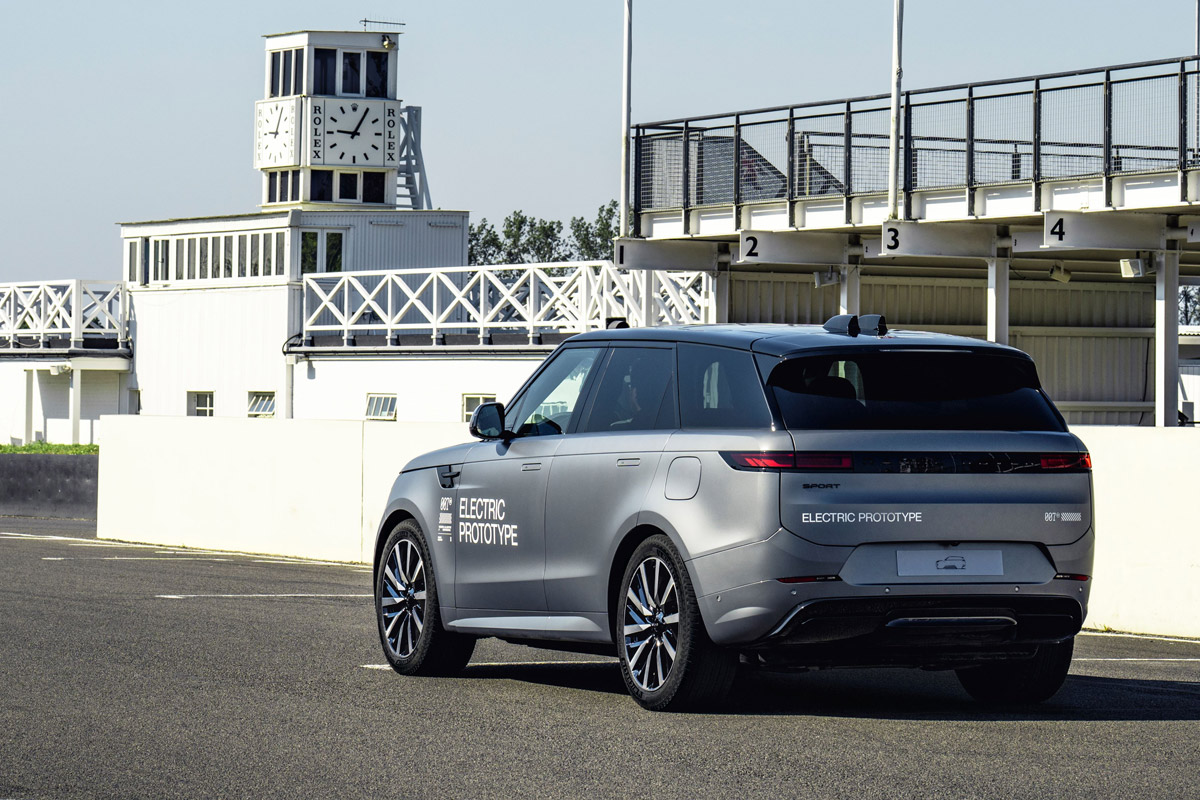
Range Rover has confirmed the forthcoming arrival of its second full-electric vehicle, the Range Rover Sport Electric, which signals a new era of sporting luxury. Following the much-anticipated Range Rover Electric, which has been previewed at a series of curated events over the summer season in Britain, the Range Rover Sport Electric features the same unmistakable, muscular form of the normal Range Rover Sport – now driven by a fully electric powertrain.
The luxury electric SUV was recently presented in a private preview event at Goodwood Festival of Speed in the UK. In homage to its legacy of piercing performance, such as the 999-step ascent at Heaven’s Gate in China and the climb of an Icelandic spillway, the Range Rover Sport Electric tackled a series of driven challenges on the Goodwood Motor Circuit.
The addition of pure-electric propulsion will complete the powertrain line-up for Range Rover Sport, with a plug-in electric hybrid, mild-hybrid V8 petrol and six-cylinder petrol and diesel offering a suitable option for every client. The electric model integrates a suite of advanced technologies that unleash more power and torque, amplified by an advanced new chassis tune and audio sound to create a visceral drive across any terrain, defining the sportiest expression of the brand.
Like the Range Rover Electric, the Sport Electric is expected to feature an advanced 800-volt electrical architecture, a battery with an estimated 118.5 kWh capacity, dual electric motors with a power output of around 410 kW and 850 Nm of torque and intelligent all-wheel drive.
It is expected to deliver an estimated driving range between 480 km and 530 km per charge, and the 800-volt system will support rapid DC fast-charging capability up to 350 kW (enabling 10% to 80% top-ups in roughly 20 minutes). Further details of the Range Rover Sport Electric will be announced later this year.
PART DUSTER
Nissan Tekton
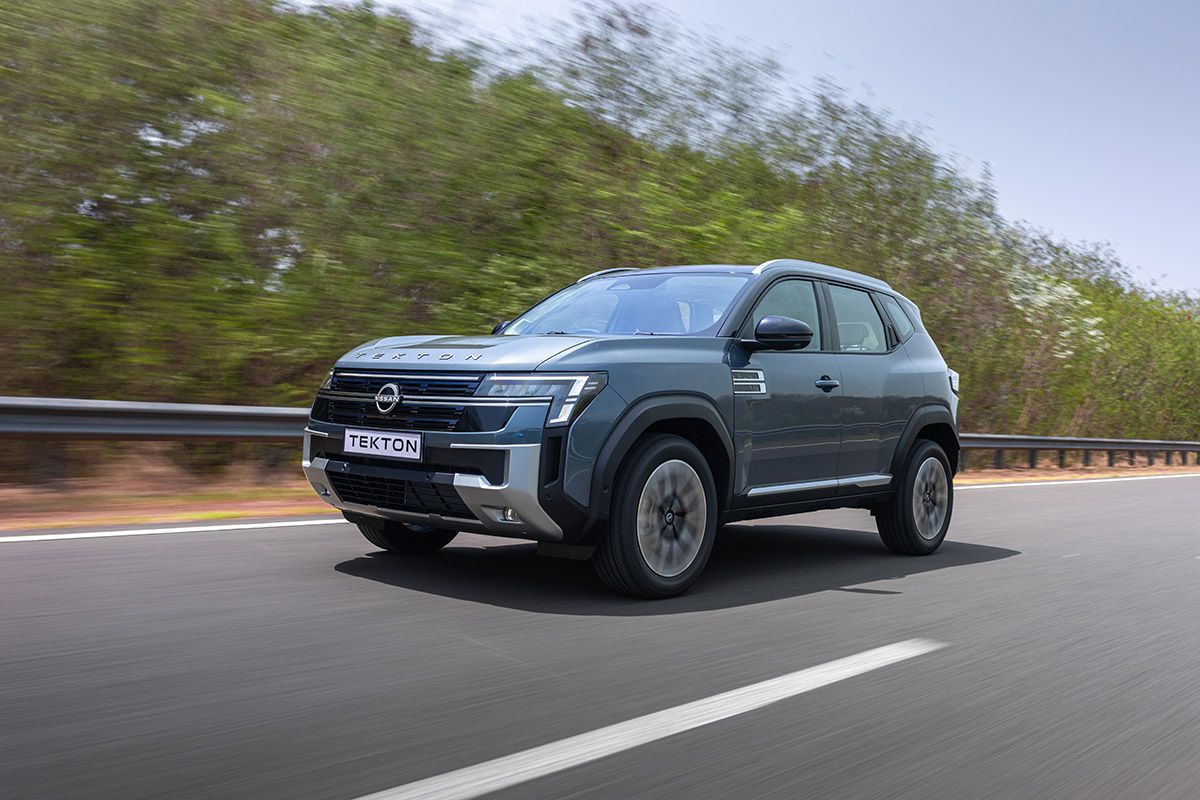
As part of its Re:Nissan strategic plan, Nissan has recently introduced the new Tekton subcompact crossover SUV in India. Based on the CMF-B platform shared with the third-generation Renault Duster, now (again) manufactured in India, Nissan has literally raided parts from the Duster bin, combining it with a contemporary Nissan-ised design to create the Tekton.
Developed in India in partnership with Renault, the Tekton will be exported to fifty global markets across the Middle East and Africa (including South Africa) to strengthen Nissan’s SUV portfolio and (hopefully) accelerate growth in key markets.
Competing with the Hyundai Creta, Kia Seltos, Toyota Urban Cruiser, Tata Sierra, Suzuki Across and a plethora of Chinese C-SUVs, the Tekton combines Nissan Patrol-inspired styling, advanced technology such as Google-powered connectivity, advanced driver assistance technologies and a spacious, premium cabin in a package tailored to evolving customer expectations.
Offered in India in Visia, Visia+, Acenta, N-Connecta, Tekna and Tekna+ trims, the Tekton has C-shaped headlights and a chrome-trimmed grille in front, with a taillight design inspired by the Patrol and full-width light bars at the front and back.
As in the Duster, the Tekton’s interior has a fully digital driver’s display, auto-aircon, ambient lighting, a premium sound system, a wireless smartphone charger, push-button engine start/stop, six airbags and a panoramic sunroof. Level 2 ADAS capacity is expected to be utilised in the top models.
The Tekton is available with two powertrain options (as found in the Duster): a 1.0-litre engine delivering 75 kW and 116 Nm of torque, paired with a six-speed manual gearbox, or a 1.3-litre turbo-petrol engine delivering 122 kW and 280 Nm, available with either a six-speed manual gearbox or a six-speed DCT. As yet, no indication has been given when the Tekton will be available locally.
NEXON BECOMES OSPREY
Tata Osprey
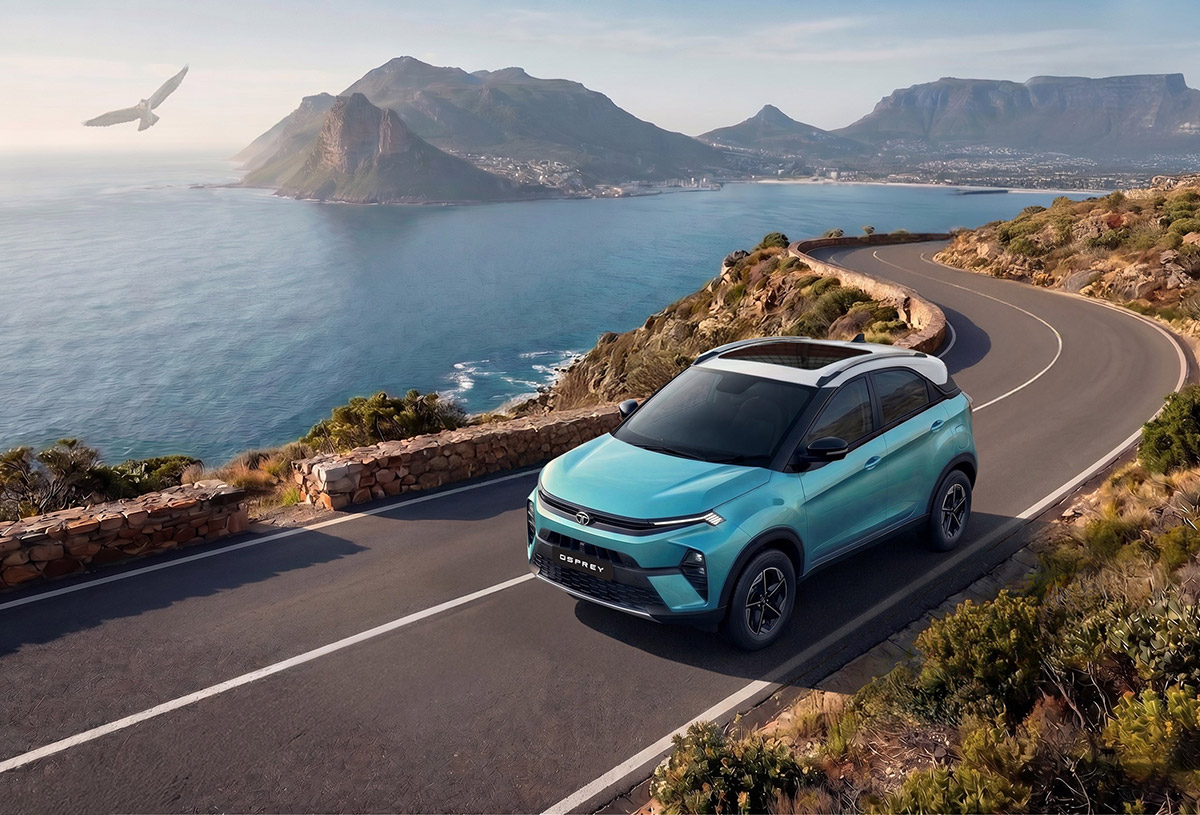
Tata Motors Passenger Vehicles (TMPV) South Africa has announced that the highly anticipated Tata Osprey sub-compact crossover SUV – internationally known as the Tata Nexon and ranked as India’s best-selling passenger vehicle multiple times in the last few years – will join the local Tata line-up in the third quarter of this year.
With its local name inspired by the versatility and adventurous spirit of the distinctive bird of prey found in parts of South Africa, the Osprey features the upgraded design traits of the last Nexon facelift in 2023, based on the Indian manufacturer’s Impact 2.0 design language.
This includes a redesigned front fascia inspired by the Tata Curvv, a redesigned rear end with a full-width LED light bar, new features such as a larger 10.25″ touchscreen and full-digital instrument cluster, a two-spoke steering wheel with an illuminated logo, six airbags as standard, telematics and a wireless charger. The Osprey also comes with a five-star Bharat NCAP safety rating.
Although engine specifications have not yet been announced, the Osprey will likely be powered by a 1.2-litre three-cylinder Revotron turbo petrol engine that delivers 81 kW and 170 Nm of torque, and perhaps a 1.5-litre four-cylinder Revotorq diesel engine producing 81 kW and 260 Nm of torque, both combined with a six-speed manual or six-speed automated manual transmission (AMT).
A model with a seven-speed dual-clutch automatic (DCT) with paddle shifters and four driving modes may also be on the cards, and an electric version of the Nexon is also available overseas, although it is unlikely to come to South Africa soon. The Osprey will be the fifth model range in the local Tata portfolio, joining the Tiago, Punch, Curvv and Harrier.
NEW TRITON FLAGSHIP
Mitsubishi Triton Bi-Turbo
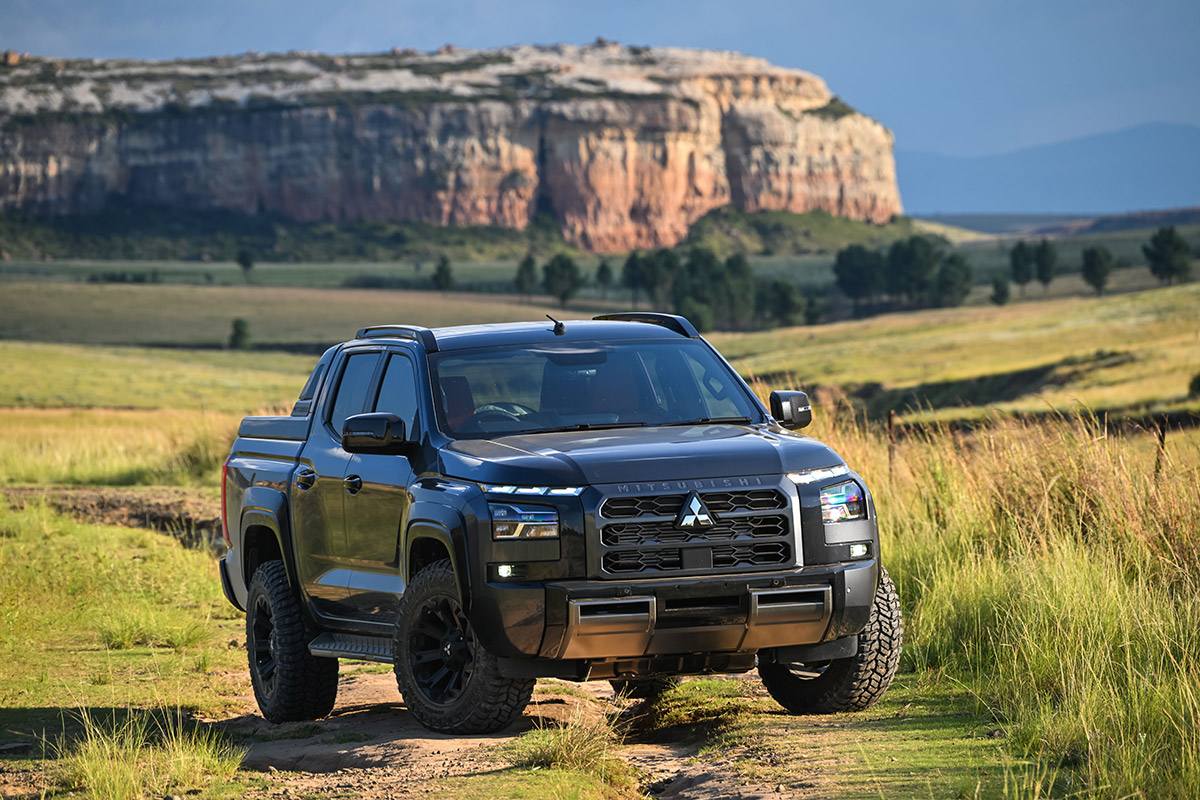
Mitsubishi Motors South Africa has expanded the Triton bakkie range with the new Triton Bi-Turbo and stylish Triton GLS to ensure that the Triton offering continues to meet the needs and demands of local bakkie customers. The Triton Bi-Turbo has been specially developed for the South African market, offering
additional performance, sportier styling and improved safety thanks to the fitment of the Mitsubishi Safety Sensing Suite.
The Triton Bi-Turbo elevates the bakkie’s robust design with a variety of sporty elements, including roof rails, a styling bar, heated door mirrors and an assisted rear tailgate to improve access to the load bin. However, the biggest update is under the bonnet, as the 2.4-litre 4N16 DI-DC Bi-Turbo diesel engine and its two-stage turbocharger have been fine-tuned to unlock additional power and torque.
The Bi-Turbo setup comprises of a smaller turbine that provides immediate low-speed response, effectively reducing lag, while a second larger turbine sustains high-end boost. The result is an impressive 150 kW at 3 500 r/min and 470 Nm between 1 500 and 2 750 r/min, offering enhanced acceleration as well as improved power and torque outputs across the entire speed range.
Power is transferred to the wheels via a six-speed automatic transmission, and the Triton Bi-Turbo is available exclusively with Mitsubishi’s Super Select II 4WD system, which incorporates a rear differential lock and seven selectable drive modes. Inside, a leather-wrapped steering wheel and gear shift knob as well as synthetic leather seats with a suede knit and quilting offer a more upmarket feel.
The infotainment system now has a nine” touchscreen Smartphone-Link Display Audio system, a seven” digital driver’s display, wireless Apple CarPlay and Android Auto and a six-speaker sound system. Mitsubishi’s Safety Sensing Suite comprises a long list of driver assistance features including Adaptive Cruise Control (ACC), Automatic High Beam (AHB), Forward Collision Mitigation system (FCM) with pedestrian detection, and many more.
As part of the range update, the Triton GLS models have received a darker exterior appearance with the fog lamp bezels, door handles, side steps, rear gate handle and garnish now finished in material black. The front bumper garnish, rear bumper, door mirrors and 18″ alloy wheels feature a metallic black look, and the inner housing of the rear combination lamps has also been blacked out. The Triton 2.4 Bi-Turbo 4×4 Auto is now available for R959,990.
Report by FERDI DE VOS

