



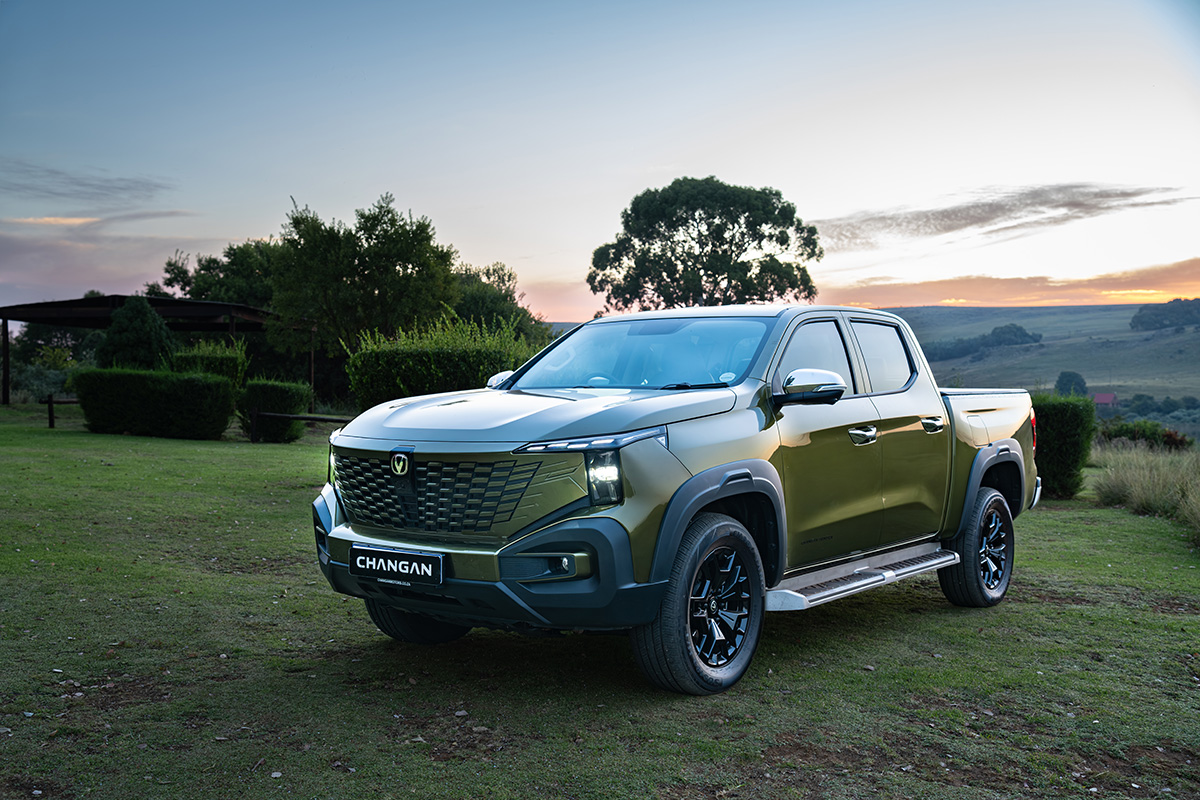
A brief drive at a media launch is enough to form an initial impression. Living with a vehicle for weeks reveals far more. After spending two weeks with the Changan Hunter K50 REEV, followed by another two weeks in the Hunter Diesel, it became clear that while they share a name, they offer two very different ownership experiences.
I first sampled the Hunter K50 REEV at its South African launch in Sun City, but it wasn’t until I lived with both models that I began to appreciate Changan’s strategy. Rather than offering different versions of the same formula, the brand has developed two bakkies aimed at distinctly different buyers.
Finished in Olive Green, the Hunter K50 REEV attracted attention almost everywhere it went. People were curious about both the styling and the unfamiliar Changan badge, with many assuming it was a fully electric vehicle.
Its drivetrain is certainly unconventional. Unlike a traditional hybrid, the turbocharged 2.0-litre petrol engine never powers the wheels directly. Instead, it acts solely as a generator, producing electricity for the battery while electric motors provide propulsion. The result is the instant response and refinement associated with an EV, without the range anxiety.
What initially sounds complex quickly becomes intuitive. Overnight charging soon became routine, while longer journeys allowed the petrol engine to quietly replenish the battery in the background. In everyday use, it simply felt like another modern bakkie.
With 200 kW and 470 Nm on tap, performance is effortless. More impressive than the figures themselves is the immediate delivery of torque, whether pulling away from a traffic light, joining a motorway or overtaking. Around Pretoria, where most of my driving took place, the REEV felt composed and refined, particularly in stop-start traffic where its electric drivetrain came into its own.
The transition between battery power and the petrol generator was almost imperceptible. Most of the time, I only realised the engine was running after glancing at the instrument panel, making the system feel impressively seamless.
Two weeks also highlighted details a launch drive might not reveal. One discussion at my estate centred on parts of the exhaust and underbody appearing to sit lower than expected. I never scraped speed humps, driveways or gravel roads during my time with the vehicle, but buyers intending to tackle more demanding terrain may wish to inspect the underbody layout themselves. It’s not a criticism, merely a practical observation.
FAMILIAR TERRITORY
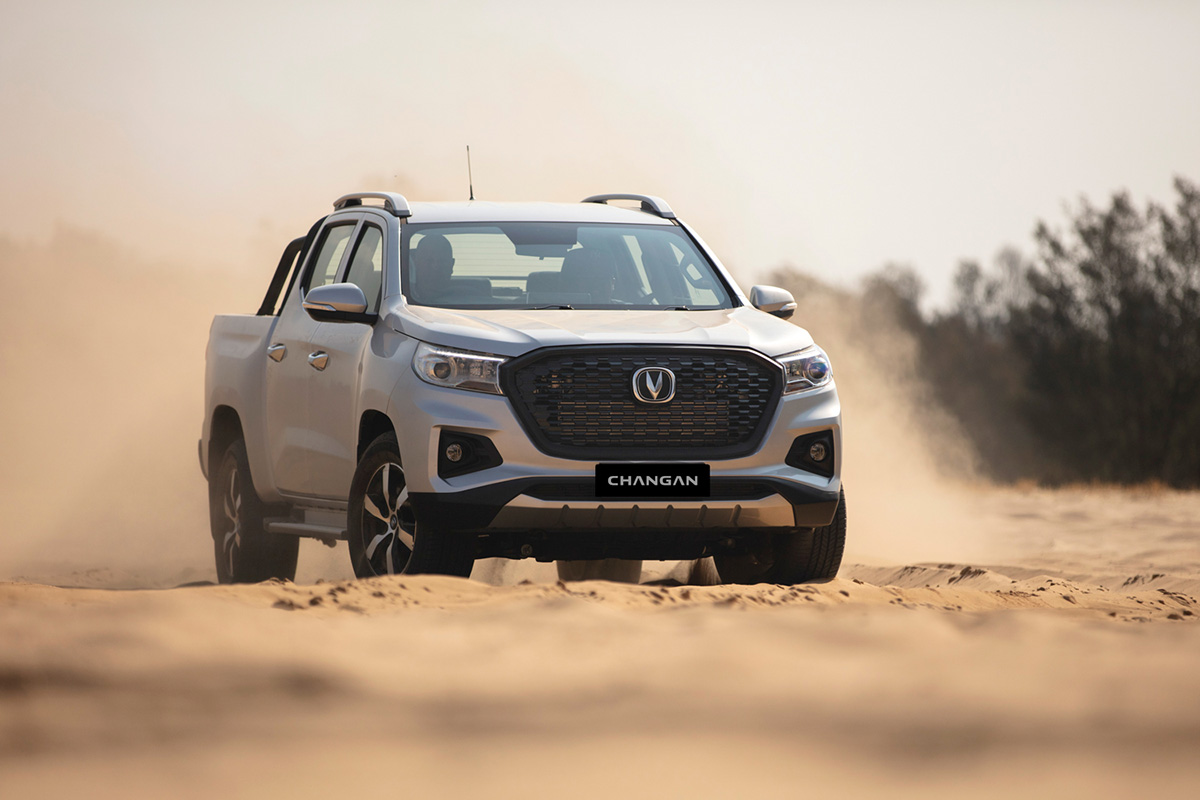
Swapping the REEV for the Hunter Diesel manual immediately highlighted the contrast. Where the REEV glides away in near silence, the diesel greets you with the familiar soundtrack South African bakkie buyers have trusted for decades.
Its 2.0-litre turbodiesel develops 110 kW and 350 Nm of torque, paired with a six-speed manual transmission. It isn’t trying to reinvent the segment. Instead, it delivers its performance in a familiar, dependable manner. Torque arrives low in the rev range, the clutch is progressive, and the gearshift has a reassuringly positive action. Within minutes, it feels completely at home.
If the REEV encourages you to embrace new technology, the diesel succeeds through simplicity. It asks little of the driver beyond selecting first gear and getting on with the job.
BUILT FOR BUSINESS
Two weeks behind the wheel made its intended audience obvious. While the REEV showcases Changan’s technological ambitions, the diesel is aimed squarely at contractors, farmers, fleet operators and small businesses seeking practicality and predictable running costs.
The cabin balances functionality with comfort, offering a natural driving position, good visibility and welcome modern touches such as Apple CarPlay and Android Auto. Around town it remained easy to manoeuvre, while on the open road the suspension struck a commendable balance between load-carrying ability and everyday comfort.
LAST WORD
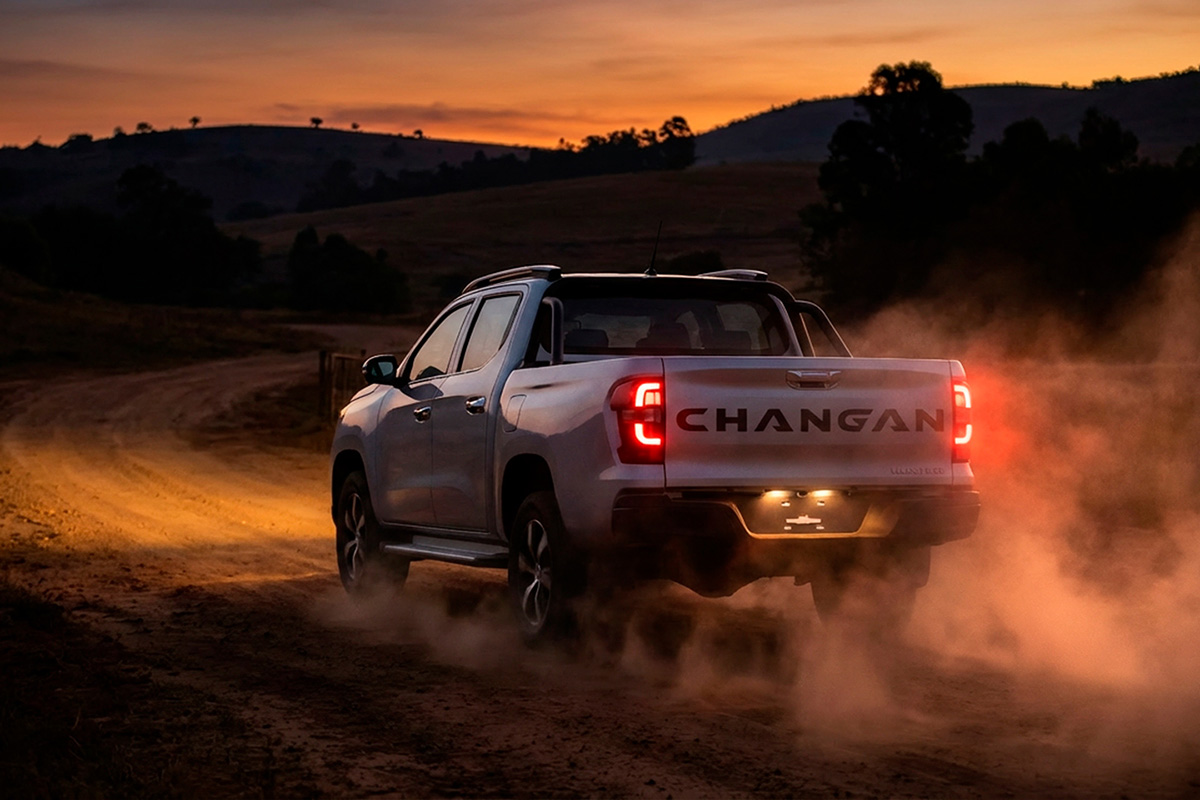
Spending extended time with both Hunters revealed two bakkies with distinct personalities. The Hunter K50 REEV combines electric driving characteristics with the reassurance of conventional refuelling, while the Hunter Diesel sticks to a proven formula that values simplicity and durability.
Neither is intended to replace the other. Instead, Changan has broadened the Hunter line-up by offering buyers two fundamentally different approaches to the same market. After living with each, I never found myself deciding which was better. Instead, it became clear that both deliver exactly what they were designed to do.
Report by BRYAN KAYAVHU | Images © CHANGAN SOUTH AFRICA

