It’s easy to become distracted by the numbers surrounding the Porsche 911 GT3 Touring. The power output, the 9,000 rpm redline and the price tag all tell part of the story. Spend a proper day behind the wheel, however, and you’ll discover that this remarkable Porsche is more about perspective than merely performance.
Expectations have a habit of shaping a drive before you’ve even turned the key. Mine centred largely on the weather. The forecast suggested a cold, wet day in the Western Cape, hardly ideal conditions in which to explore the limits of Porsche’s latest 911 GT3 Touring. Instead, we were greeted by clear skies, dry roads, and a winter morning that makes you want to take the scenic route.
As it turned out, the weather wasn’t the only thing that challenged my expectations. I arrived expecting to evaluate one of the world’s benchmark driver’s cars, but left with a far greater appreciation for my own limitations behind the wheel.
That may sound like an odd conclusion after spending a day in one of Porsche’s finest road cars, but by the time we’d traversed Du Toitskloof Pass, it made perfect sense.
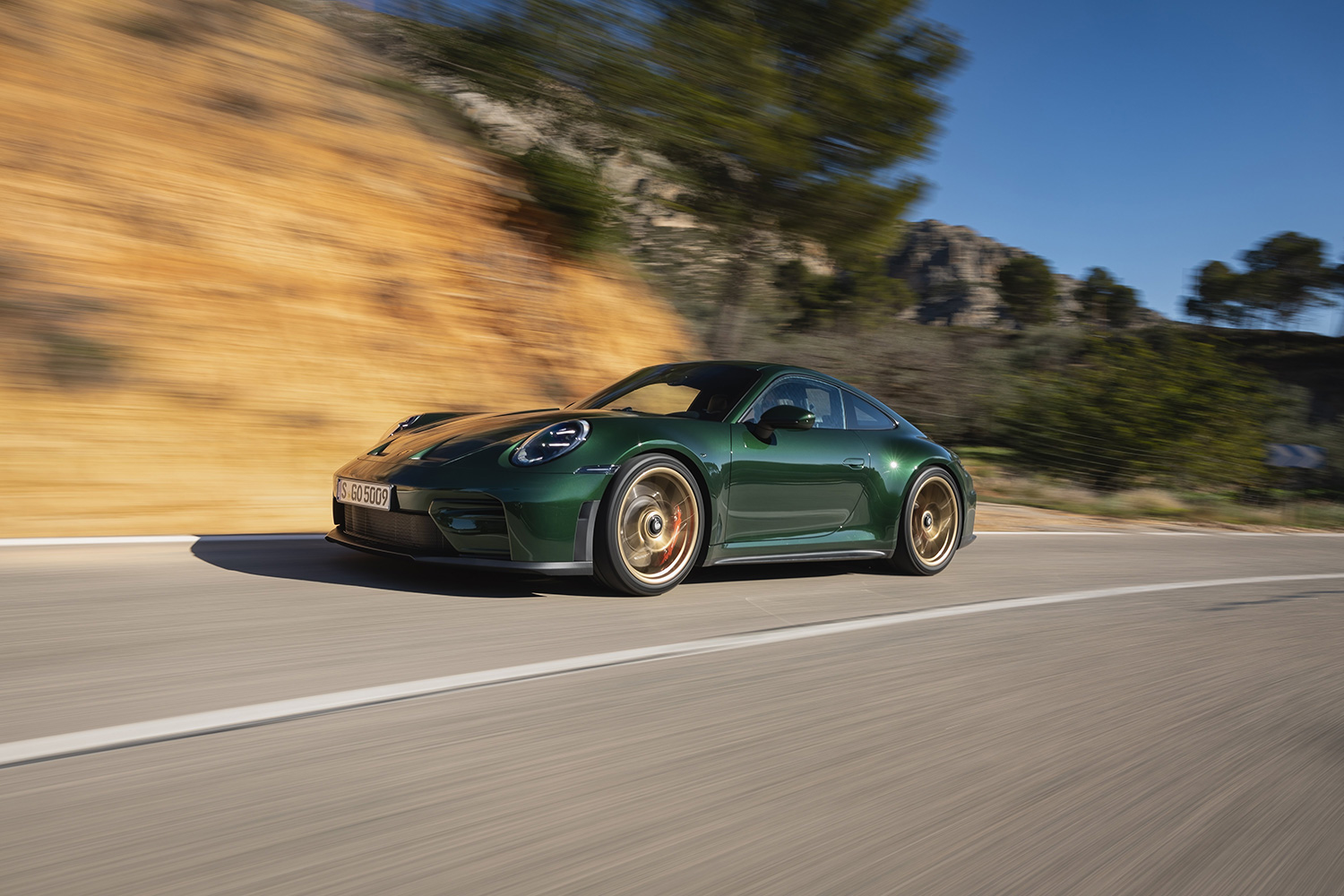
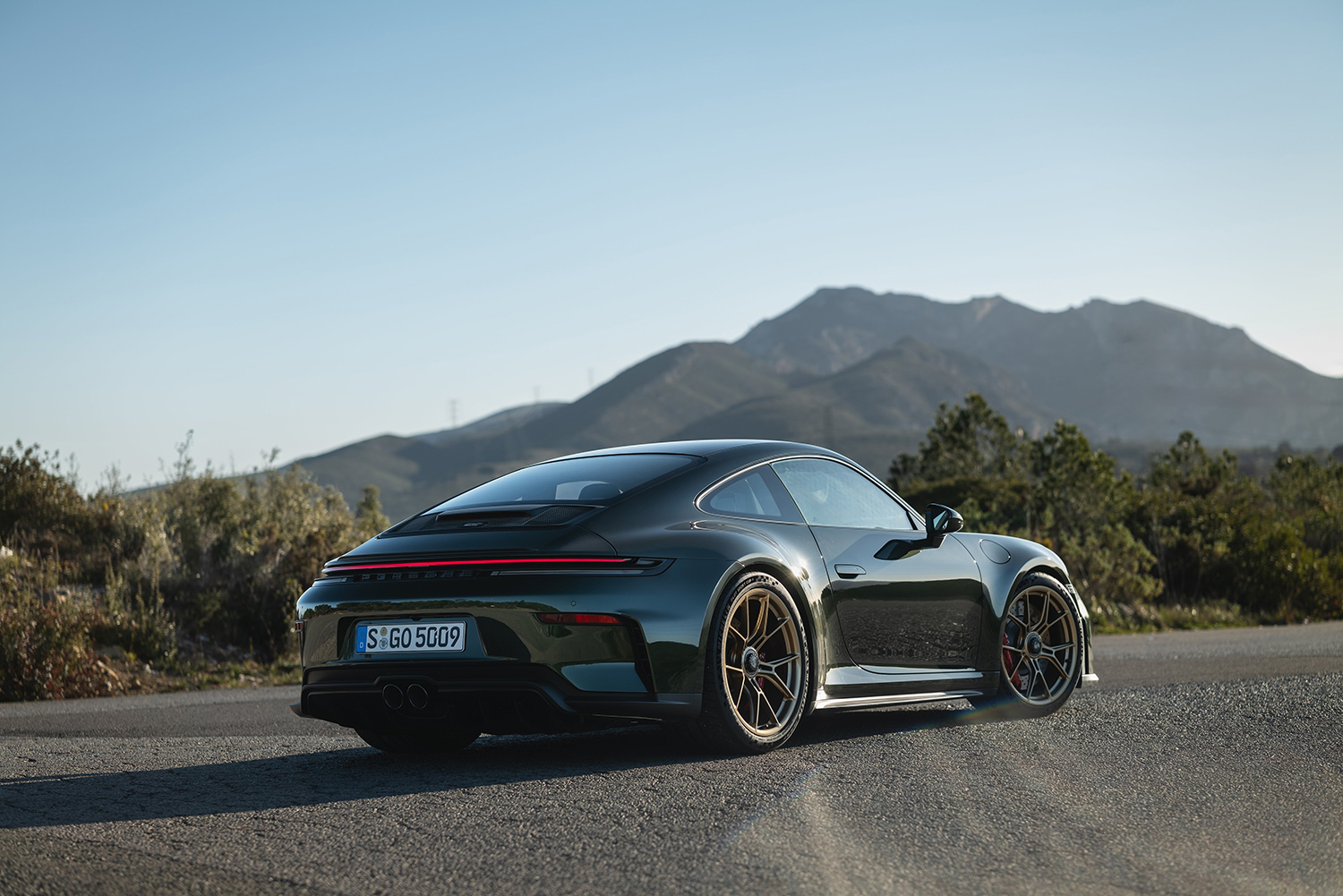
The GT3 Touring hardly needs an introduction. Since its arrival, it has become the understated choice in Porsche’s GT family, dropping the standard GT3’s towering rear wing for cleaner lines without sacrificing any of the engineering that makes the car so special. If anything, I think it’s the prettier of the two. It possesses all the intent of its track-focused sibling, but wears it with considerably more restraint.
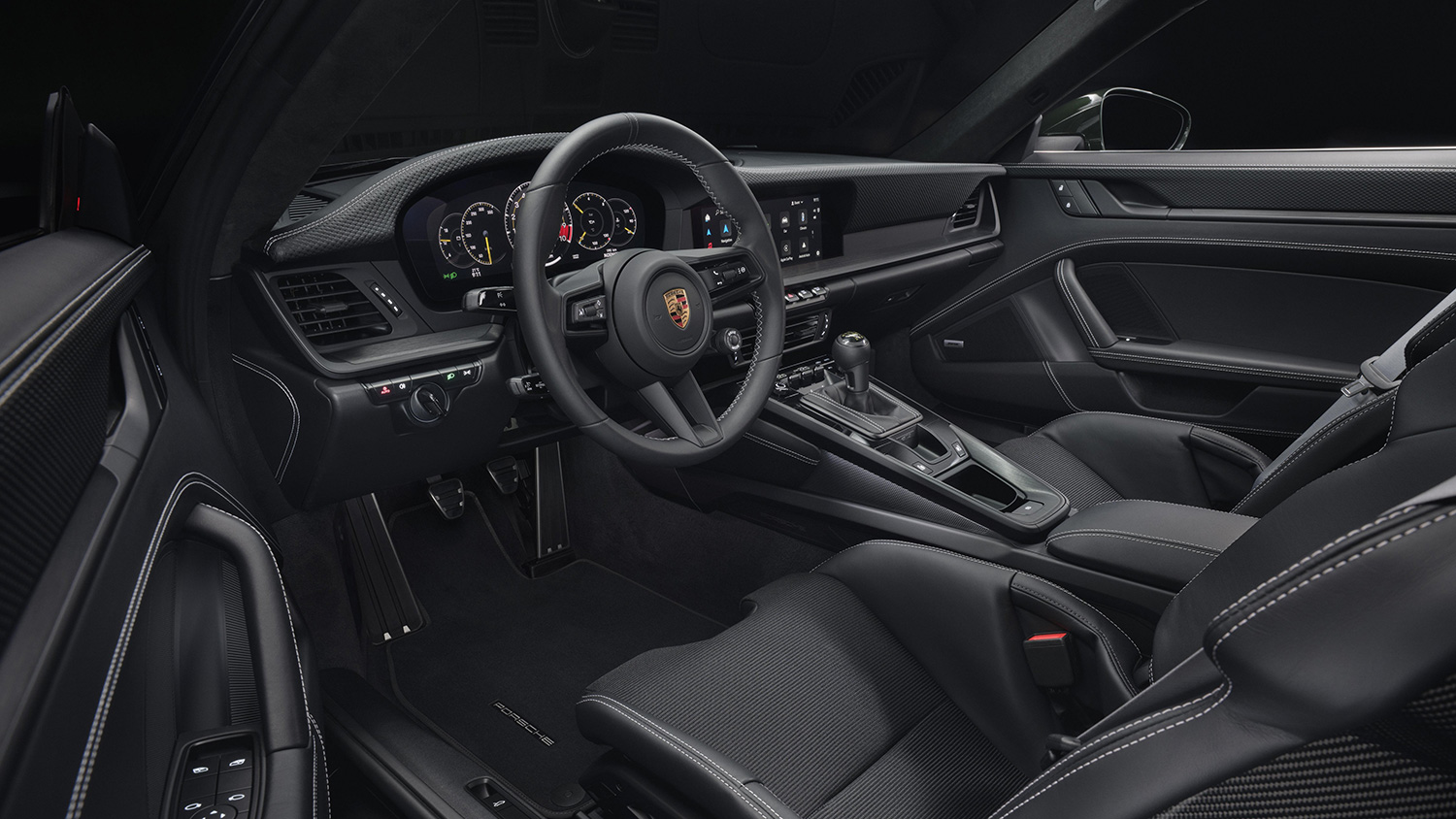
Our test car began life at R4,722,000 before Porsche’s options catalogue inevitably became involved, pushing the final figure to R5,695,790. Finished in Ice Grey Metallic (not shown here), it featured Porsche Ceramic Composite Brakes (PCCB), the Chrono Package with Porsche Design GT clock, HD Matrix LED headlights, a Bose surround sound system, carbon interior trim and several Porsche Exclusive Manufaktur touches.
Fortunately, the GT3 Touring doesn’t rely on an extensive options list to feel complete. Standard specification already includes forged aluminium wheels, adaptive GT sports suspension, rear-axle steering, a mechanical limited-slip differential with Porsche Torque Vectoring, dual-zone climate control, a 10.9″ infotainment system with wireless Apple CarPlay and Android Auto, cruise control and LED lighting. The fundamentals are all there before you’ve spent a cent on personalisation.
COMPLETE BEFORE THE OPTIONS
As with every Porsche, however, the options list quickly becomes a test of one’s own restraint. Take the lightweight folding bucket seats fitted to our test car. At R167,810 they’re beautifully made, wonderfully supportive, and look absolutely right in a GT3. Yet after a full day’s driving, I’m not convinced I’d spend the money.
I completely understand the appeal, but I’d happily save the money and put it elsewhere. The standard sports seats remain excellent and, if I were fortunate enough to be ordering one myself, that’s where my money would stay.
The Porsche Ceramic Composite Brakes, on the other hand, are a different conversation altogether. At R282,820 they’re hardly inexpensive, but they’re one option I’d tick without hesitation. Not because I think the standard steel brakes would be lacking, Porsche’s engineers know better than most how to build a braking system, but because the spectacular naturally aspirated flat-six deserves stopping power every bit as memorable as its acceleration. Every firm application of the brake pedal reinforces how complete the GT3 Touring feels with PCCBs.
And then there’s the gearbox. Spend any time around Porsche enthusiasts, and you’ll quickly discover that discussions surrounding the GT3 seldom begin with the engine or chassis. Instead, they almost inevitably descend into the manual-versus-PDK debate. The assumption seems to be that if you’re serious about driving, the manual is the only acceptable answer.
After a full day in the PDK-equipped Touring, I think that misses the point. The seven-speed dual-clutch transmission is, quite simply, one of the finest gearboxes Porsche has ever built. Upshifts happen so quickly that you stop noticing them altogether. Downshifts arrive with equal precision, always accompanied by a perfectly judged throttle blip. Before long, the gearbox fades into the background, leaving you free to concentrate entirely on the road.
Rather than thinking about changing gears, you’re thinking about braking later, clipping the next apex more cleanly and feeding the throttle in just that little bit earlier. The PDK doesn’t lessen the experience. It lets the rest of the car shine, and nowhere is that clearer than on Du Toitskloof Pass.
For years, Franschhoek Pass has occupied top spot on my list of South Africa’s finest driving roads. It remains good, but deterioration and a lack of passing opportunities have relegated it. In contrast, following its rehabilitation, Du Toitskloof has quietly become the new “go-to”. The surface is exceptional, the rhythm of the corners almost hypnotic, and the consistency of the tarmac encourages you to build confidence naturally rather than cautiously. It’s the sort of road that rewards precision, but won’t flatter a driver who doesn’t know what they’re doing.

THE ROAD THAT CHANGED MY MIND
Within a handful of corners, I realised the road had a remarkable ability to expose not only the GT3’s strengths, but also the shortcomings of the person behind the wheel. Every instinct told me I was approaching my own comfort zone. I was braking hard, carrying what felt like meaningful speed into corners and feeding the throttle in with increasing confidence on the exit. The Porsche, meanwhile, felt like it was merely stretching its legs.
The steering remained calm, the chassis never became flustered, and those enormous rear tyres simply converted 375 kW into effortless traction before catapulting the Touring towards the next corner. Looking back, I doubt the car was operating at much more than six-tenths of its ability.
That’s a remarkably humbling realisation for any driver. Not because it makes you feel inadequate, but because it quietly demonstrates just how much further its own capabilities extend beyond yours. Most modern performance cars have become incredibly good at flattering their drivers. They mask untidy inputs, disguise poor technique and leave you believing you’re extracting every ounce of their potential.
The GT3 Touring doesn’t have to do that. Over time, you will learn from this car, as it rewards smoothness, precision, and commitment, but it won’t pretend that you’ve reached its limits just because you’ve reached your own. It left me climbing out at the top of the pass with a renewed appreciation for the skill of Porsche’s GT engineers, but also a desire to become a better driver. That’s not something many cars can claim.
WITH GREAT POWER…
The naturally aspirated 4.0-litre flat-six undoubtedly deserves every accolade it receives. Even in an era where emissions regulations continue to tighten their grip on performance cars, Porsche has somehow managed to preserve one of the automotive world’s truly great engines. It still spins to a spine-tingling 9,000 rpm, still produces 375 kW without turbocharger assistance, and still responds to the throttle with an immediacy that feels almost mechanical in its honesty. The engine’s character is undoubtedly near flawless, but if I’m being completely honest, the engine wasn’t the biggest takeaway from the drive, the chassis was.
Everything the GT3 Touring does seems connected. The brake pedal feels perfectly matched to the steering, the steering to the chassis, and the chassis to the rear axle. There isn’t a weak link anywhere in the chain. It simply encourages you to concentrate on driving well, because every thoughtful input is rewarded with an equally thoughtful response.
Had I spent the day managing a clutch pedal and manually selecting gears, I’m sure I’d have enjoyed the interaction. But I also suspect I’d have devoted a meaningful portion of my attention to operating the gearbox itself. The PDK quietly removes that distraction. It allows you to focus entirely on the road, the balance of the chassis, and the confidence the front axle inspires as you commit to another sequence of corners.
Yet, if I have one criticism of the GT3, it concerns the steering. On some of the rougher sections of road, I found it just a touch lighter than I’d personally prefer. It’s not a flaw, and it doesn’t detract from the front-end accuracy. I suspect it’s simply a consequence of Porsche chasing absolute precision at higher cornering loads. Even so, I still think the Carrera GTS strikes the sweeter balance for our conditions, offering a little more reassuring weight without sacrificing the precision that makes every modern 911 such a rewarding thing to drive.

LAST WORD
The GT3 Touring poses an interesting question. Could you drive it every day? The simple answer is the affirmative. The PDK is effortless in traffic, the Touring’s cleaner styling attracts far less attention than the winged GT3 and, despite its uncompromising reputation, it’s perfectly capable of tackling the daily grind. Porsche has even made it a little more practical than before by allowing rear seats to be specified alongside the new folding bucket seats.
But would I? Probably not. Not because it couldn’t handle the commute, rather because I don’t think a car like this should become routine. The Carrera GTS and Turbo are magnificent everyday 911s because they slot so effortlessly into ordinary life.
The GT3 Touring deserves more than that, it deserves to be anticipated. It deserves early alarms on crisp winter mornings, roads chosen for the quality of their corners rather than their convenience, and destinations that matter a little less than the drive itself. Cars like this don’t exist to get you somewhere, instead, they remind you why you wanted to go in the first place.
Report by BERNIE HELLBERG JR | Images © PORSCHE