South Africa’s hybrid market hasn’t exactly been starved of new contenders lately, but few have arrived with quite the same polish – or promise – as the freshly launched Omoda C9 PHEV and Jaecoo J7 SHS. Under the Chery Group umbrella, these two premium Chinese SUVs are the first electrified flagships from their respective brands, and they’re gunning for a slice of the fast-growing hybrid SUV segment by offering something increasingly rare – long range, real-world practicality, and genuine design appeal.
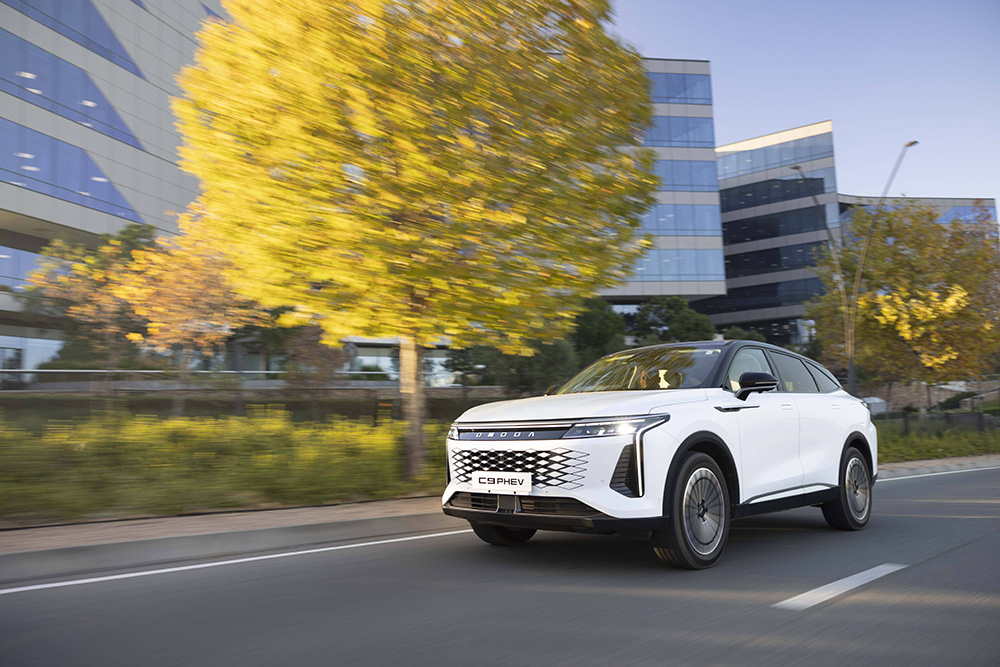
Starting with the Omoda C9, which now crowns the Omoda range in South Africa, it’s clear the brand wanted to make a statement. The C9 is the more luxurious and more powerful of the two recently introduced hybrids, with a 1.5-litre turbocharged petrol engine and no fewer than four electric motors – one at each wheel. That setup delivers a total system output of 440 kW and a stonking 915 Nm of torque. For context, that’s nearly double the output of some established premium plug-in hybrids on sale here. The result? A zero to 100 km/h sprint in under five seconds and acceleration that’s as immediate as it is unrelenting – not something you usually say about a two-tonne SUV.
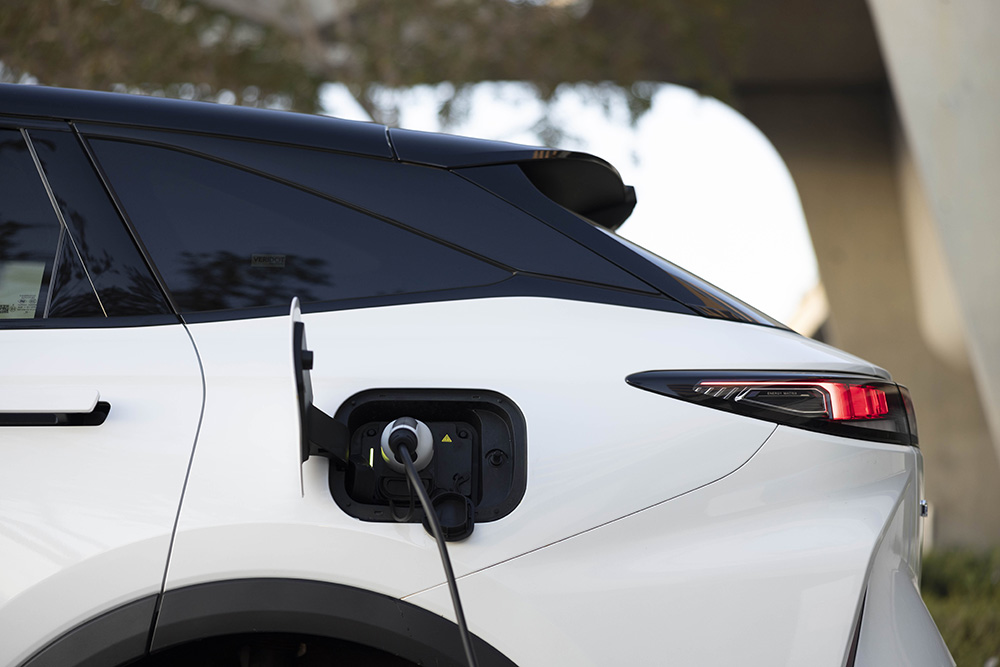
But speed is only half the equation. The real talking point is range – and lots of it. With a 34.5 kWh battery onboard, the C9 can deliver up to 150 km of pure electric driving, enough to cover most urban commutes without sipping a drop of petrol. And when you do need the petrol engine, a combined range of over 1,100 km means that long trips can be handled with zero anxiety. Recharging from 30% to 80% takes just 25 minutes using DC fast charging, while a full charge at home takes approximately 5.5 hours via a wall box.
The interior of the C9 backs up its performance with equally high-end features. Heated and ventilated seats front and rear, massaging front chairs, dual 12.3″ digital displays, and a crisp 12-speaker Sony sound system are standard fare. It’s a bold, high-spec execution, with details like a diamond-pattern grille, 20″ alloys, and adaptive LED lighting lending the C9 the sort of presence one typically associates with German rivals. Safety is also comprehensive, with all the necessary acronyms present: AEB, adaptive cruise control, lane keeping, blind spot warning, and a clever 540-degree camera system.
Pricing for the C9 Explore PHEV is pegged at R999,000, which, while significant, positions it competitively against similarly sized luxury PHEVs, particularly considering the included kit. A seven-year/200,000 km warranty backs it up, while the hybrid battery gets an impressive 10-year/unlimited km warranty for the first owner.
ACCESSIBLE HYBRID EFFICIENCY
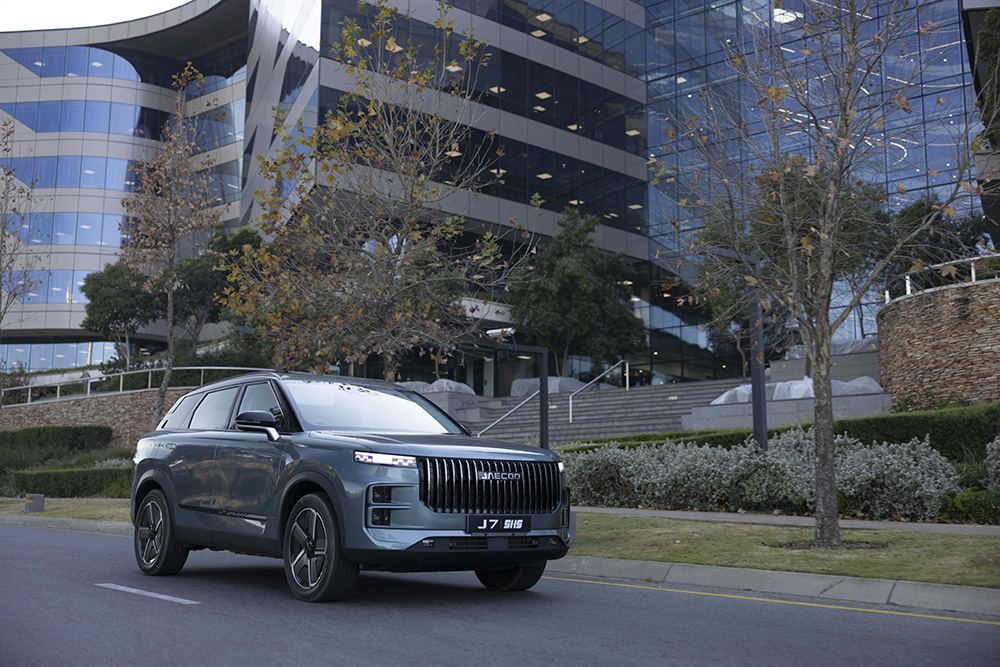
Where the C9 feels like a headline-grabbing showcase of what the brand can do at the upper end, the Jaecoo J7 SHS takes a more grounded – though no less impressive – approach. With the J7, Jaecoo has introduced what it calls a Super Hybrid System (SHS), blending a 1.5-litre turbo-petrol engine with a single electric motor, driving the front wheels via a dedicated hybrid transmission. The system outputs sit at 255 kW and 525 Nm, which is still plenty of grunt for a car of this size.
Its secret weapon, however, lies in its smart blend of battery capacity and fuel efficiency. The 18.3 kWh LFP battery supports up to 90 km of electric-only driving – ideal for shorter daily trips. When combined with its efficient engine, the J7 boasts a theoretical range of up to 1,200 km, helped along by a claimed combined consumption of just 4.7 l/100 km. Real-world testing will likely push that up slightly, but early indications show a comfortable 5.2 l/100 km under mixed conditions – still remarkable for a vehicle of this stature.
Fast charging capability allows a 30 to 80% top-up in just 20 minutes, while full charging on a public AC charger takes around 2.5 hours. And once battery levels drop below 30%, the car’s energy recuperation system cleverly utilises braking and coasting to maintain a usable level of charge, ideal for longer trips out of town.
Inside, the Jaecoo makes a strong case for itself. The cabin is premium without being overdone – think soft-touch materials, ambient lighting, leather upholstery, a panoramic sunroof, and a 14.8″ touchscreen that dominates the dash. The user interface is slick, and wireless smartphone integration is standard. Features like dual-zone climate control, a heated steering wheel, a powered tailgate, and adaptive cruise control all come as standard in the flagship variant, reinforcing Jaecoo’s bang-for-buck value proposition. Boot space is a solid 500 litres with the seats up, and over 1,200 litres with the rear seats folded.
The J7 SHS arrives at a considerably more accessible R689,900, positioning it squarely as one of the best-value plug-in hybrids currently on sale in South Africa. Only the BYD Sealion 6 undercuts it in price, and even then, the Jaecoo may edge it out in terms of features. Buyers also benefit from a seven-year/200,000 km vehicle warranty, 10-year/unlimited km battery warranty (again, for the first owner), and a particularly eye-catching 10-year/1 million kilometre engine warranty.
LAST WORD
So, where does that leave us? The Omoda C9 and Jaecoo J7 don’t just fill gaps in the premium hybrid segment – they reframe it entirely. The C9 feels like a flagship designed to showcase everything Omoda can offer a luxury SUV buyer, from performance and electric range to technology and finish. The J7, by contrast, feels like the people’s hybrid – accessible, efficient, and very well specified.
More importantly, both SUVs demonstrate a thoughtful approach to South African conditions. Neither relies exclusively on charging infrastructure to deliver its best – the C9’s extended EV-only range and the J7’s battery-sustaining SHS setup mean that even if you don’t plug them in daily, you still enjoy most of the benefits of hybrid motoring. That’s crucial in a market where public charging infrastructure is still catching up with consumer interest.
Chery isn’t playing in the margins anymore. With Omoda and Jaecoo now firmly established in South Africa, and their hybrid models showcasing global levels of technology, refinement, and real-world usability, the competition in the hybrid SUV space has just become a lot more interesting.
Report by BERNIE HELLBERG JR | Images © OMODOA&JAECOO