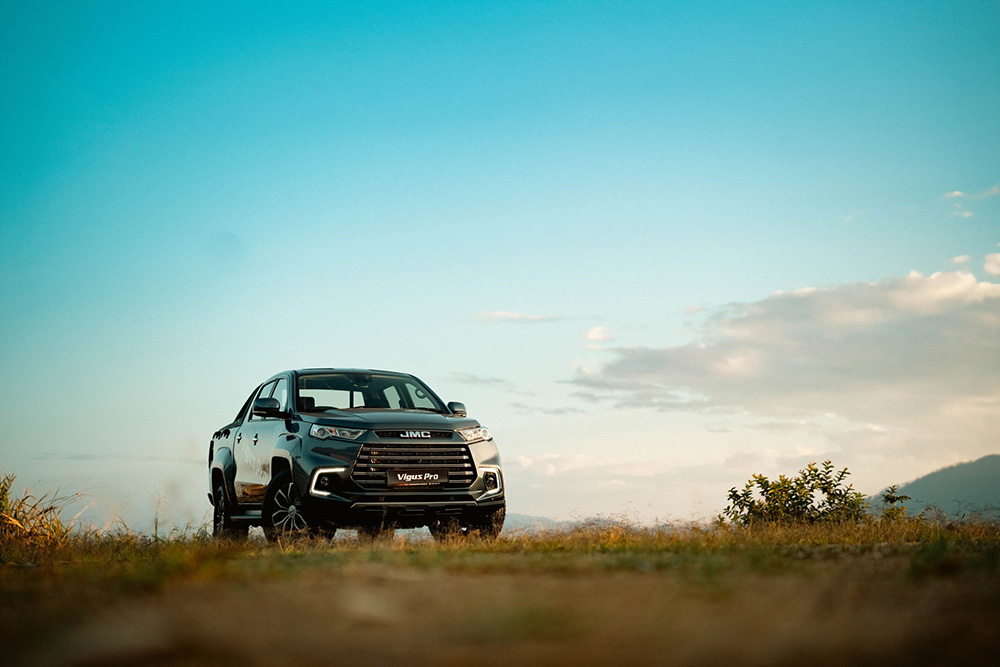
The JMC Vigus is not a new name in the local bakkie market, but its presence in South Africa has been intermittent. Previous attempts to establish the brand were short-lived, despite the product’s proven international roots. With JMC now returning under new local representation, the Vigus is back, positioned as a value-driven offering aimed at rebuilding the brand’s footprint.
My first encounter with the JMC Vigus was in 2016, when the brand’s former local distributors officially introduced this long-serving model in South Africa (it was first launched in China in 2012 to replace the ancient Boarding).
A facelifted version with an uprated engine, called the Vigus 5, was released here in 2019 but importation of this model was discontinued less than three years later. Now, both JMC and the Vigus, is back – this time imported and distributed by Salvador Caetano, a global automotive group with 80 years of experience and operations in 37 countries.
With the reintroduction locally, JMC has undergone a strategic revitalisation, including an initial launch phase with the introduction of the Vigus Single Cab and Double Cab, now available in 4×2 and 4×4 configurations, alongside the Isuzu-derived Carrying Plus with three different body guises, and a plan to roll out 40 JMC dealerships nationwide this year.
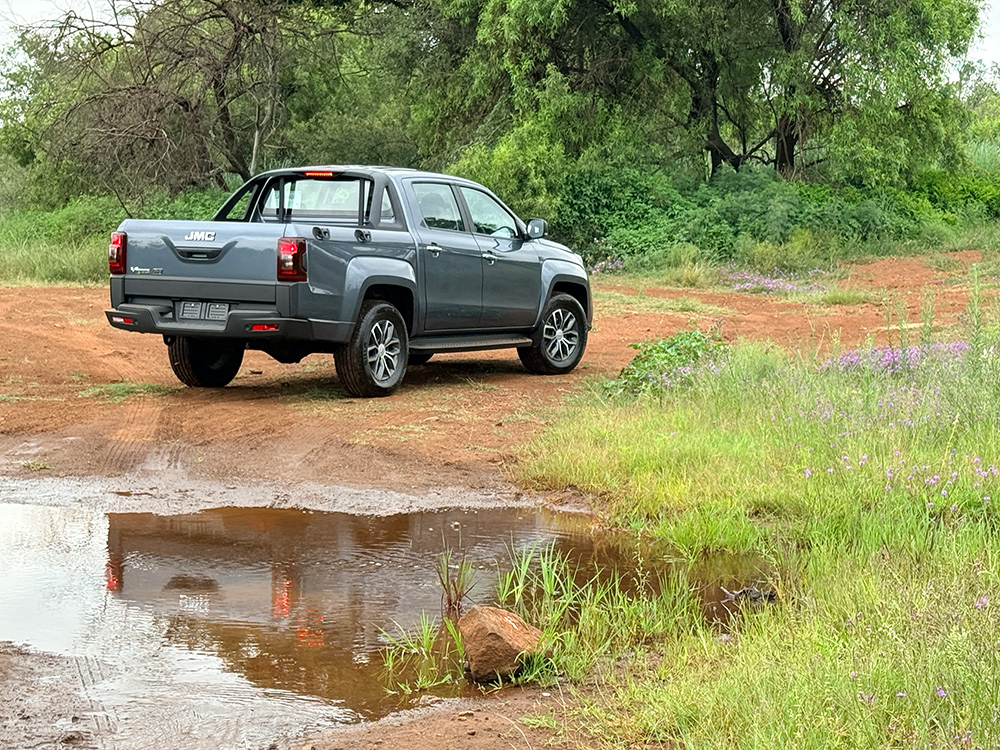
In essence, the latest Vigus range is just a proven recipe reheated – a heavily facelifted version of Vigus 5, now badged the Vigus Pro, with uprated power plants and the choice of an automatic transmission (previously the range was only available with a five-speed manual gearbox).

CARRIED-OVER POWERTRAINS
Two powertrains of Ford origin are offered – a 2.4-litre Puma turbodiesel delivering 103 kW and 310 Nm of torque in the Single Cab model, coupled with a five-speed manual gearbox, and a 2.0-litre Puma turbodiesel rated for 104 kW and 350 Nm of torque in the Double Cab 4×2 and 4×4 derivatives, paired with a Getrag eight-speed automatic transmission.
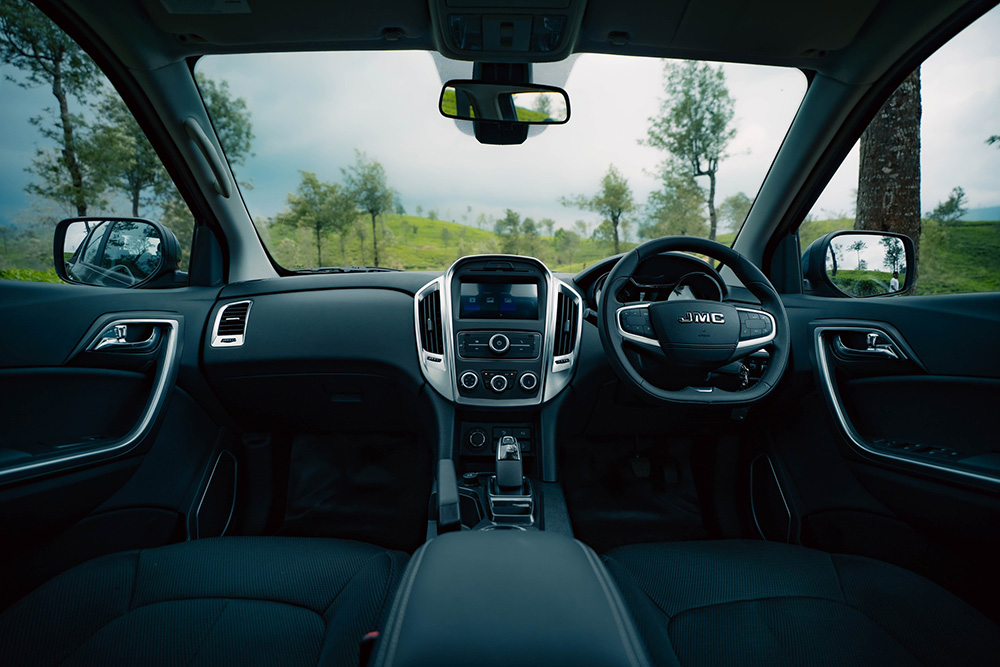
Our Vigus reintroduction included an on-road drive and a short 4×4 route at the Lion and Safari Park in Broederstroom, Gauteng, and, when we got into the 4×4 double cab, we found the same interior and console layout as six years ago, with the same first-gen LCD readout in the driver’s console.
The graphics and picture quality of the 9.7” central touchscreen infotainment system and the integral reverse camera, as found in the double cab models, have been upgraded at least, and the interior material finishes have been modernised but as found way back in the Vigus 5, back seat space is cramped compared to most of its newer double cab rivals.
The familiar sound of the proven and responsive Puma engine was comforting, and the smoothness of the eight-speed auto ’box, with well-chosen gear ratios, elevated the driving experience. The combination with the shift-on-the-fly 4×4 worked well on the off-road track – even though the Vigus has no diff-lock, only traction control and downhill speed control.
The whole package felt solid, though (so it should, given how long this model has been in production…) and the best part is the price, compared to similarly specified equivalents – with the 4×4 model available for under R500,000 and the 4×2 double cab going for R440,000.
At R299,900 (R260,783 without VAT), the Vigus Pro single cab derivative is highly affordable, given its list of specifications compared to the Mahindra Pik-Up 2.2CRDe S4 (R289,249), the GWM Steed 5 2.0 S (R307,950) and the Foton Tunland G7 2.0TD Hi Rider (R329,900).
LAST WORD
With the new Ford Ranger-based JMC Vigus (known as the Baodian in China) expected imminently, the strategy for the current Vigus is clearly to reestablish the JMC brand in the country with highly competitive pricing before introducing the new model. Also highly likely is the introduction of the bigger Dadao bakkie (although it will be named differently here) as flagship in the JMC range.
Report by FERDI DE VOS | Images © FERDI DE VOS / BERNIE HELLBERG JR