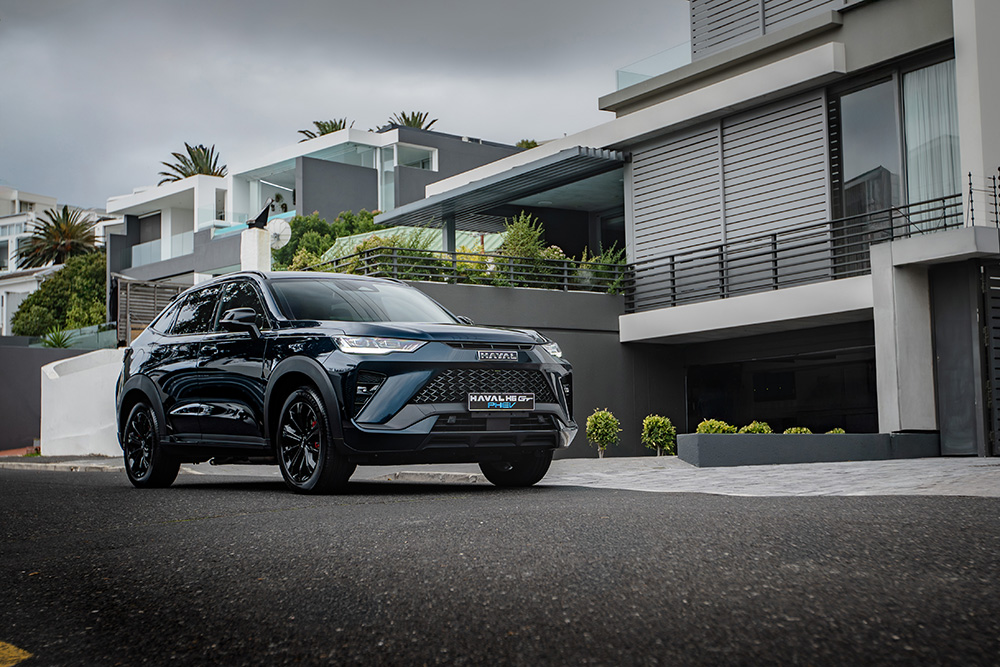
Winter in the Western Cape has a way of laying things bare. And as it happened, the mid-year relaunch of GWM’s updated Haval H6 range in early June came cloaked not in golden light, but cold rain and the kind of sideways wind that tests panel seals and tyre grip. It was, in short, perfect weather to separate the flashy from the fundamentally good.
As one of its most dependable sales offerings from GWM South Africa, the Chinese automaker made sure that, for the update of the Haval H6 and H6 GT, they didn’t just roll out a nip and tuck. On the contrary, a concerted upgrade across the H6 line-up, from smoother drivetrain behaviour to a more refined and European-feeling cabin, has cemented the family SUV’s place as one of the most sought-after in its segment. But, among the refreshed standard H6 models (split between turbo-petrol and hybrid drivetrains), the halo GT derivative is where things get interesting. Especially now that the line-up includes the first-ever plug-in hybrid H6 GT to be sold in South Africa.
FAMILIAR FACES
Let’s get the range positioning out of the way. The standard H6 is now offered in six derivatives, a mix of 2.0-litre turbo-petrol engines in front- and all-wheel drive, and 1.5T hybrid electric variants for the eco-conscious. The GT sub-range, previously a single-model affair, is now two-pronged: the familiar H6 GT 2.0GDIT 4WD Super Luxury remains, but is now flanked by the new 1.5T PHEV GT Ultra Luxury.
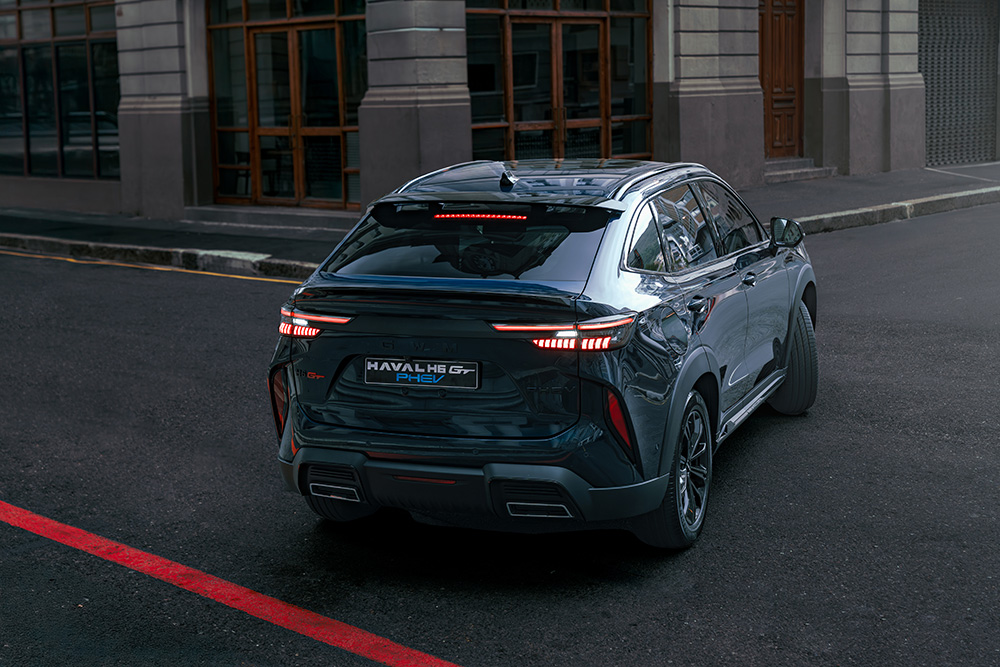
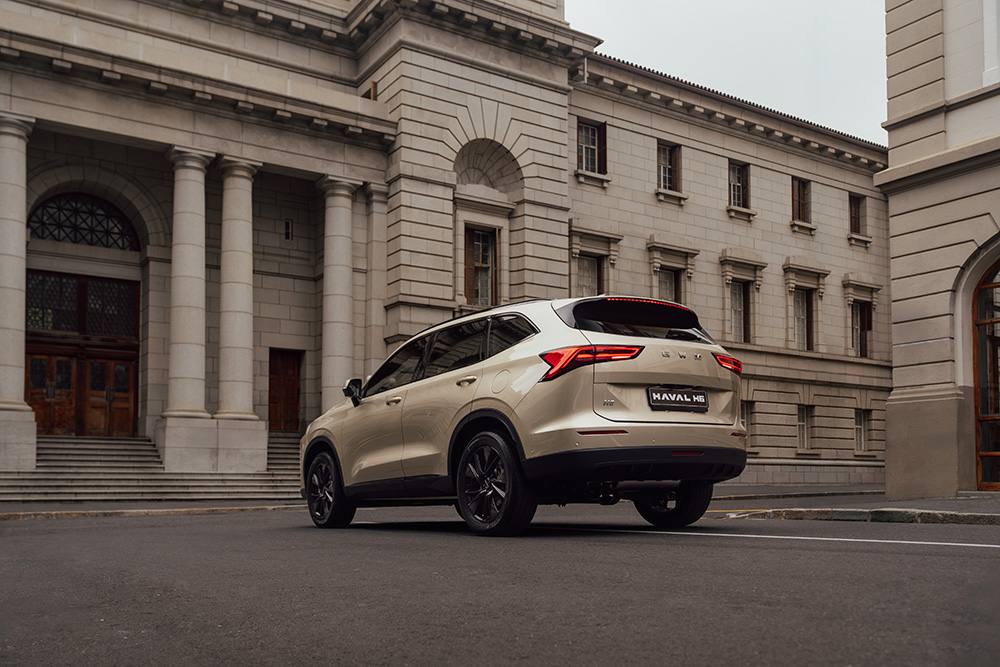
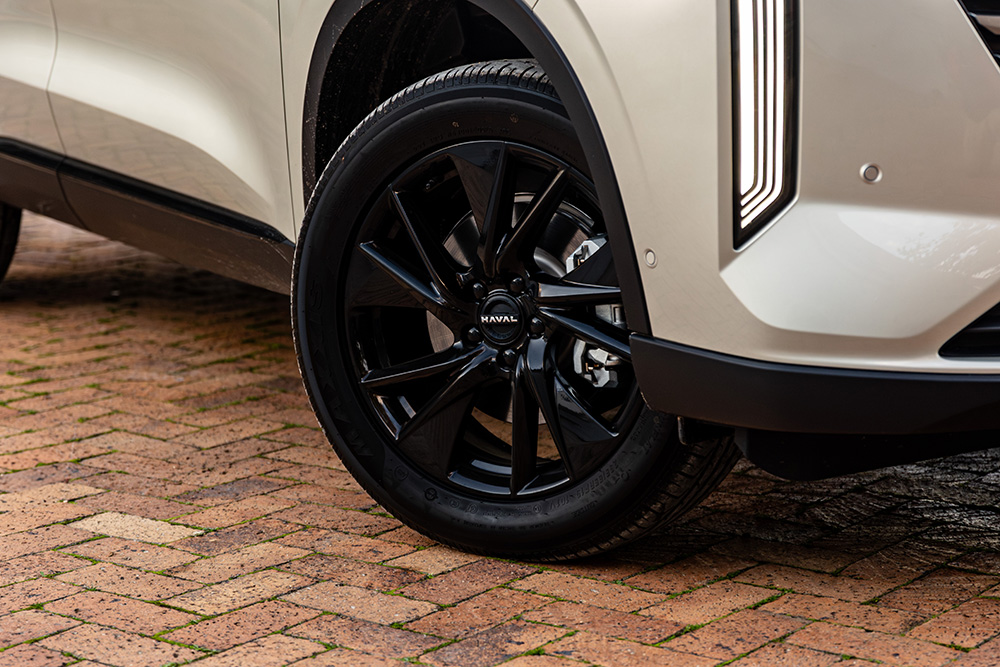
While the core H6 range received an aesthetic refresh with a new grille, sharper bumpers, and upgraded lighting, the GT models retain their distinctively aggressive coupé-style silhouette, 19″ alloys, black cladding and aero-inspired details. That’s because the GT was already updated in late 2024. So if it looks familiar, that’s by design.
But don’t be fooled into thinking the changes are only skin-deep.
HI4 HITS SOUTH AFRICA
The star of the show is the new H6 GT 1.5T PHEV Ultra Luxury, the first plug-in hybrid GWM product launched in South Africa. Under the skin, it debuts GWM’s new Hi4 (Hybrid Intelligent 4WD) system, which was revealed earlier this year at Auto Shanghai, where we had a chance to preview the technology in detail. (See also Driven June 2025 for an in-depth assessment of the technology.)
Hi4 is more than a clever acronym. It’s a twin-motor electric system paired with a turbocharged 1.5-litre petrol engine, all fed by a 35.4 kWh battery. One motor up front, one at the rear, and software smarts that dynamically shuffle torque in milliseconds. The result? Combined outputs of 342 kW and 762 Nm. That’s not a typo. Zero to 100 km/h in a claimed 4.9 seconds. From an SUV that doesn’t look like it’s trying to star in Fast X.
The system is intuitive. Seamless electric takeoff. Silent coasting. And when you do engage all the petrol-electric artillery, the GT doesn’t just move, it launches. More importantly, it does so without the clunky transitions or power surges that plagued early-generation hybrids. Credit must go to the revised drivetrain calibration across the range. Whether you’re driving a 2.0T 2WD, the 4WD petrol, or either hybrid variant, the H6 now feels properly refined. Less surgey. More grown-up.
And yes, that’s also down to the new nine-speed dual-clutch transmission, which plays a major supporting role in the GT’s newfound civility and sharpness. No hunting for gears. Just crisp, measured shifts.
SCANDINAVIAN SOUL ON THE INSIDE
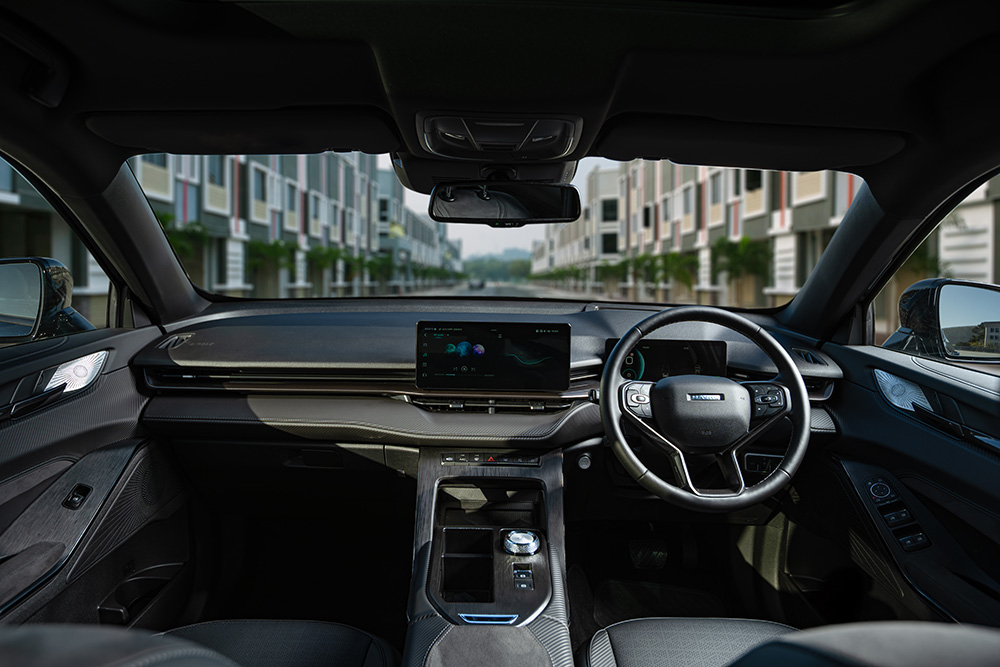
The most noticeable change in the updated H6 is the decluttered dashboard. GWM has gone minimal, and it works. The centre console now floats elegantly with wireless charging tucked neatly underneath. A new floating touchscreen takes centre stage, with climate controls now easier to access, and voice commands more cooperative (if not entirely unflappable when engaged).
The materials impress as well. Soft-touch surfaces where it matters. Stitching that looks and feels premium. Subtle metallic accents that give off strong Audi Q3 vibes. This is no longer the plasticky cabin of H6s past.
The GT models, naturally, dial things up, although they retain the interior layout from the previous generation, including the smaller touchscreen (that’s grown to over 14” in the standard H6). Alcantara on the seats and door inserts. Heated and ventilated sports seats. A sportier flat-bottom steering wheel and suede trim inserts. And in the PHEV GT, added insulation means it’s quiet inside, whether running on electric power only or at mid-throttle on the Franschhoek Pass.
Even during the soggy conditions of our Cape test route, the cabin remained composed and welcoming. Road noise was impressively filtered. The all-wheel drive system stayed confidently on task. You can tell GWM spent time refining not just performance, but comfort.
ON-ROAD AND CHARGING BEHAVIOUR
One of the benefits of the PHEV’s large battery is its sheer usability. GWM claims up to 180 km of electric-only range. While we didn’t get to test that in our launch route, we estimate that around 150 km is the most likely range you’ll achieve before the petrol engine intervenes. That’s solid range for anyone with access to regular charging.
The petrol engine in the PHEV acts more as a generator or range extender than a full-time motivator, especially in EV-first mode. And it’s impressively unobtrusive when it kicks in. The Hi4’s torque vectoring smarts also allow for quick and predictable power application mid-corner, making the H6 GT feel unexpectedly agile despite its two-tonne kerb weight.
Meanwhile, standard features on the GT PHEV include nearly everything GWM could fit in – adaptive cruise control, traffic jam assist, lane centring, blind spot detection, a 360-degree camera, panoramic roof, auto parking, and wireless Apple CarPlay/Android Auto. Frankly, it’s a feature set you’d need to option heavily in most European rivals to match.
PRICING AND POSITIONING
The updated H6 line-up now starts at R495,500 for the 2.0T Luxury, stretching to R799,900 for the GT 1.5T PHEV Ultra Luxury. The 2.0GDIT GT sits below it at R664,950. GWM isn’t playing coy: they’re aiming directly at the premium set. While you might not see a Haval badge in Sandton’s underground valet zones just yet, the brand is clearly laying the groundwork to change perceptions.
Crucially, every model is backed by a seven-year/200,000 km warranty, with the hybrid battery covered for eight years/150,000 km. A seven-year/105,000 km service plan is also included.
LAST WORD
GWM’s progress with the Haval H6 is nothing short of impressive. While the exterior tweaks are evolutionary, the changes under the skin tell a different story. Smoother drivetrain response, better chassis tuning, and a more usable hybrid system. And, in the case of the GT PHEV, genuine high-performance ability blended with electric range and refinement.
This isn’t only a value play anymore, although the points rival some of the best out there. It’s a capable, comfortable, well-sorted SUV that can now credibly stand up to rivals wearing fancier badges and loftier price tags.
If anything, the miserable weather during launch highlighted how resolved the H6 now feels. It shrugged off wind, rain, and slick roads with the kind of quiet confidence that used to be reserved for far more expensive machinery.
Whether you’re ready to believe in a Chinese PHEV SUV with sports car acceleration is another story. But here’s the truth: the new H6 and H6 GT have arrived, and they make a statement that is incredibly hard to deny.
HAVAL H6 PRICING
Haval H6 2.0T Luxury: R495,500
Haval H6 2.0T Luxury 4WD: R574,500
Haval H6 2.0T Super Luxury: R542,500
Haval H6 2.0T Ultra Luxury 4WD: R614,500
Haval H6 1.5T HEV Luxury: R641,500
Haval H6 GT 2.0GDIT 4WD Super Luxury: R665,950
Haval H6 1.5T HEV Ultra Luxury: R686,500
Haval H6 GT 1.5T PHEV 4WD Ultra Luxury: R799,900
Report by BERNIE HELLBERG JR | Images © GWM SOUTH AFRICA