Hyundai has given two of its more practical offerings a timely refresh, with the facelifted Staria and Creta arriving in South Africa with sharper styling, updated technology and, in the Creta’s case, an important new addition to the range.
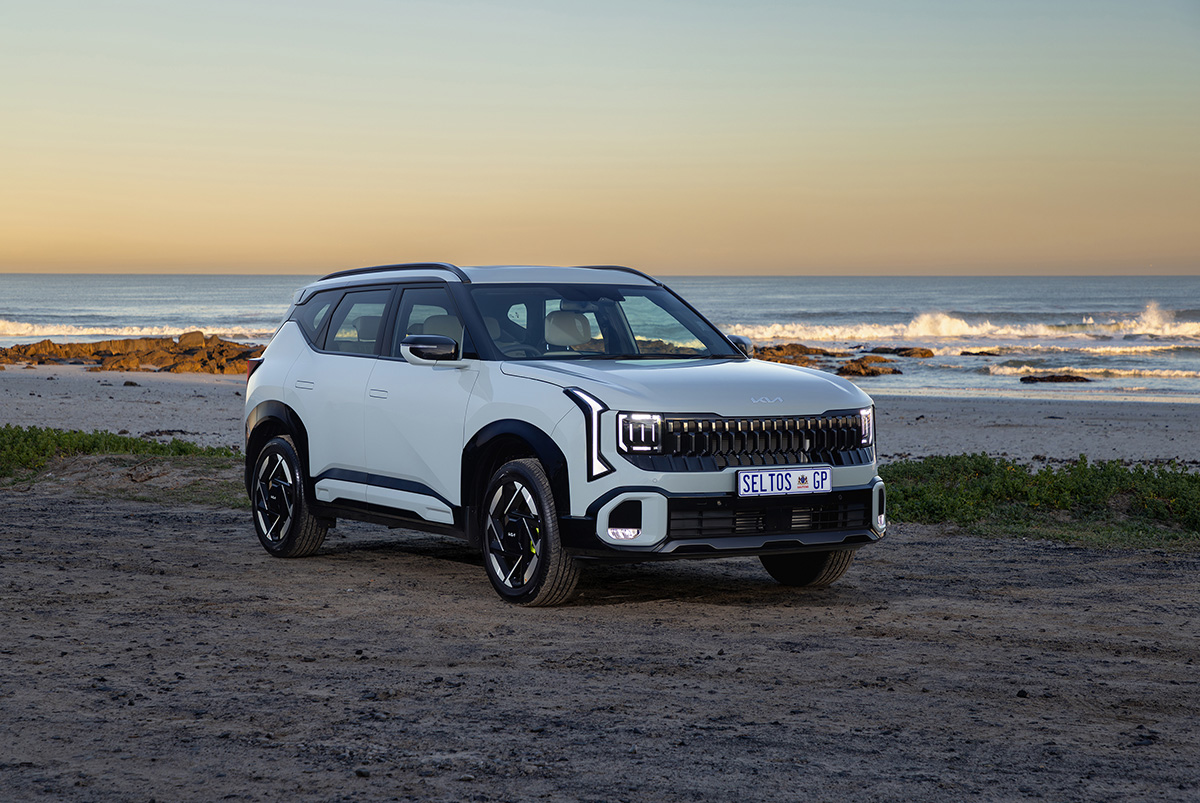
Mid-life refreshes are common in the motor industry, and in the case of the Hyundai Staria and Creta, both vehicles were beginning to show their age against increasingly aggressive competition, although for very different reasons. The Staria’s original design was so futuristic that, ironically, it started to look dated rather quickly. The Creta, meanwhile, had simply been overtaken visually by newer rivals, including its increasingly sophisticated Kia Seltos cousin.
The good news is that Hyundai hasn’t attempted to fix what wasn’t broken.
STARIA: DESIRABLE ONCE MORE
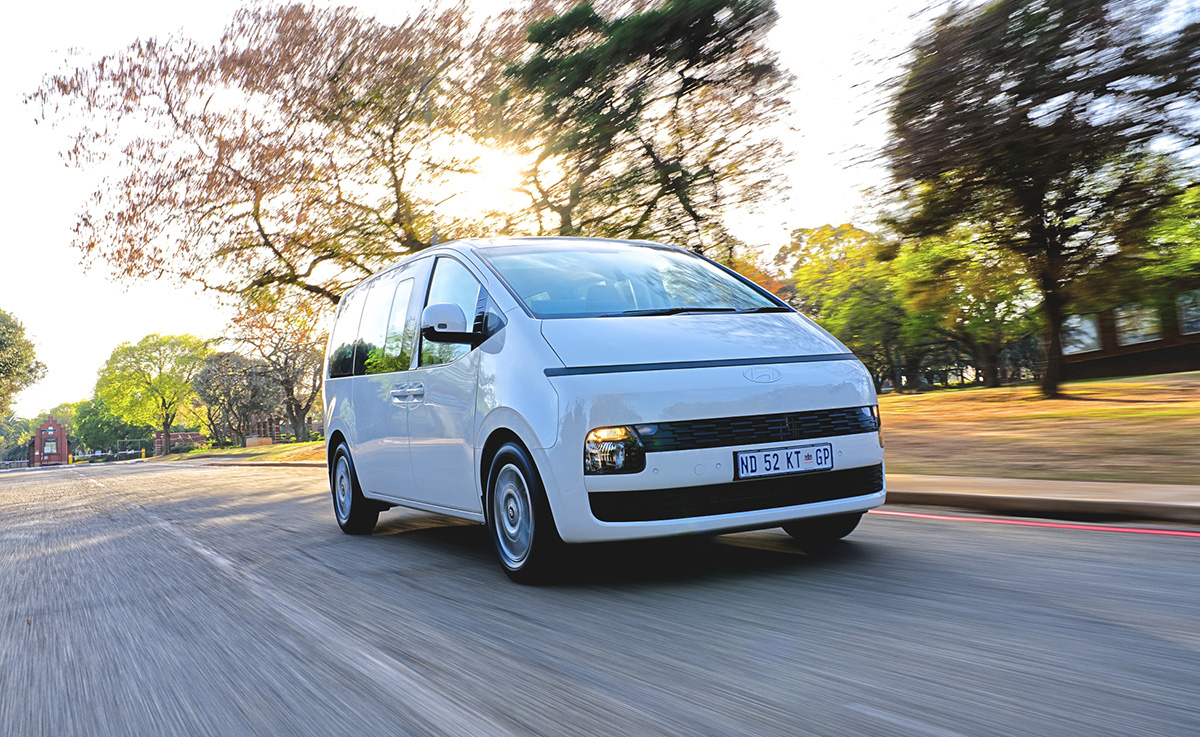
I loved the original Staria when it arrived in South Africa. Its spaceship-inspired styling was a breath of fresh air in a segment traditionally dominated by boxy people carriers, and the combination of space, comfort and Hyundai’s familiar mechanical dependability made it a compelling alternative to the usual suspects. But time hasn’t been entirely kind to that design.
Oddly, there was something almost too futuristic about the Staria when it launched, and that meant it aged surprisingly quickly. The facelift doesn’t fundamentally alter the recipe, but the changes are well judged enough to make the Staria attractive to me again.
The front grille has been revised, the lighting signatures updated, and the rear redesigned with new tail-lamps. Depending on the derivative, there are also new 17- and 18″ alloy wheels. The result is recognisably Staria, but with a little more visual definition.
The bigger changes are inside. The facelift brings a new 12.3″ infotainment display, up from the previous 10.25″ unit, with wireless Apple CarPlay and Android Auto. The instrument display has also grown to 12.3 inches, while the dashboard, steering wheel and centre fascia have been redesigned. A new column-mounted, drive-by-wire gear selector frees up space around the centre console, while additional USB charging points make sense in a vehicle designed to carry a small army of passengers.
Higher-specification derivatives also gain selectable driving modes.
Mechanically, however, Hyundai has sensibly left the Staria alone. The 2.2-litre four-cylinder turbodiesel continues to produce 130 kW and 430 Nm, driving the front wheels through an eight-speed automatic transmission. Hyundai quotes fuel consumption of around 8.0 l/100 km, depending on derivative and conditions.
The local line-up has been rationalised slightly. The five-seat Multicab has disappeared, leaving the three-seat Panel Van and passenger versions comprising the nine-seat Executive, 11-seat Executive, nine-seat Elite and flagship nine-seat Luxury. Pricing now starts at R719,900 for the Panel Van and stretches to R1,324,900 for the Luxury.
And that is perhaps the most important point about the Staria. Those who buy them generally aren’t doing so because they want the latest fashion statement. They buy them because they are comfortable, spacious, powerful enough, relatively frugal and dependable family transporters that will get everyone to the destination with minimal fuss.

CRETA: A MUCH-NEEDED RESET
If the Staria’s problem was that its design was perhaps ahead of its time, the Creta’s problem was almost the opposite. The previous model had become increasingly ordinary-looking as newer competitors arrived.
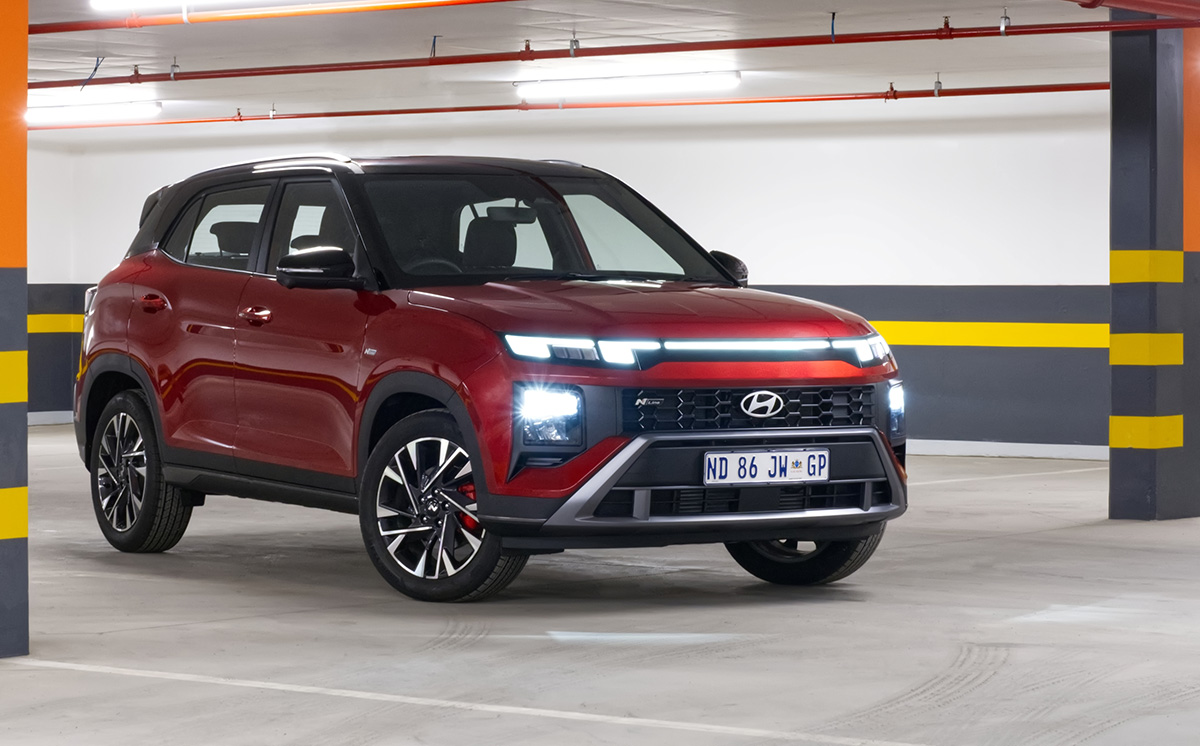
The new Creta adopts Hyundai’s latest design language, with a much more upright and assertive front end inspired by larger models such as the Santa Fe and Alcazar. Slimmer lighting elements and a full-width LED treatment give the front a more contemporary look, while the rear gets similarly styled lamps linked by a horizontal light bar. It is a substantial visual transformation, and one that was needed.
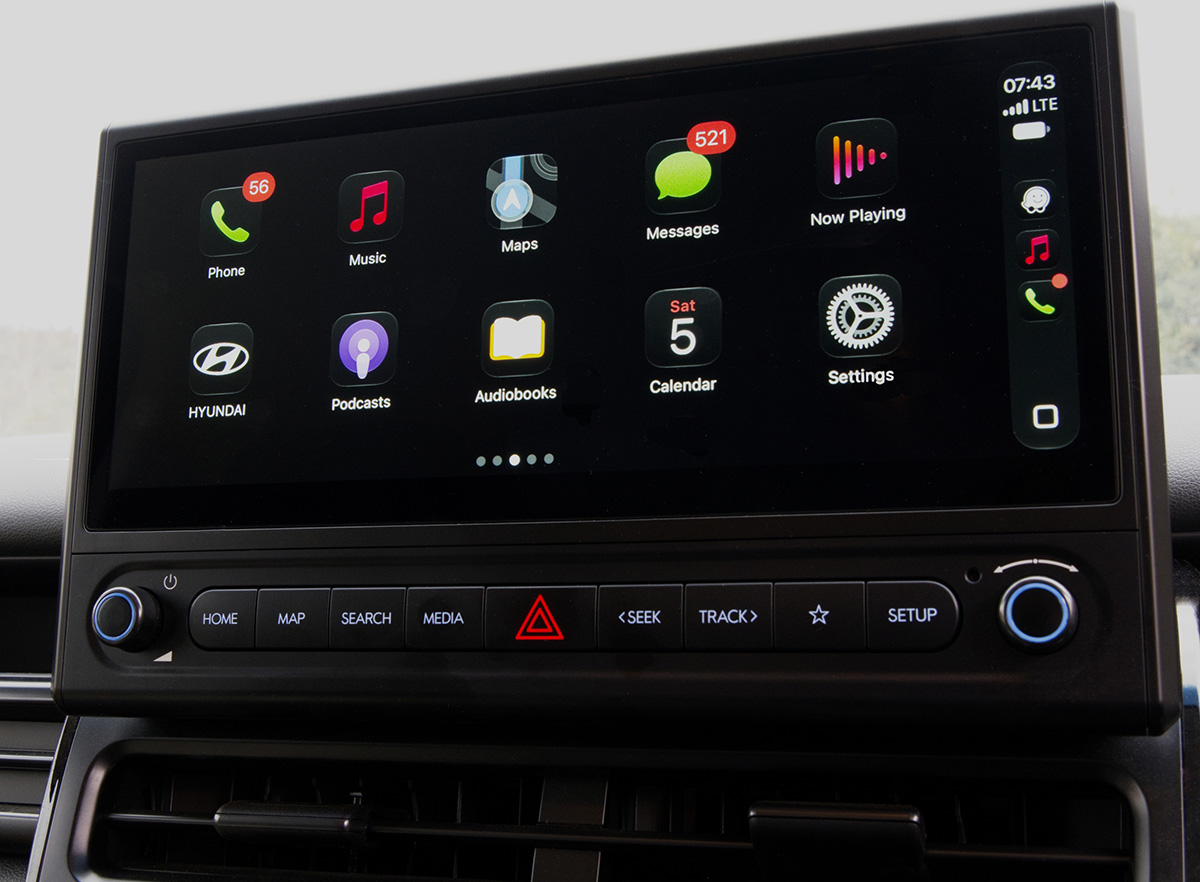
Inside, the changes are less dramatic but still worthwhile, with a revised dashboard, larger displays, updated controls and higher-quality materials. The overall impression is more modern and upmarket, while the Creta’s familiar, practical nature remains intact.
The biggest change to the South African offering, though, isn’t something you can see immediately. It is called N Line.
For the first time, Hyundai South Africa is offering the Creta with a turbocharged petrol engine, bringing some much-needed performance variety to the range. The 1.5-litre turbocharged four-cylinder produces 117.5 kW and 253 Nm, with drive sent to the front wheels through a seven-speed dual-clutch transmission.
The N Line treatment goes beyond an engine upgrade to include 18″ alloy wheels, N Line badging, a roof-mounted spoiler, twin exhaust outlets and sportier exterior. Inside, red stitching, sports seats, steering-wheel-mounted shift paddles and a panoramic sunroof add some visual and tactile differentiation. A Bose sound system is another welcome addition.
It also adds more driver-assistance and convenience tech, including adaptive cruise control, blind-spot monitoring, lane-departure warning, pre-collision avoidance and a 360-degree camera.
The standard Creta retains the naturally aspirated 1.5-litre petrol engine, producing 84 kW and 144 Nm, paired with a CVT. The interesting part is that Hyundai has rationalised the range considerably. The previous Premium manual and Executive IVT derivatives have disappeared, leaving the 1.5 Premium IVT as the entry point alongside the new N Line flagship.
The pricing adjustment is also unusually attractive, with the new Premium IVT retailing for R434,900, which is R45,000 less than the outgoing equivalent. At the other end of the range, the N Line is priced at R569,900.

LAST WORD
There’s a common thread running through these two updated Hyundais. Neither needed a complete rethink. The fundamentals were already sound.
The Staria remains an exceptionally practical people mover, and its facelift concentrates on bringing its design and technology back into line with its considerable strengths.
The Creta’s transformation is more significant. The new styling finally gives it the visual presence it had been missing, while the arrival of the N Line adds an entirely new dimension to the offering. It also means the Creta can now appeal to buyers who want something a little more entertaining without abandoning the practicality that makes this segment so popular.
With the compact SUV market becoming increasingly crowded with capable competitors, including the Kia Seltos, Toyota Corolla Cross, Suzuki Grand Vitara and a growing number of Chinese offerings, the timing of the Creta’s makeover is important.
For the Staria, meanwhile, the formula remains reassuringly familiar. Sometimes, a facelift doesn’t need to reinvent the wheel. It simply needs to remind you why you liked the car in the first place.
PRICING
HYUNDAI CRETA
Hyundai Creta 1.5 Premium: R434,900
Hyundai Creta 1.5T N Line: R569,000
HYUNDAI STARIA
Hyundai Staria 2.2D panel van: R719,900
Hyundai Staria 2.2D Executive 9-seater: R959,900
Hyundai Staria 2.2D Executive 11-seater: R969,900
Hyundai Staria 2.2D Elite: R1,099,900
Hyundai Staria 2.2D Luxury: R1,324,900
Report by BERNIE HELLBERG JR | Images © HYUNDAI SOUTH AFRICA