Chinese brand Jeacoo couldn’t have timed the local introduction of its J5 New Energy Vehicles any better. With petrol and diesel prices rising, NEV sales are soaring, so what better way to display the advantages of the new J5 SHS and BEV models than with a cool road trip across the country.
Local sales of New Energy Vehicles (NEVs) in the first seven months of this year came to 16,289 units – equal to 97.5% of the total NEV sales in 2025 and already surpassing the 15,851 units sold in 2024 – with Hybrid vehicles making up the bulk (8,078 sales) compared to 5,851 Plug-in Hybrids (PHEVs) and 2,360 Battery Electric Vehicles (BEVs) retailed.
It is against this backdrop that Chinese manufacturer Jeacoo introduced its new J5 SHS, closely following the launch of the full-electric J5 BEV, and invited us to undertake an extended road trip from Johannesburg over Clarens in the Free State Province to Durban, KwaZulu-Natal, to experience the long-distance proficiency of the SHS and the advantages of the BEV.
The Chery affiliate entered the local market nearly three years ago with the J7, and since then the brand’s popularity has skyrocketed, with 2,771 Jeacoos sold from January to July this year. According to Lightstone Auto, the J5 accounted for 1,935 of the sales, and the J7 for 836.
Jaecoo achieved its highest monthly sales figure in July, with 481 units retailed, consisting of 367 J5s and 114 J7s. These sales were achieved before the introduction of the new J5 SHS and J5 BEV derivatives, and although the J7, with its Land Rover Evoque-ish styling, established the brand here, the J5 – in reality a smaller version of the J7 – is now the brand’s top seller. With the growth of NEV sales, the introduction of the J5 SHS and J5 BEV variants (the first full-electric model from Jaecoo locally) is timely.
Splendid Performance
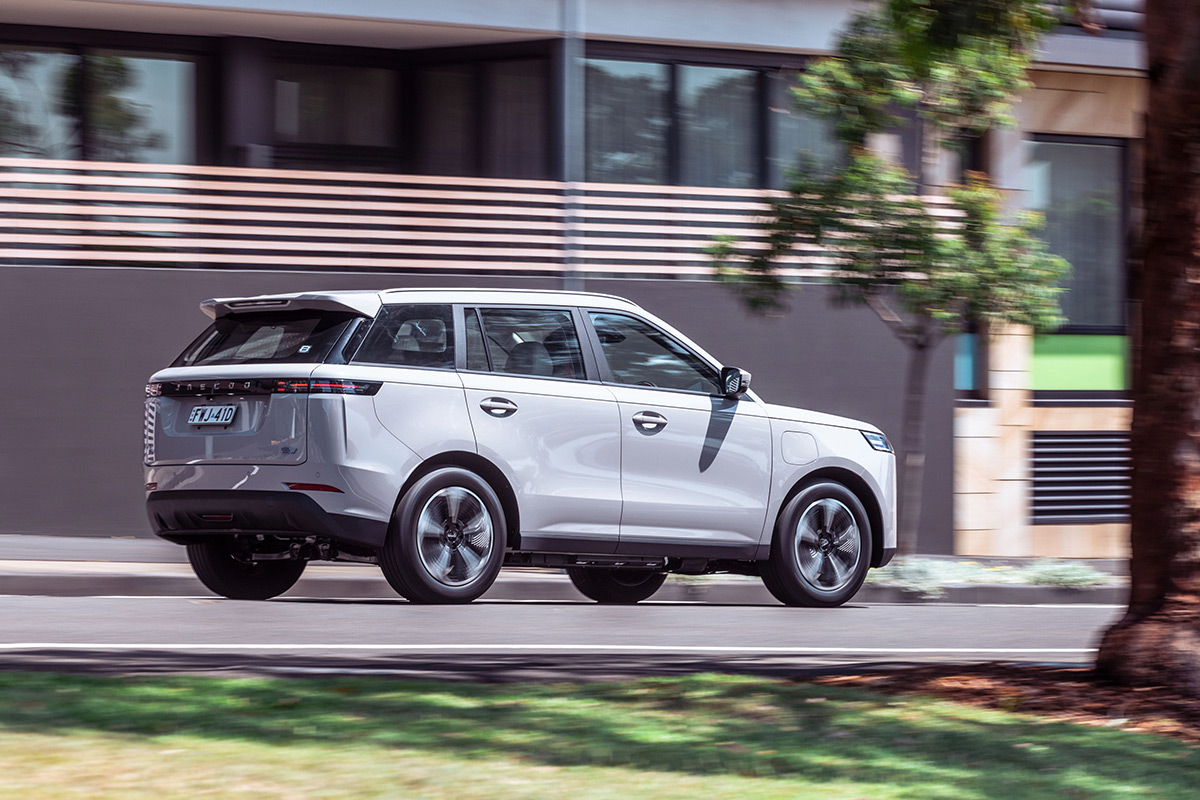
A fleet of J5 SHS SUVs awaited us at Omoda & Jaecoo’s headquarters in Bryanston, Johannesburg. Externally, there are no discernible styling differences between the HEV and the petrol model, except for a blue J5 badge and hybrid insignia at the rear.
However, under the bonnet the turbocharged 1.5-litre engine is coupled with an electric motor and 1.83 kWh battery for a combined power output of 165 kW and 295 Nm of torque – and making our way down the N3 highway towards the Free State Province, it was clear the smaller Jeacoo model possessed performance equal to, if not better than, its J7 PHEV stablemate (255 kW/525 Nm).
Even with 90 kW less, the J5 SHS cruised comfortably on the open road in Eco mode, and the extra power surge from the electric motor made overtaking slower traffic a breeze (the convoys of trucks on the N3 are a nightmare). Jaecoo quotes a zero to 100 km/h acceleration time of 7.9 seconds (and a 170 km/h top speed) compared to 8.4 seconds (as tested) for the J7 SHS (and a top speed of 180 km/h).
This impressive performance is mostly due to the J5’s weight advantage over the bigger, heavier J7. However, its range is less: Jaecoo claims 980 km on a single tank of fuel (with an average consumption of 5.3 litres/100 km) versus around 1,200 km for the J7 SHS.
Excellent consumption
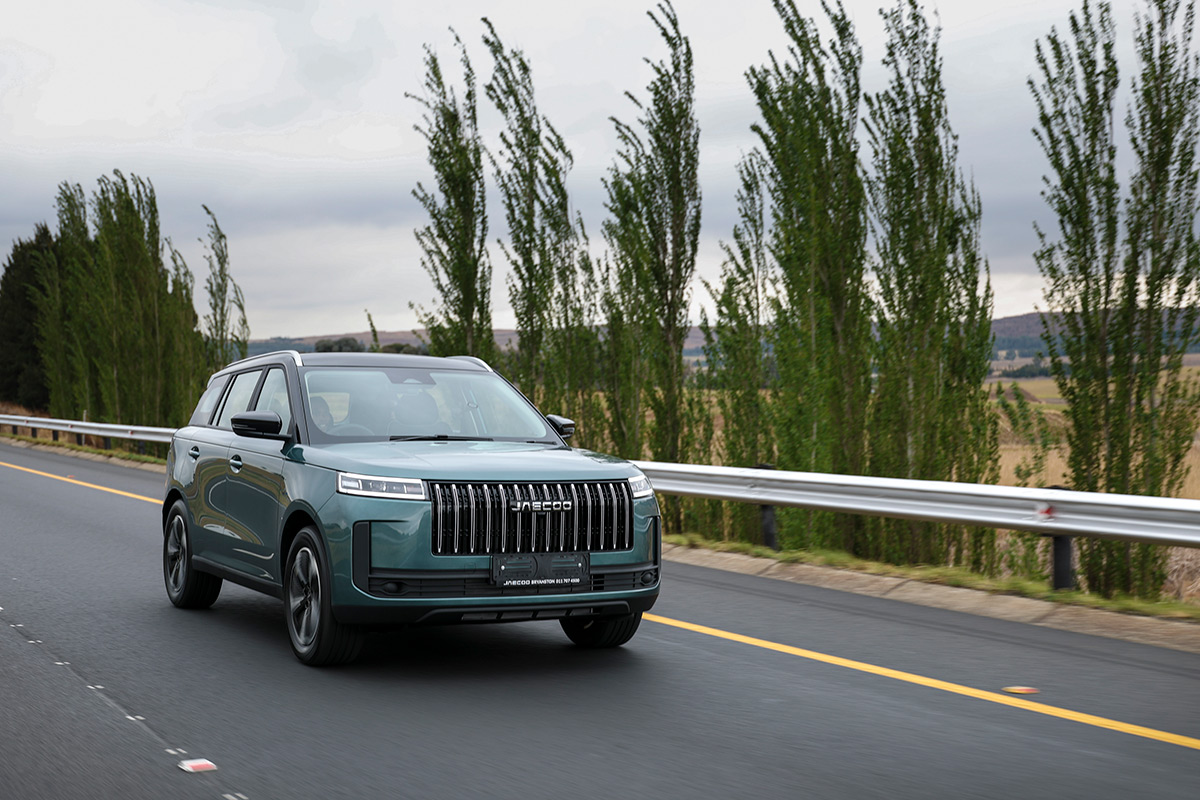
Well, up to Clarens – a distance of 400 km at an average speed of around 90 km/h – our consumption was about 5,9 litres/100 km, and from there, on the picturesque route through Golden Gate and past the Sterkfontein Dam to the Royal Natal National Park, it dropped to 5,4 litres/100 km (granted, at a lower average speed).
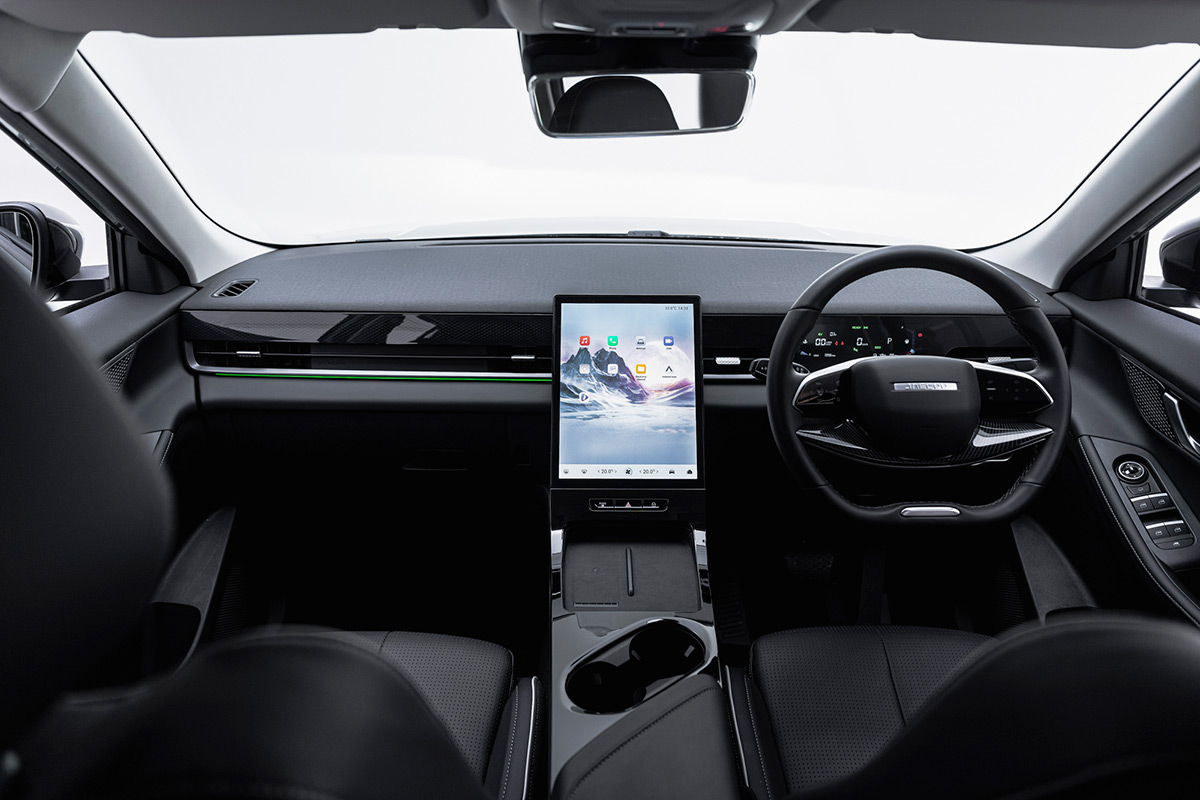
Compared to most of its Chinese sports utility competitors, the interior design of the J5 is tastefully minimalistic and unpretentious, with a vertically mounted 13.2” touchscreen that dominates the dash. The black leather-clad seats proved very comfortable on the long journey, and the quality sound from the six-speaker system made it even more pleasant.
With double-zone climate control, a big moonroof with power screen, multi-colour ambient lighting, various power sockets and charging points, a practical luggage compartment (410 litres, extendable to 1,214 litres with the rear seats folded away), a powered tailgate, numerous active and passive safety systems, as well as driver assist systems, the J5 SHS offers everything buyers would expect from a classy compact SUV.
However, the lane-keep assist system is oversensitive (we immediately switched it off), the voice control sometimes activates randomly, and you need patience to use some of the amenities via the touch screen. We also found that the J5 is perhaps too firmly sprung for our road conditions, causing the vehicle to tramline over undulations, especially on dirt roads.
Even so, the front-wheel-drive SUV feels solid on the road, exhibiting slight tendencies to understeer in corners, and the steering was accurate, although with a somewhat light and artificial feel.
All this, as well as its less extravagant exterior and interior design, excellent fuel efficiency and competitive price (R459,900, including an extensive warranty and service plan) makes the J5 SHS a compelling proposition – compared with the Chery Tiggo Cross CSH Elite (R469,900), the Omoda C5 SHS (R479,900), the Toyota Corolla Cross HEV XS (R506,100) and the Haval Jolion Pro HEV (R519,950).
FULL-EV ALTERNATIVE
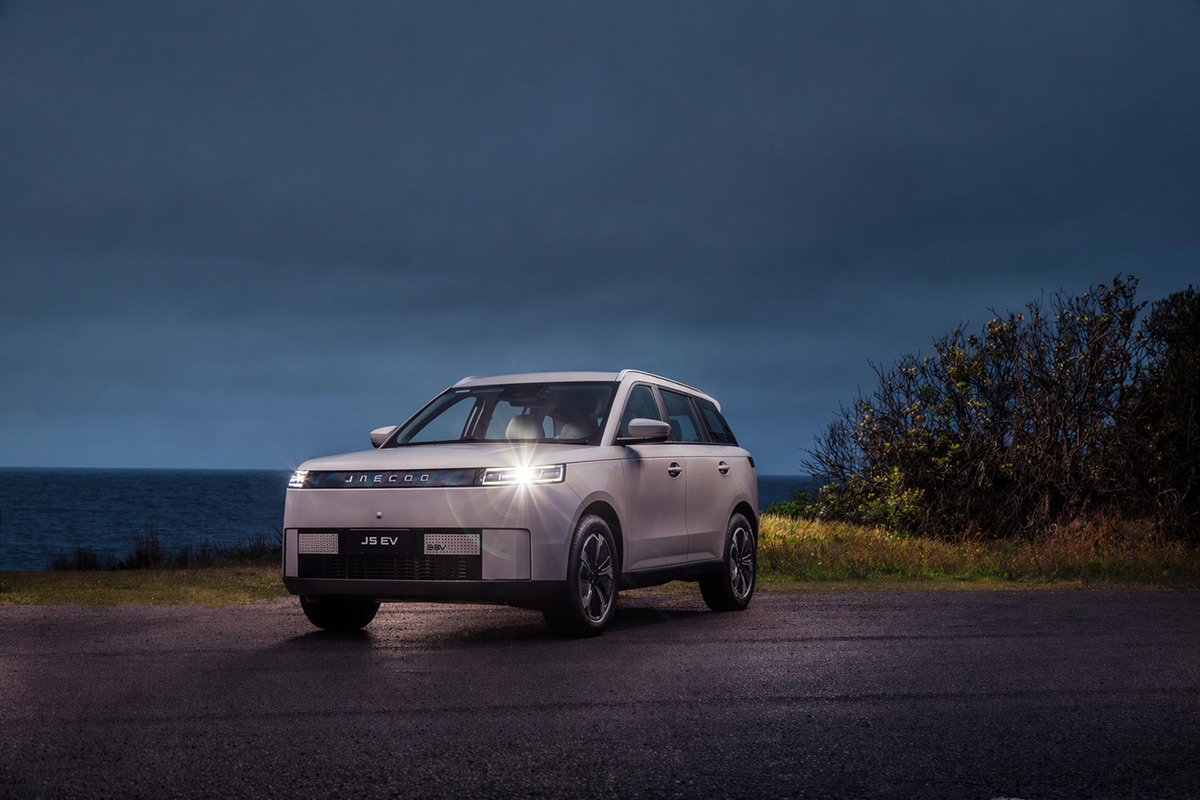
After an enjoyable evening and overnight stay in a specially erected tent camp inside the national park, we embarked on a journey to Durban in the full-electric J5 model the next morning. Externally, the BEV is easily distinguishable from the other J5 variants, and inside, white leather upholstery is an option. Although attractive, this option will likely not be practical over time.
Powered by a 58.9 kWh battery and an electric motor with a combined output of 155 kW and 288 Nm of torque, the J5 BEV has performance comparable to that of the SHS BEV (7.7 seconds from zero to 100 km/h and a top speed of 175 km/h). However, the power surge from the electric motor is much more linear in this model.
Understandably, the cabin is also quieter, but the BEV’s range is limited to a claimed 402 km in the WLTP cycle, which translates to a realistic usage number between 320 and 350 km in most cases. Recharging with an 11 kW AC charger or 130 kW DC charger from 30% to 80% will take about half an hour, according to Jaecoo.
The BEV is equipped with all the amenities, systems and accessories found in the SHS, but it has some extra storage space in the frunk, and as it is based on the normal J5, the electric version (thankfully) comes with a spare tyre, even though it is a space saver.
The EV version, available from R549,900 (including a 7 kW home charger and other benefits), impressed with its quiet, powerful drive and acceptable ride quality, yet range is a problem – due to the underdeveloped charging infrastructure in the country. Therefore, with range, spec level, and price in mind, the HEV derivative, is, in our view,, the best option.
Report by FERDI DE VOS | Images © O&J SOUTH AFRICA/FERDI DE VOS