The new Haval H7 has sharpened its looks, upped its cabin game and added a powertrain line-up that makes a compelling case for GWM’s Go With More philosophy. From capable turbo-petrol models to punchy plug-in hybrids, there is plenty to like, but the self-charging HEV hits the sweet spot, blending performance, efficiency, and value in a stylish, well-built SUV.
The second-generation Haval H7 arrives in South Africa with a more sophisticated look, a better-resolved cabin and a powertrain line-up that gives buyers considerably more choice. The outgoing model was hardly short on character, but this latest iteration feels more mature, retaining its rugged SUV appeal while adding a welcome layer of elegance. I am particularly impressed by the self-charging hybrid, which combines useful performance with promising fuel economy at a competitive price. With improved build quality, generous standard specifications, and a choice of petrol, hybrid, and plug-in hybrid powertrains, the new H7 makes a persuasive case in South Africa’s increasingly competitive family SUV market.
MORE POLISHED CHARACTER
The H7 has had a remarkably short first innings in South Africa. The original model arrived in early 2025, derived from the Haval Big Dog sold in China. Its replacement is based on the Raptor, also known as the Menglong in certain markets, making this a substantially revised proposition rather than a routine facelift.
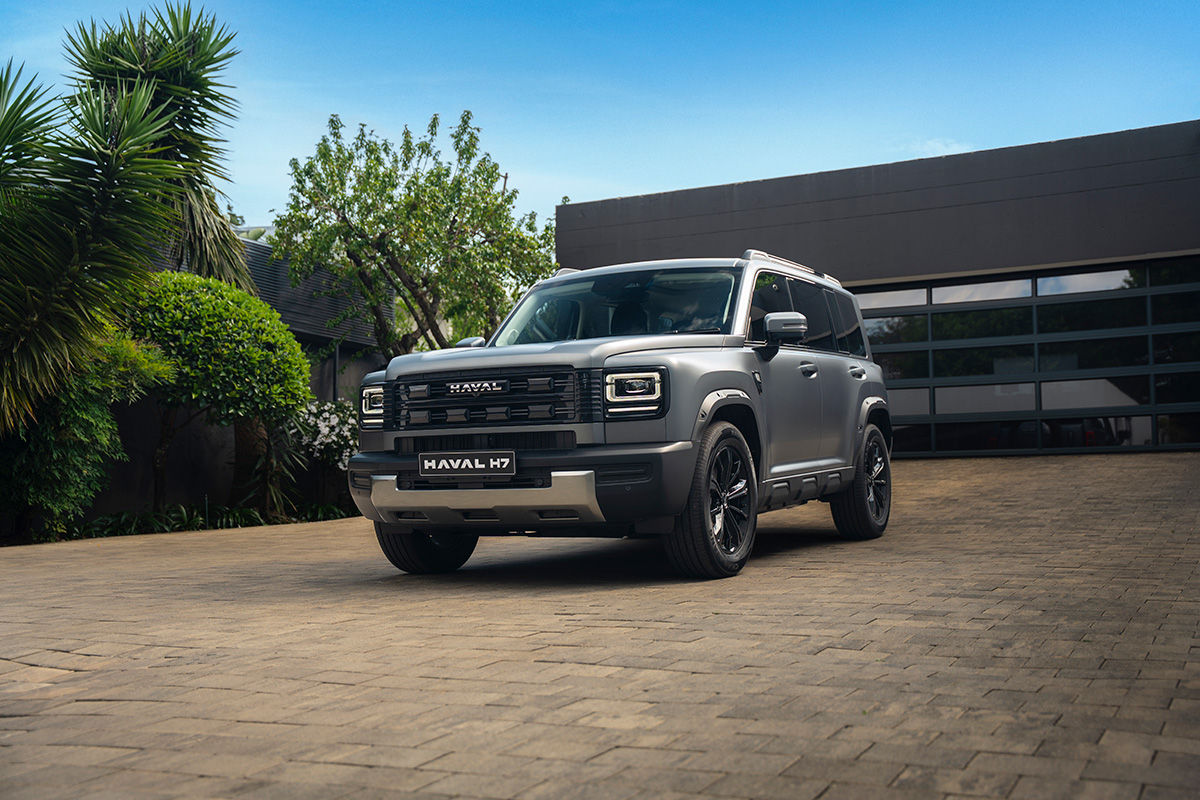
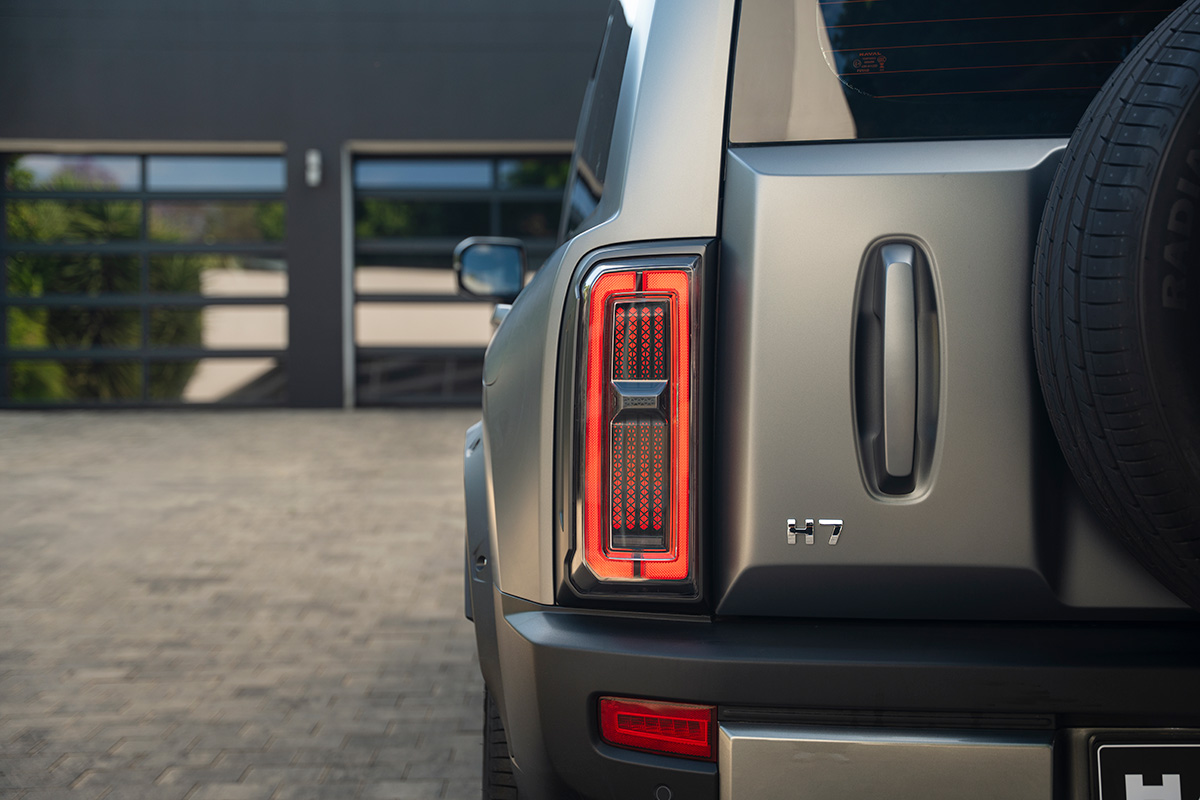
The original H7 had plenty of personality, although its unconventional styling was always going to divide opinion. The new car retains the upright proportions, squared-off bodywork, and outdoorsy character, but the designers seem to have spent more time refining the details than adding visual muscle.
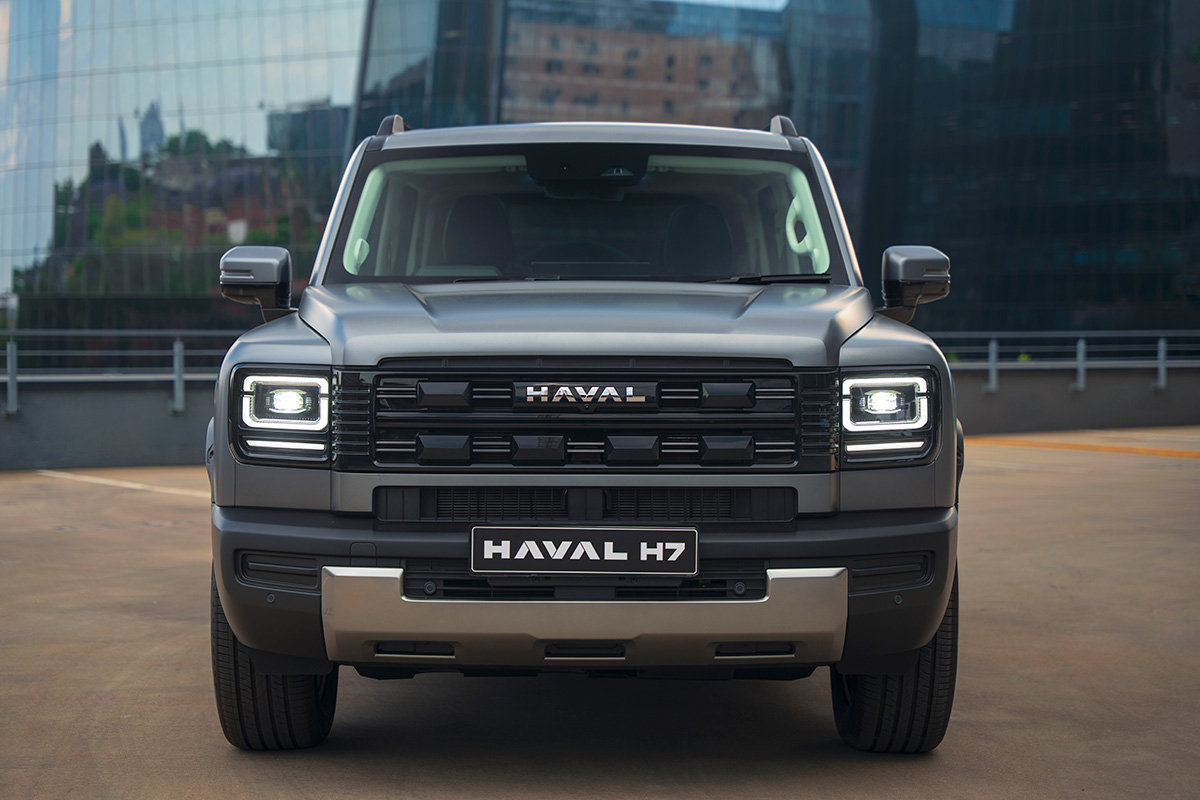
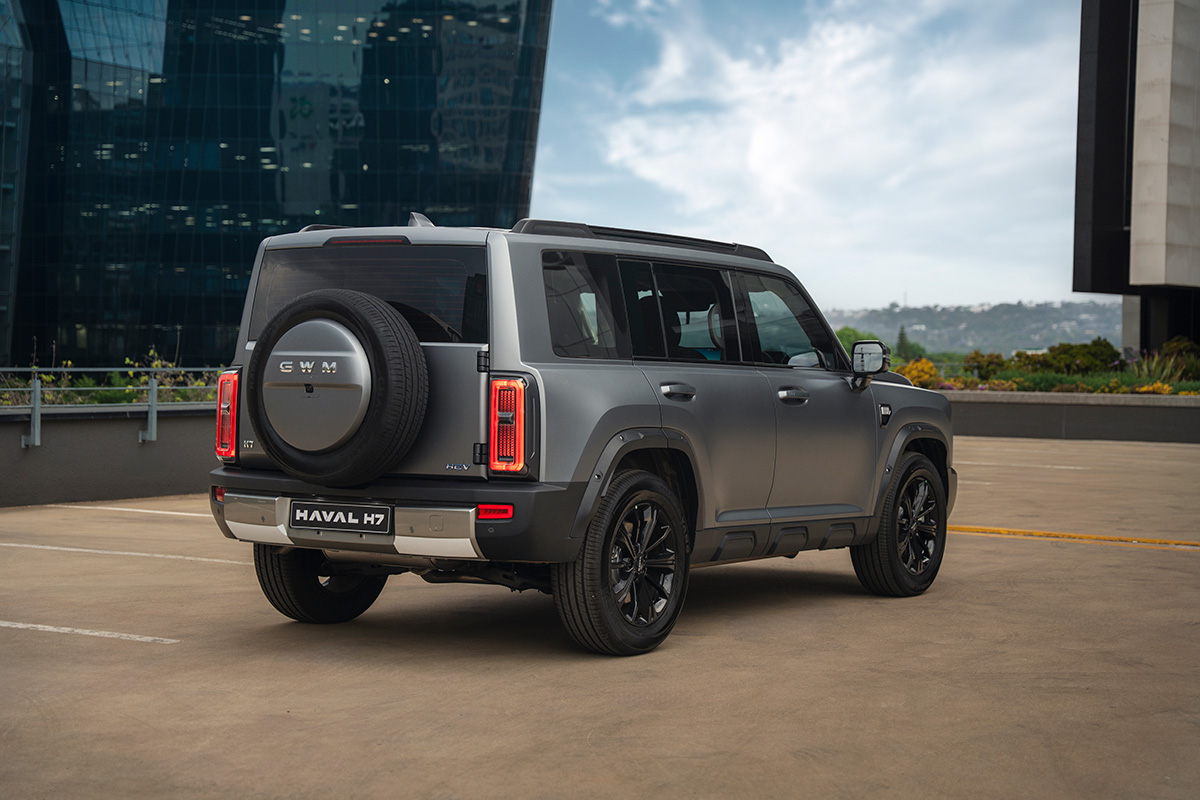
I like the result. The new H7 is noticeably more elegant, with a cleaner front end, more cohesive lighting details and a silhouette that looks purposeful without trying too hard. It still has the visual confidence of an SUV that wouldn’t look out of place at a mountain lodge, but the design has a sophistication that was less evident before.
The dimensions reinforce its substantial presence. At 4,800 mm long, 1,950 mm wide and 1,843 mm tall, the new H7 is 95 mm longer, 42 mm wider and 63 mm taller than its predecessor. Its 2,738 mm wheelbase is actually 72 mm shorter, a reminder that a new generation doesn’t necessarily mean every measurement increases.
What matters more is how the proportions come together. The H7 looks bigger and more imposing, yet less cumbersome. That is a difficult balance to strike in a boxy SUV, and GWM has done a good job of it.
WELL RESOLVED INTERIOR
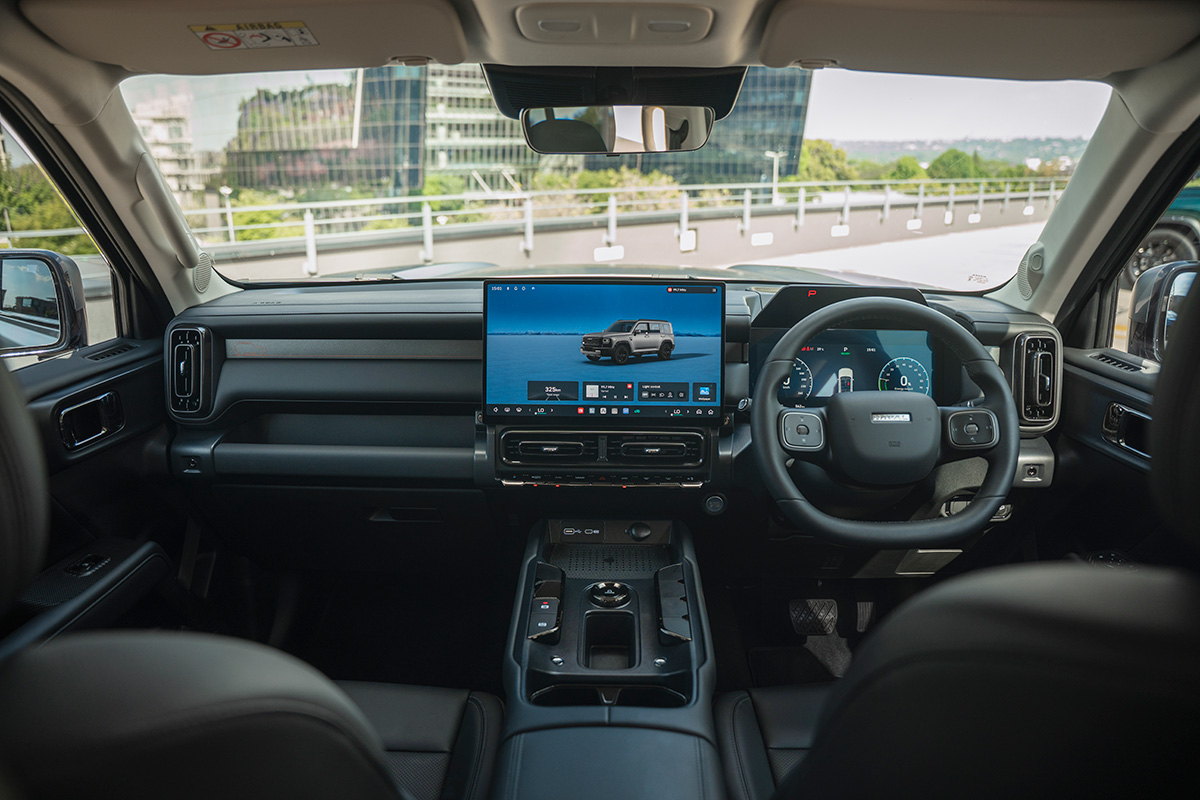
The improvements continue inside, where the H7 feels like a convincing premium offering. Material selection, fit and finish, and overall build quality make a positive impression, and the cabin feels more expensive than its price tag suggests. The exterior assembly quality is equally noticeable, reinforcing the impression that GWM has paid a fair amount of attention to the details.
The dashboard is dominated by a 15.6″ infotainment touchscreen, complemented by a 12.3″ digital instrument cluster. Super Luxury models feature wireless Apple CarPlay and Android Auto, wireless smartphone charging, dual-zone climate control, and an eight-speaker audio system. A panoramic sunroof and electrically adjustable driver’s seat are also standard across the range.
The Ultra Luxury derivatives add heated and ventilated front seats, a heated steering wheel, a head-up display and a 10-speaker sound system. The flagship plug-in hybrid goes a step further with additional electric adjustment for the front passenger seat.
There is a small caveat. As is increasingly common in modern vehicles, the touchscreen handles much of the car’s functionality. It looks neat and keeps the dashboard uncluttered, but some functions are easier to operate with a physical button than by navigating a screen. The pursuit of a minimalist cabin should not come at the expense of usability.
Space is good, too. The H7 remains a five-seater, with a 586-litre boot that expands to 1,404 litres when the 60:40-split rear seats are folded. The side-opening tailgate houses a full-size spare wheel, a practical touch that will be appreciated by anyone who spends time travelling beyond the suburbs.
THREE WAYS TO POWER
One of the H7’s most significant changes is its powertrain choice. The South African line-up comprises six derivatives, spanning conventional turbocharged petrol, self-charging hybrid and plug-in hybrid configurations.
The entry-level 2.0T models use a 2.0-litre turbocharged petrol engine producing 170 kW and 380 Nm, paired with a nine-speed dual-clutch transmission. Front-wheel drive is standard, while the Ultra Luxury derivative is also available with four-wheel drive.
Claimed fuel consumption is 8.0 l/100 km for the 4×2 and 8.8 l/100 km for the 4×4. These versions can tow up to 2,000 kg braked, making them sensible choices for buyers who need a family vehicle that can also haul a trailer or recreational equipment.
The conventional petrol models remain a straightforward option for those who prioritise familiar technology and towing ability. However, the electrified derivatives add another dimension to the range, particularly for buyers looking to balance performance with running costs.
HYBRID HITS THE SPOT
The H7 1.5T HEV pairs a 1.5-litre turbocharged petrol engine with an electric motor and a 1.53 kWh battery. Combined outputs are 182 kW and 540 Nm, delivered through a dedicated hybrid transmission to the front wheels.
GWM claims fuel consumption of 5.3 l/100 km, with zero to 100 km/h taking a claimed 8.6 seconds. Those are appealing numbers for an SUV this size, especially given the torque on offer.
This is the derivative that interests me most. It offers a convincing blend of performance, efficiency and affordability without asking owners to change their daily routines. You don’t need to plug it in, plan charging stops, or worry about whether the next destination has a charging station. The battery charges through the hybrid system, including regenerative braking, while the electric motor assists the petrol engine when needed.
At R624,900, the HEV costs R30,000 more than the entry-level petrol model. That is a relatively modest premium for the additional torque and lower claimed fuel consumption. Real-world results will vary with traffic, driving style and route, but the official figures make an attractive starting point.
For buyers who spend plenty of time in urban traffic yet still need a capable long-distance family SUV, the HEV strikes a particularly sensible balance. It delivers the benefits of electrification without the added considerations of a plug-in vehicle.
PLUG IN FOR PERFORMANCE
For those who want to go further with electrification, the H7 PHEV models offer a larger 23.7 kWh battery and a claimed electric-only range of up to 130 km in the front-wheel-drive derivative. The all-wheel-drive flagship claims an electric range of 115 km.
The front-wheel-drive PHEV produces 240 kW and 540 Nm, while the flagship 4×4 raises those figures to 280 kW and 670 Nm. The latter is claimed to go from 0 to 100 km/h in 5.8 seconds. That is brisk enough to make this practical family SUV feel rather more enthusiastic than it looks, although flattening the accelerator did send the front wheels scrambling for grip on more than one occasion.
Both plug-in hybrids offer vehicle-to-load functionality, allowing the battery to power compatible external equipment. The flagship combines its additional electric motor with four-wheel drive and the more comprehensive Ultra Luxury specification.
Prices start at R734,900 for the PHEV Super Luxury and rise to R794,900 for the Ultra Luxury 4×4. The R170,000 gap between the entry-level petrol model and the flagship PHEV is substantial, so buyers should consider how often they will charge the battery and how much driving they can complete on electric power alone.
For owners who can charge at home and regularly complete shorter journeys, the PHEV could make a great deal of sense. Those who cannot charge consistently may find it harder to justify the premium, despite the impressive performance on offer.
RUGGED CREDENTIALS
The H7’s rugged styling is backed by some useful hardware. Ground clearance is 210 mm, while the claimed wading depth is 580 mm. Approach and departure angles of 25 and 32 degrees, respectively, should help when the road becomes a little less civilised.
The four-wheel-drive petrol model uses an electronically controlled all-wheel-drive system, while the flagship PHEV employs GWM’s Hi4 arrangement (with electric motors driving the front and rear axles). Both four-wheel-drive configurations include an electronically locking rear differential and terrain modes for conditions such as sand, mud, grass, or gravel.
That should be enough for gravel-road driving, slippery surfaces, and moderate off-roading. It is worth remembering, though, that the H7 is a unibody construction, not ladder-frame like its more rugged ladder-frame Tank 300 stablemate.
Safety equipment is comprehensive, with six airbags, a 360-degree camera system incorporating a transparent chassis view, front and rear parking sensors, adaptive cruise control, autonomous emergency braking, lane-keeping assistance and forward collision warning. Ultra Luxury models add blind-spot monitoring, rear cross-traffic alert and braking, and a door-opening warning system.
VALUE PROPOSITION
The H7 range starts at R554,900 and tops out at R794,900, placing it in a competitive part of the South African SUV market. The entry price is lower than the outgoing range, which started at R604,950, and the new line-up expands from three derivatives to six.
That broader offering is important. Buyers can choose a conventional petrol engine, a self-charging hybrid, or a plug-in hybrid, with different performance and equipment levels to suit their needs. Rather than forcing everyone towards one powertrain, GWM has given the H7 a more flexible appeal.
The ownership package adds further reassurance. Buyers receive a seven-year/200,000 km vehicle warranty, a seven-year/75,000 km service plan and seven-year/unlimited-kilometre roadside assistance. Electrified models also benefit from an eight-year/150,000 km battery warranty.
For buyers weighing up a newer entrant against established rivals, that level of support is a useful part of the equation. Combined with the H7’s equipment levels and improved cabin quality, it strengthens the overall value proposition.
LAST WORD
The second-generation Haval H7 feels like a meaningful step forward. It retains the rugged character that made the original distinctive, but wraps it in a more elegant design and a cabin that feels increasingly competitive with established players.
That said, it is not without its compromises. The touchscreen-heavy interface could be more intuitive, and real-world fuel consumption depends on how and where you drive. But those are relatively small reservations in a package that gets plenty right.
The broader range is one of its greatest strengths. The petrol models offer a sensible entry point, while the PHEVs deliver impressive performance and the flexibility of electric driving. Overall, the H7 combines generous equipment with a convincing sense of quality.
Report by BERNIE HELLBERG JR | Images © GWM SOUTH AFRICA