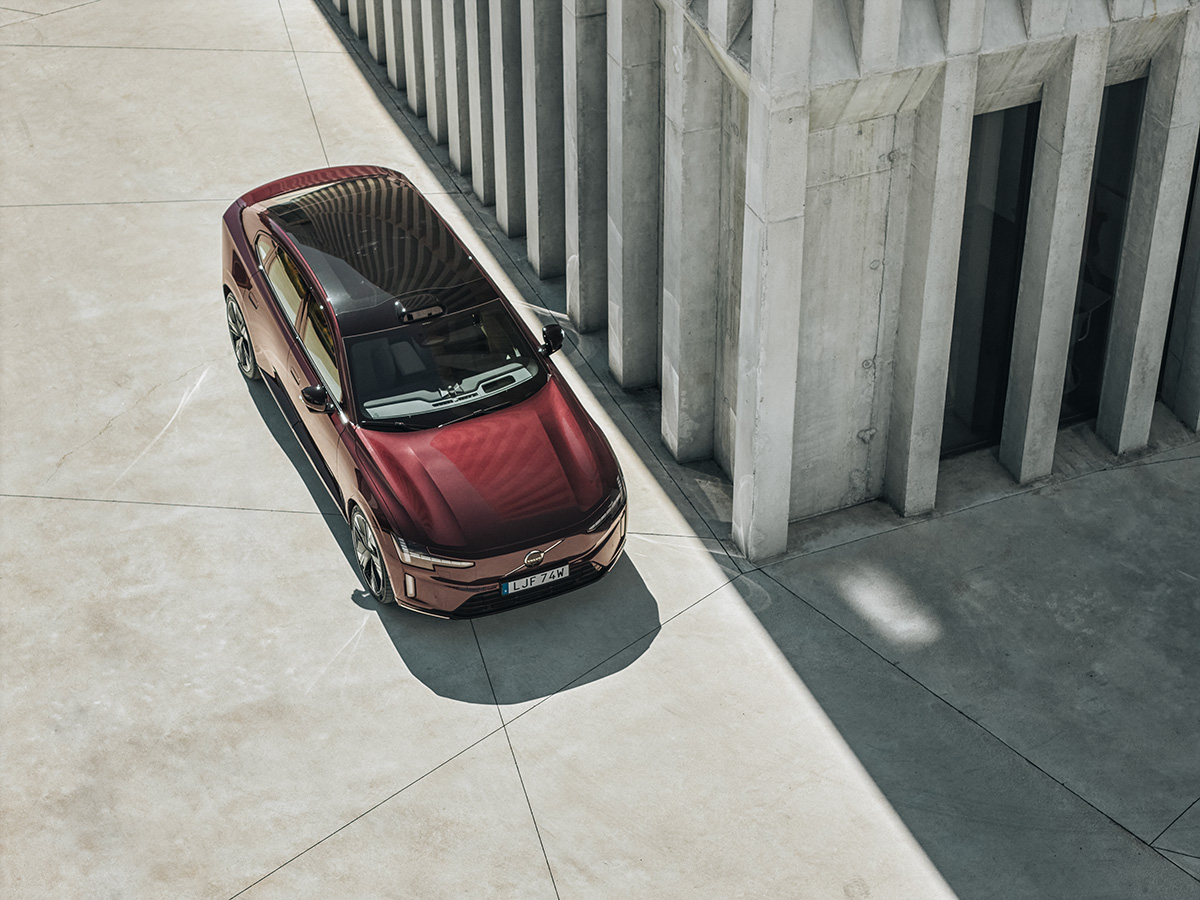
Chery’s 2025 Brand User summit held in Wuhu, China, had way more than just corporate speeches to offer. Layered into the long speeches were threads of detail that the motoring world should really get excited about.
Chery has been developing its Hybrid and EV systems with incredible speed; the long-distance problem plaguing hybrids for years has all but been solved with the Chery Super Hybrid system. Now, Chery might have the secret to take that final leap forward, with an invention all the way from 1831.
The nagging problem for EVs and hybrid vehicles has always been long distances, whether the car just doesn’t have the battery storage capacity or infrastructure available to recharge along the route, or in the case of most hybrids, which work extremely well in urban environments, fall way short when they hit the open road. No braking means no charge regeneration, falling back on its internal combustion engine, usually a small powerplant that now must work all on its own, drastically increasing fuel economy.
Chery calls it the Chery Super Hybrid System, or in short, CSH. It’s a system based on the Parallel Hybrid Electric Vehicle (PHEV) platform. PHEV platforms can use the ICE (internal combustion engine) and EM (electric motor) drivetrains, completely independently from each other, alas well as in complete unison. Focusing on combining the most efficient forms of both the electric motor and the internal combustion engine to find the perfect balance between the two.
Instead of vilifying ICE cars, Chery has realised that combining the best of the old world with the brightest stars of the future, you can create a symbiotic relationship that will trump any singular EV or ICE car. Quite honestly, I think this way of thinking should have been the entire automotive industry’s focus from the start of the EV era. I guess hindsight really does have 20/20 vision.
Consider the following figures: Chery’s ICE powerplant, utilised in its CSH platform, has a thermal efficiency of 44.5%, whereas the industry average is between 25% and 30% with good examples reaching 40%. Their EV transmission efficiency is at 98.5% and their fuel consumption in low state-of-charge (SOC) conditions is 4.2-l/100 km. That combined gives you an ultra-long, comprehensive endurance mileage between 1,200 km–1,400 km, bridging the gap from Johannesburg and Cape Town with one charge, all the while still offering acceleration figures of zero to 100 km/h in 5.4s, fast charging from 30% to 80% in a mere 20 minutes and a full home charge of between 3.5 hours to five hours.
Impressed, I’m sure you are! The thing is, those numbers can be even better.
Enter Mr Michael Faraday, who showcased the phenomenon of electromagnetic induction in 1831, creating the world’s first electric generator, known as the Faraday Disk Generator. He’s invention can be seen as the prototype of the Axial flux motor, a motor that has Chery very excited.
Chery’s Axial Vector dual motor utilises a magnetic field that runs parallel to the axis of rotation instead of perpendicularly, like in traditional electric radial motors. So just imagine a stack of pancakes, where the stator and rotor are stacked facing each other, and the magnetic field created crosses the air-gap perfectly parallel to the motor’s shaft. This makes for a very flat motor, and much smaller than equally powerful radial motors.
Because of the Axial Vector motor’s geometry, it delivers 30-40% more torque than a similar‐sized radial motor, can neatly fit into any wheel well and uses much less material in construction because of its compact design. Smaller, lighter and way more powerful, why then hasn’t it been used in more applications?
The answer is manufacturing costs and complexity because of very tiny tolerances and the immaturity of production lines and equipment for these motors. Thanks to radial motors having been widely used for so long, all the sub-systems connected to the radial motor have been optimised for it specifically. The switch to Axial Flux Vector motors will demand a redesign of a lot of subsystems, but all is not lost, as recent manufacturing advancements and the influx of R&D into the axial flux vector motor space, especially by Chery, have reduced these costs and difficulties significantly.
In conclusion, Chery hinted at the general introduction of the Axial Flux Vortex Dual Motor at its Annual Chery Brand User Summit in Wuhu, China, earlier this year. I had the privilege of experiencing first-hand how they employ their CSH system in the Chery Tiggo 9 PHEV, which is on its way to SA in 2026, a car that demands to be taken seriously.

WATERSHARK TO THE RESCUE!
Drones have quietly woven themselves into the fabric of modern life. From security patrols to crop monitoring, they’re proving their worth as efficient, reliable tools that take on tasks once reserved for humans. But while most drones prefer the sky or solid ground, RanMarine has taken the concept to a whole new element – water.
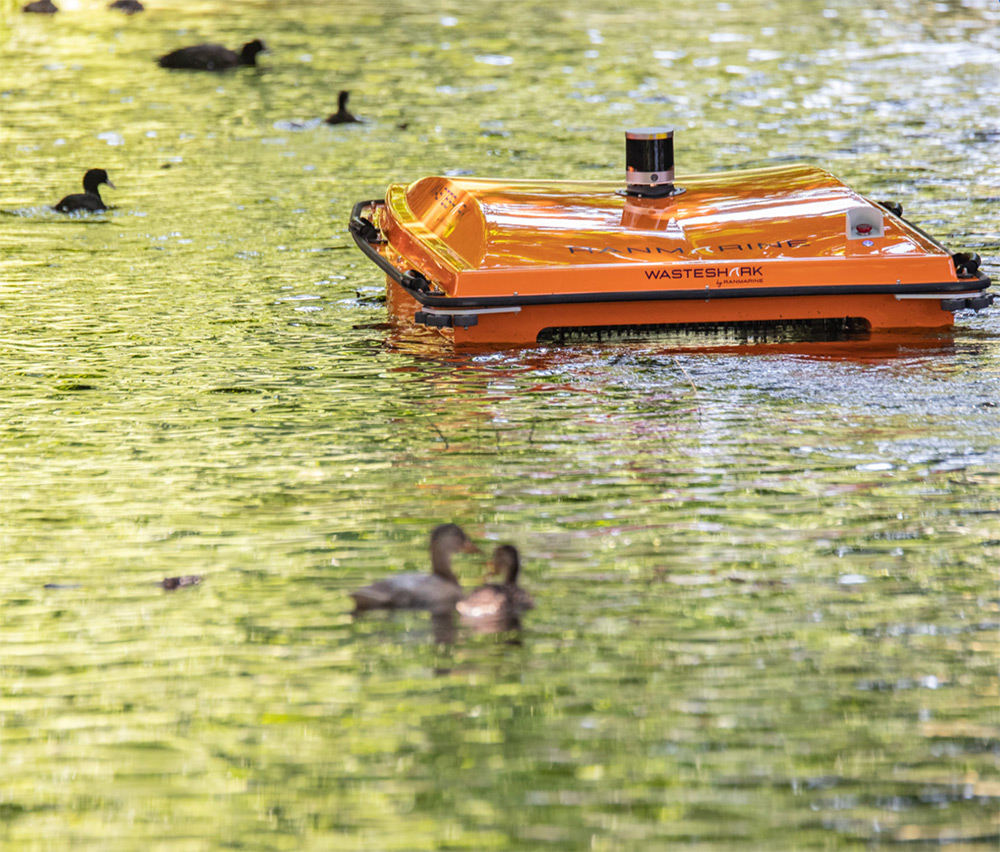
Developed by Dutch company RanMarine Technology, the WaterShark is classified as an Autonomous Surface Vehicle (ASV) – a sort of aquatic cousin to the traditional drone. The company was founded by Richard Hardiman, an “accidental environmentalist” whose inspiration came while watching two workers in a small dinghy scoop litter from a harbour. “I bet a drone could do that,” he thought. And so, the idea for a water-cleaning drone was born.
The result was the WasteShark, a catamaran-style ASV designed to collect non-biodegradable waste and biomass from lakes, rivers, and harbours. It features two pontoons flanking a central collection basket, where waste is captured as the drone glides along. Power comes from a pair of electric thrusters, each producing 9 lb of thrust, giving it a modest top speed of 3 km/h.
Despite weighing just 72 kg, the WasteShark can operate autonomously for up to eight hours, guided by a 4G waypoint navigation system. It’s also solar-charge compatible and can be controlled manually from up to five kilometres away. Best of all, you don’t need any special certification to operate it, and it’s compact enough to fit neatly into a small van or trailer.
Priced between $23,000 and $33,000, it’s a clever, cost-effective solution that could make a meaningful difference in South Africa, where water pollution remains a pressing issue.
Report by Ruben von Steen | Images © CHERY SOUTH AFRICA