MERCEDES-BENZ CLA
INTELLIGENT, IMMERSIVE, INTUITIVE
Image © MERCEDES-BENZ AG
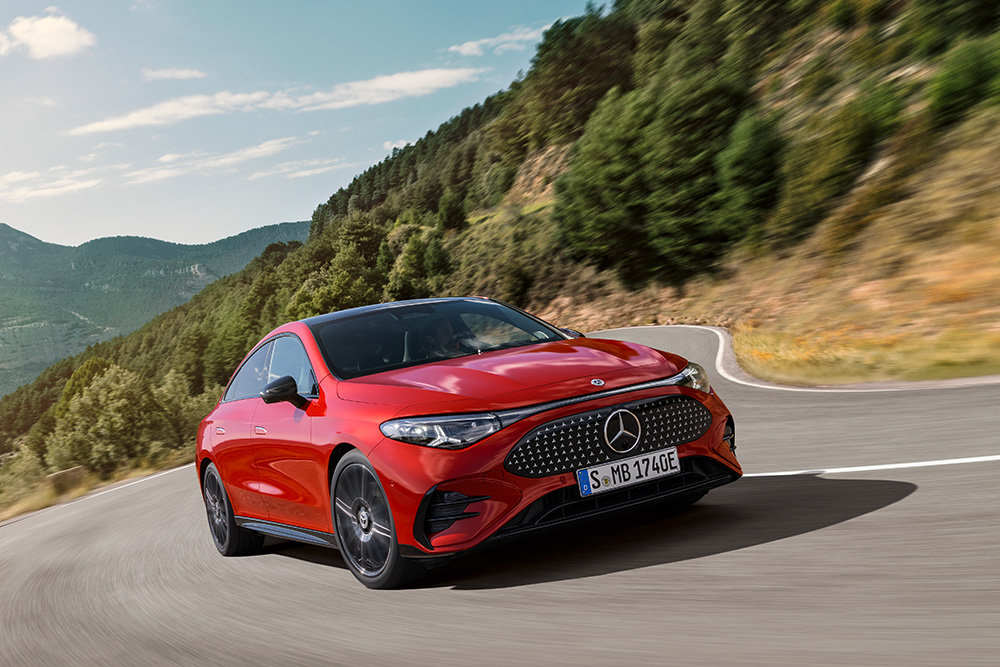
The third-generation Mercedes-Benz CLA (internal codes C178 and C174 for the electric model), recently introduced overseas in all-electric sedan form, is the first model in a completely new family of vehicles from Stuttgart, and each new derivative will be available with both electric and high-tech hybrid drives.
The German manufacturer describes the new CLA as the most intelligent Mercedes-Benz ever, thanks to the latest, in-house developed Mercedes-Benz Operating System (MB.OS), marking the start of the fourth MBUX generation. The new AI-enhanced system makes it possible to equip every vehicle with a supercomputer connected to the Mercedes-Benz Intelligent Cloud, setting new standards in the automotive industry.
It is the first in-car infotainment system to integrate artificial intelligence (AI) from Microsoft and Google. This combines multiple AI agents in one system for the first time, and enables regular over-the-air updates for the most critical vehicle functions, including driving assistance systems for the first time.
NEW RADIANT “FACE”
The all-electric CLA also features a radiant new “face” with the iconic A-shape grille reinterpreted for the electric age. The seamless star panel is now fully illuminated on a Mercedes-Benz production vehicle for the first time, with 142 individually animated LED chrome-effect stars creating a distinctive brand signature.
The CLA hybrid (the model derivative most likely to be introduced locally) is visually differentiated from the electric model by its classic radiator grille featuring a Mercedes-Benz pattern in chrome, framed by an LED lightguide as standard. Another distinguishing feature of the CLA is the daytime running lights taking the form of a Mercedes-Benz star in combination with the optional Multibeam LED headlights.
A band of light connects the headlights, and the taillights are also star-shaped and connected by an illuminated design element, giving the CLA a unique visual presence. The standard-fit LED High Performance headlights have a chrome-plated design element in the shape of a star, and the grille is placed lower than the headlights.
MORE INTERIOR REFINEMENT
Inside, the new CLA offers more in every dimension: more space, refinement, and comfort compared to its predecessor. The front panel is dominated by the optional, floating MBUX Superscreen, which extends across the entire width of the interior, consisting of a 10.25” driver display and 14” centre display. An additional 14” display for the front passenger will also be optionally available.
The floating centre console is split into two levels, and the upper section offers an integrated double cup holder and optional wireless smartphone charging cradle. Also available are interior trim elements made of open-pore wood, brushed aluminium, a coating with an anodised look, and a decorative paper surface (as shown on the launch model). All CLA models have an expansive panoramic roof as standard.
The new all-electric CLA’s carbon footprint is reduced by 40 percent over the entire value chain compared to its non-electrified predecessor. The first models to come to market are the CLA 250+ with EQ Technology and the CLA 350 4MATIC with EQ Technology. With a range of up to 792 km (WLTP), the 200 kW CLA 250+ offers a large radius in its class, with the CLA 350 4MATIC with 260 kW positioned as the flagship performance version.
With 800-volt electric architecture, the CLA 250+ can be recharged to a range of up to 325 km within ten minutes. Fast DC charging up to 320 kW is possible for the CLA 250+ and CLA 350 4MATIC. Both models use lithium-ion batteries with an energy content of 85 kWh. The electric CLA is also the first Mercedes-Benz vehicle to feature an air-to-air heat pump.
HYBRID POWER
By year-end, the new CLA hybrid with 48-volt technology and an electric motor integrated into the transmission will be available. The combustion engine of the CLA hybrid will initially be available at three power levels and will have a choice between front-wheel drive and 4Matic all-wheel drive.
The hybrid models can drive on electric power alone at urban speeds when less than 20 kW is needed, and electric cruising is possible at speeds of up to 100 km/h. The combustion engine can also recover up to 25 kW in all eight gears of the two-speed gearbox.
The new CLA comes as standard with extensive safety features and Distronic Distance Assist with additional comfort assistance systems bundled under MB.Drive. MB.Drive Assist will be optionally available in Europe from market launch. Although not confirmed, the new CLA is expected to launch in South Africa early next year.
VOLKSWAGEN TERA
KARIEGA PLANT’S FUTURE REVEALED
Image © VOLKSWAGEN
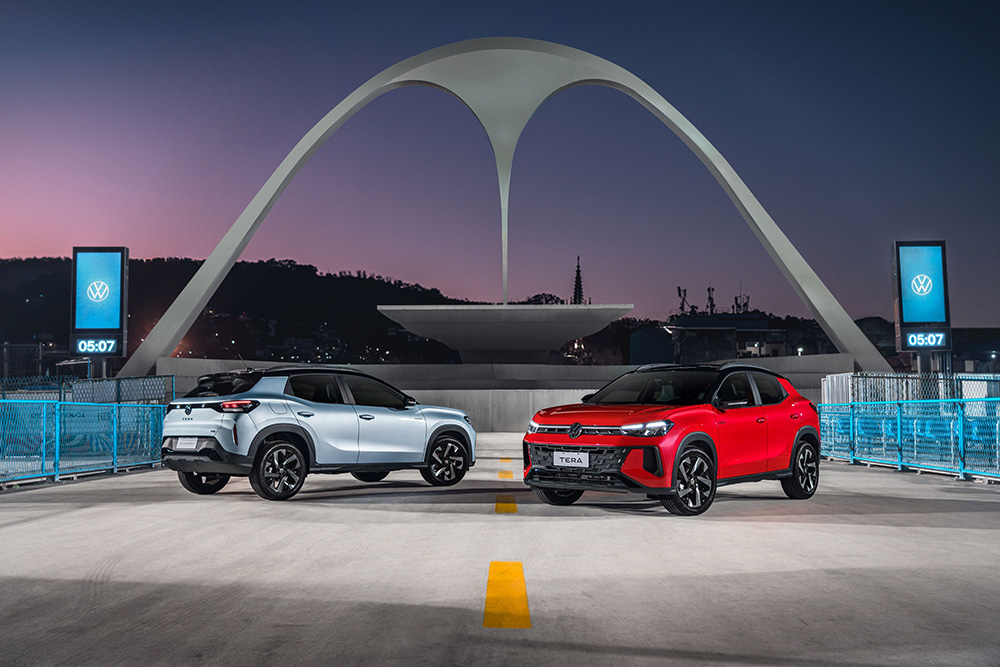
The new Tera, revealed during the Rio Carnival in Brazil, has been designed and developed to slot between the Polo and the T-Cross in Volkswagen’s model line-up. As such, it is set to reinforce and expand the manufacturer’s leading position in the SUV segment.
Although conceived in Brazil and produced in Volkswagen do Brasil’s factory in Taubaté, the Tera forms an integral part of the German brand’s model offensive with sixteen new vehicles to be launched until 2028, the Tera being the fourth model on this list.
The Tera will be sold in over 25 countries, covering markets in Latin America, such as Argentina, Chile, Colombia, Uruguay and Mexico. It will also be present on the African continent – as it will be the third model line, complementing the Polo and Polo Vivo, produced in the Kariega plant of Volkswagen Group Africa from 2026.
While it will be called Tera in Brazil and South America, the new, entry-level SUV will most likely be branded with a nameplate of African origin in South Africa. This name will be decided after a public competition set to start soon, so be on the lookout for this.
NEW STYLE IDENTITY
Created by a team led by José Carlos Pavone, Head of Volkswagen Design for the Americas, the Tera debuts a new style identity characterised by fluid lines and novel rear sculpting. The fender lines create a sense of height and presence, visually elevating the beltline and reinforcing its design’s robustness.
The frontal lines are imposing, and in the rear, the widening of the C-pillar follows the same principle to provide balance between fluidity and strength. The wheels, sized to fill the wheel arches, create harmony between the volume of the body and the dynamic stance of the vehicle, and the roof has a sporty slope while not losing the characteristic SUV look.
Sharing its underpinnings with the Polo, the new SUV – when it becomes available here next year – will most likely be available with the same powerplants as found in its hatch sibling; a 1.0-litre three-cylinder TSI turbo-petrol engine delivering 70 kW of power and 175 Nm torque, or the 1.0 TSI DSG engine, rated for 85 kW and 200 Nm of torque.
It will also be offered with different trim levels to meet consumer needs and preferences. It will also have a comprehensive set of amenities, including a 10” instrument panel, a VW Play Connect multimedia centre, inductive cell phone charging, ambient lighting and an ADAS package.
The Tera was displayed in three colours on the Rio samba catwalk: Hypernova Red, Lunar Silver and Arctic Blue. The show models also sported diamond-cut alloy wheels and full LED headlights and taillights, with the headlights featuring a fractional lighting signature, unique in this segment.
The Brazilian Tera models also introduced some “Easter Eggs”, such as a drawing on the rear window showing iconic VW models in Brazil, with the Beetle, Gol and Tera forming a line. Other hidden gems are spread throughout the bodywork, including a sticker reading “Trip mode on” in the luggage area.
Later this year, sections of the Kariega plant will be shut down in order to be refurbished in the ramp-up towards production of the new SUV, slated to start early next year. Model derivatives, trim lines, and pricing for the newcomer will be announced closer to its introduction date next year.

VOLVO ES90
IN A CLASS OF ITS OWN
Image © VOLVO SWEDEN
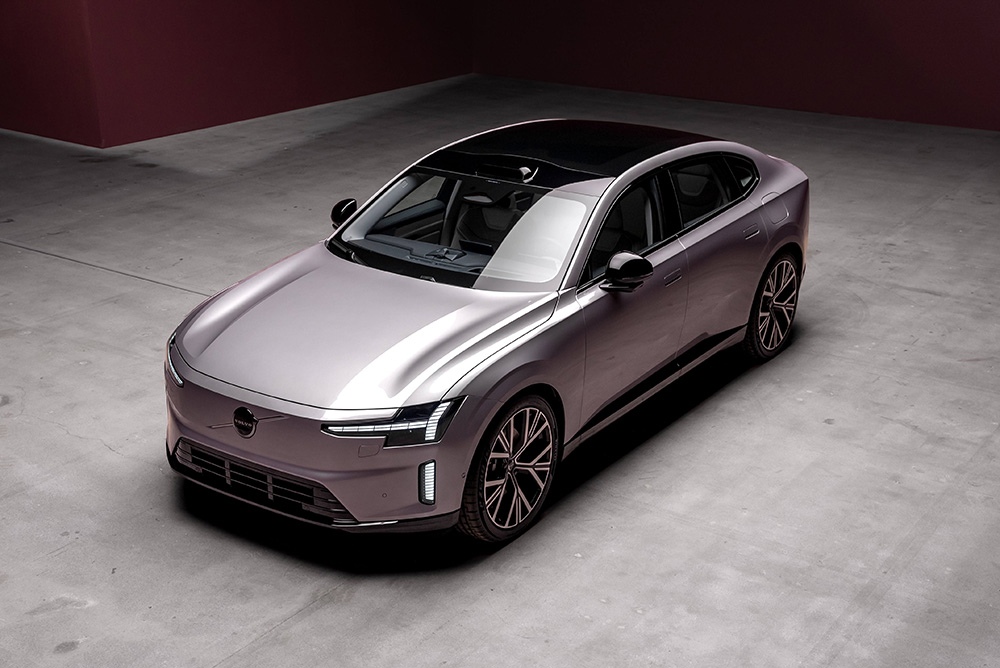
Some might describe it as a sedan. Others will depict it as a fastback, or even see hints of an SUV, but according to Volvo, the new, fully-electric ES90 carves out a new space for itself by eliminating the compromises between those three segments, putting it in a class of its own.
As such, the ES90 combines the elegance of a sedan, the adaptability of a fastback, and the spacious interior and higher ground clearance of an SUV, making it a versatile vehicle that does not compromise on comfort or space. Designed to evolve over time, it is the first Volvo car with 800-volt technology, and the sixth fully electric model in the Swedish carmaker’s line-up, joining the EX90, EM90, EX40, EC40 and EX30.
The ES90 is built on the SPA2 architecture and, like the EX90, is based on the Volvo Cars Superset tech stack consisting of one single set of hardware and software modules that will underpin all upcoming electric cars from Volvo. The ES90 can go further and charge faster than any electric Volvo before, adding a 300 km range in just 10 minutes at 350 kW fast charging stations and offering a driving range of up to 700 km under the WLTP testing cycle.
The bold proportions of the ES90 contribute to its efficiency, and with a drag coefficient (Cd) of only 0.25, it has the lowest Cd of any vehicle Volvo has ever built. The ES90 was also developed to meet the rigorous Volvo Cars Safety Standard, including a strong safety cage, state-of-the-art restraint systems and optimised deformation zones.
Active safety systems are powered by an advanced array of sensors, including five radars, seven cameras, twelve ultrasonic sensors, and a lidar from Luminar Technologies, enabling vision beyond human range to help avoid collisions and hazards on the road.
The ES90 has a confident and distinctive stance, with a slightly raised ride height. The flowing roofline balances elegant looks with ample interior space and contributes to its excellent aerodynamics, boosting overall efficiency and electric range. A large tailgate hatch makes it easy to load and unload luggage, and the boot provides up to 424 litres of loading space and 733 litres with the rear seats folded down.
Inside, the focus is on premium comfort, authentic materials, and purpose-driven design, which are in line with Volvo’s Scandinavian identity and design principles. Six interior ambient light themes and various upholstery options further allow personalisation of the ES90. Seven exterior colours and four wheel options varying from 20 to 22” are available.
The new Volvo ES90 is available for order now in most European countries and other markets, most likely including South Africa, which will be added later this year and into 2026.