Maserati’s latest flagship super sports car arrives with a sharper design, updated tech and the same visceral powertrain. But does it move the needle? We attended the exclusive reveal of the latest iteration of the Trident brand’s MC line-up to discover what it brings to market in its now purest road-going form.
Maserati has always walked the line between tradition and evolution. Since the launch of the MC20 in 2020, the brand has worked to reclaim its place among the world’s top-tier performance marques. The introduction of the new MCPURA – the latest evolution of the MC20 halo car – is Maserati doubling down on its strengths: lightweight engineering, expressive Italian design, and a distinct, if understated, sense of exclusivity.
While the silhouette remains familiar, the MCPURA isn’t merely a facelift. It brings meaningful updates to aerodynamics, interior materials, driver-focused technology, and, perhaps most notably, a new steering wheel and a refined infotainment system. What hasn’t changed is the beating heart of the car: Maserati’s homegrown Nettuno engine, which remains central to the MCPURA’s appeal.
Let’s unpack what’s new, what’s better, and what it all means in the context of a fiercely competitive segment.
An Exterior with Subtle but Smart Changes
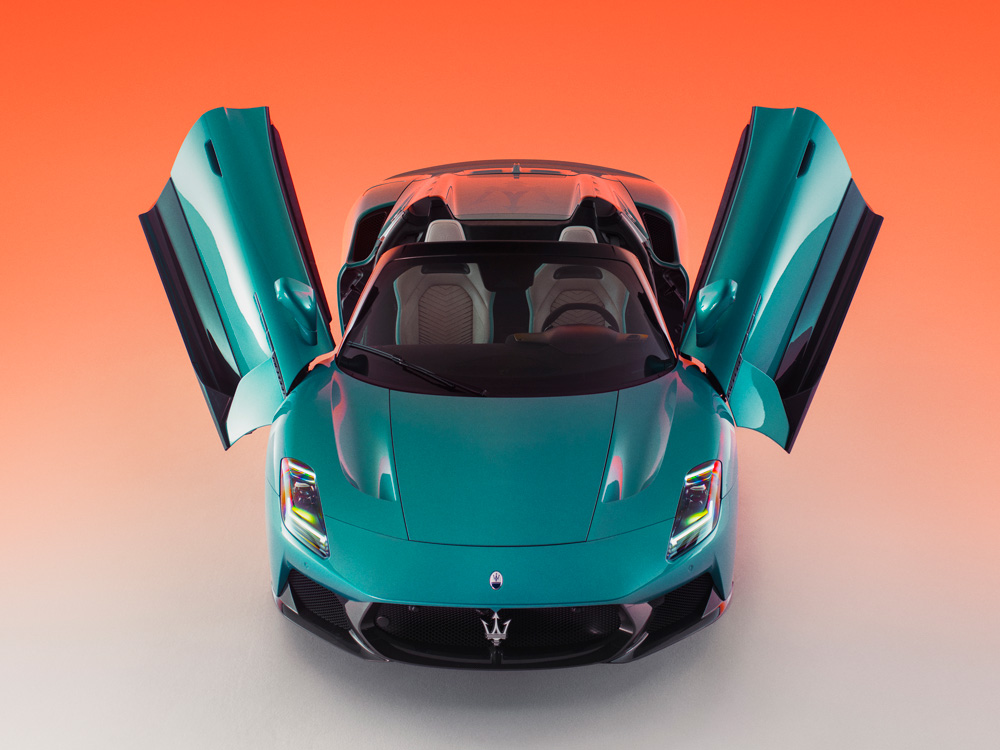
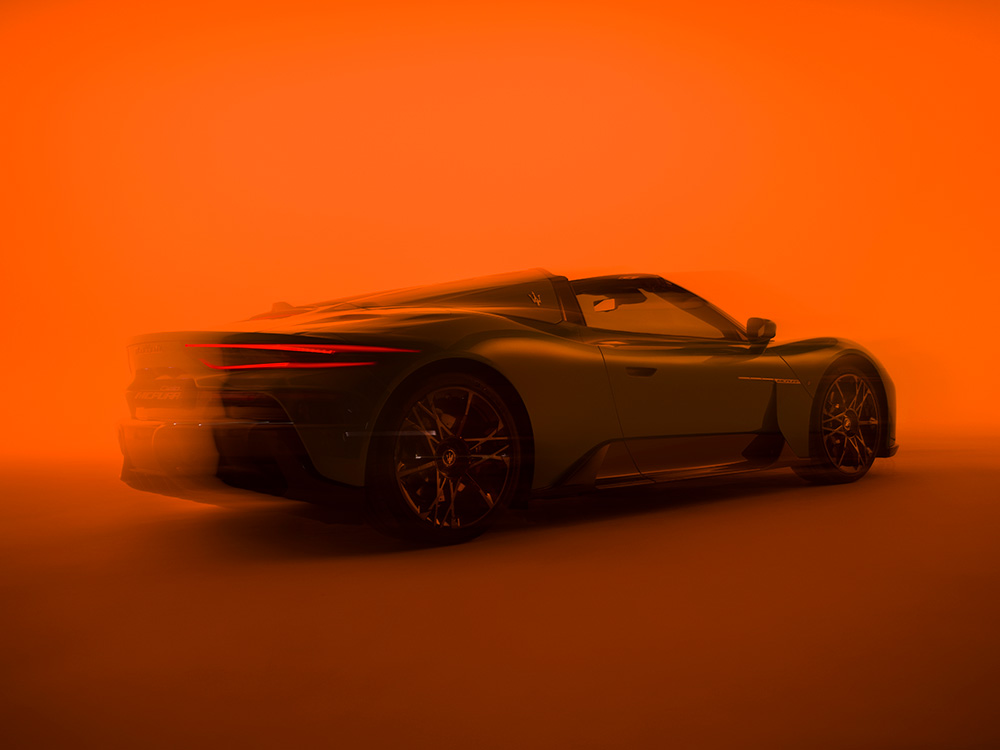
The MCPURA is available in both coupé and convertible Cielo body styles, and the core design language of the MC20 remains intact. That’s not a bad thing, especially given how clean and well-resolved the original car’s proportions are. The front fascia draws inspiration from the GT2 Stradale but stops short of appearing track-focused, instead retaining a road-friendly elegance.
The real gain comes from the reworked aerodynamics. Over 2,000 hours of wind tunnel testing and more than 1,000 fluid dynamic simulations have improved downforce without the need for overt appendages. There’s an optional oversized rear spoiler for those who want the visual theatre, but the standard car keeps it discreet.
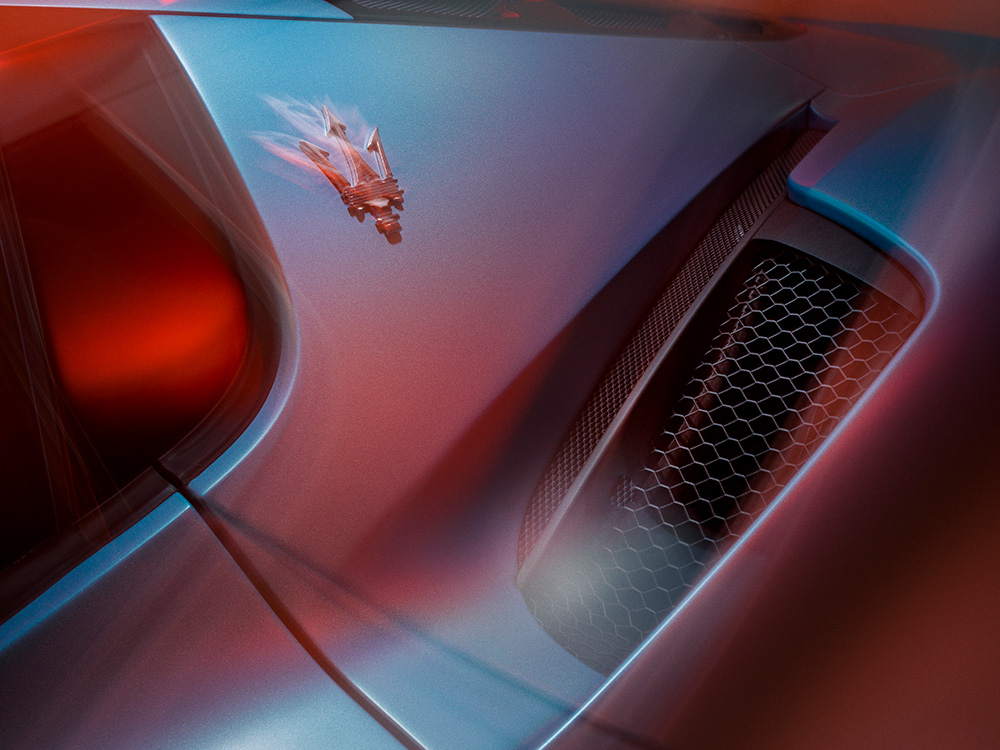
Other exterior tweaks include a lower fascia with improved airflow management, new air channels behind the front wheels to manage lift, and a reprofiled diffuser. The “shark nose” has been sharpened, and paintwork options have expanded considerably – now including a bold new shade called Devil Orange, and the bespoke matte or gloss AI Aqua Rainbow finish seen at the car’s Goodwood Festival of Speed debut.
From Leather to Laser-Etched Alcantara
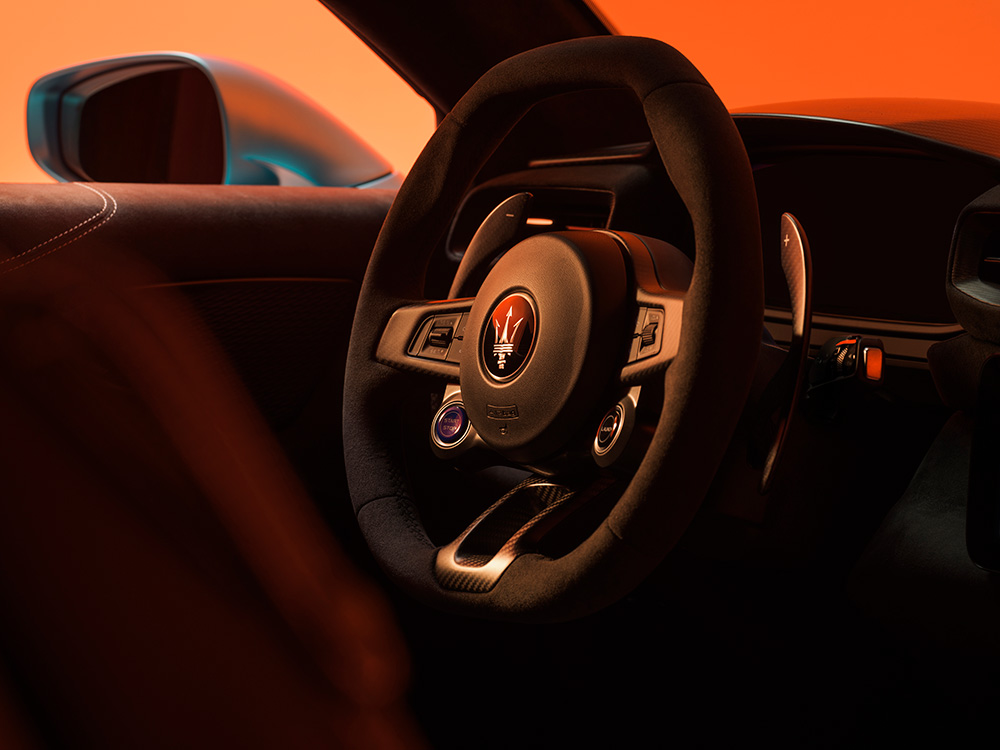
Inside, the changes are more substantial. The MCPURA swaps much of its traditional leather for Alcantara, not just for the seats, but also the dashboard, door panels, and a new GT2-inspired flat-top steering wheel.
This move isn’t only aesthetic – Alcantara is lighter, grippier, and better suited to performance driving. It also wears better under heat and UV exposure, making it a practical as well as premium choice. The embossed Trident logo now features on the headrests, replacing the previously raised elements for a cleaner, more integrated look.
The driving position remains low and focused, with only the essential switchgear on the minimalist centre tunnel. The drive mode selector – a knurled, metal-finished rotary dial inspired by luxury watches – sits front and centre, flanked by start and launch control buttons.
Opting for the carbon fibre interior package adds shift paddles and wheel inserts in exposed weave. Interestingly, the LED shift lights seen in the MC20 GT2 make an appearance here – but only on the coupé, and only as an option.
Five Modes, One Mission
MCPURA offers five distinct drive modes: Wet, GT, Sport, Corsa, and ESC Off. The transitions between them are quick – a twist or press of the dial is all it takes – and each mode alters throttle mapping, gearshift aggression, suspension stiffness, and traction control thresholds.
Wet and GT modes cater to comfort and everyday usability, with softened damping and conservative engine response. Sport mode wakes the car up significantly, opening the exhaust valves at 3,500 rpm and stiffening the suspension. Corsa is the sharpest, enabling launch control and offering the most responsive settings, while ESC Off disables all driver aids for track use.
There’s also a suspension softening feature accessible in Sport and Corsa, designed to offer some relief on bumpier roads without giving up too much body control. It’s a thoughtful addition in a car that is expected to straddle the line between GT comfort and genuine track-day readiness.
Nettuno: The Soul Carries On
Much of what makes the MCPURA compelling is what hasn’t changed. At its core remains the 3.0-litre twin-turbo V6 Nettuno engine, developed and built entirely in Modena. It delivers 463 kW and 730 Nm, with zero to 100 km/h taking under 2.9 seconds. Top speed? Over 325 km/h in the coupé and 320 km/h in the Cielo convertible.
The engine’s party trick is its F1-derived pre-chamber combustion system – a world-first in a road car when the MC20 launched. This setup allows for better efficiency and cleaner ignition, particularly at higher loads. The twin-spark system and dual injection setup provide excellent throttle response, even at low engine speeds, and help keep emissions in check. Despite the performance, combined consumption is rated at 11.5 l/100 km – not frugal by any means, but within segment expectations.
The engine is paired with an eight-speed dual-clutch transmission that shifts smoothly and cleanly, without the overaggression sometimes seen in rival setups. Power delivery is strictly rear-wheel drive – a purist move in a world where many competitors rely on all-wheel drive for traction.
Roof Tech and Structural Rigidity
The MCPURA Cielo retains its signature feature: a retractable glass roof that transitions from opaque to transparent in a second, thanks to polymer-dispersed liquid crystal (PDLC) technology. The mechanism opens or closes in 12 seconds and can operate at up to 50 km/h. It’s not just a gimmick – the roof provides excellent thermal insulation, helping to maintain the Cielo’s elegant silhouette without sacrificing rigidity.
The carbon-fibre monocoque, co-developed with Dallara and manufactured by TTA Adler, was designed from the outset to accommodate both body styles. It’s light (under 1,500 kg in the coupé) and stiff enough to ensure precise handling, with differing carbon layups for the coupé and convertible to account for structural loads.
Infotainment and Sound
Tech updates in the cabin come courtesy of the Maserati Intelligent Assistant (MIA) system, based on Android Automotive. There are two 10.25″ displays – one for instrumentation, one for central controls – and the interface is responsive, with crisp graphics and a simple layout.
Maserati Connect keeps the MCPURA always online, allowing remote access via smartphone or smartwatch, over-the-air updates, and even virtual assistant integration via Amazon Alexa or Google Assistant.
Performance pages, lifted from the MC20 GT2, provide real-time readouts of temperatures, boost pressure, and torque vectoring. The system supports both the standard six-speaker setup and an optional 12-speaker Sonus faber unit, paired with a 695-watt amplifier. The sound quality is excellent – though if we’re being honest, most drivers will prefer the symphony of the Nettuno engine at full chat.
Rivals in Sight
The MCPURA enters a segment filled with strong personalities. Buyers considering this car are also likely evaluating options such as Ferrari’s 296 GTB, Lamborghini’s Huracán Tecnica, the McLaren Artura, and Porsche’s 911 Turbo S. Each brings a unique mix of character, powertrain technology, and brand appeal to the table.
Rather than chasing spec-sheet superiority, Maserati’s approach with the MCPURA leans into heritage, craftsmanship, and individuality. This is a car designed for drivers who value tactile connection and a more analogue experience – qualities that are becoming rarer in today’s hybrid and electric-dominated landscape.
Last Word
The MCPURA is not a radical reinvention – and Maserati never intended it to be. Instead, it’s a calculated and mature update to the MC20 that focuses on material quality, user experience, and subtle aerodynamic gains.
It’s still quick, still striking, and still very much Maserati. But in a segment now crowded with hybridised hyper coupés and electric upstarts, it will need more than just Italian charm to stay relevant.
For the purist buyer seeking something beautifully engineered and built in small numbers, the MCPURA delivers. It’s fast, focused, and refreshingly analogue. Whether it’s enough to recapture lost ground from Ferrari, McLaren, and Porsche remains to be seen, but for now, the MCPURA feels like Maserati doing what it does best: blending performance, luxury and character in a way only it can.
Report by Bernie Hellberg Jr | Images © Maserati