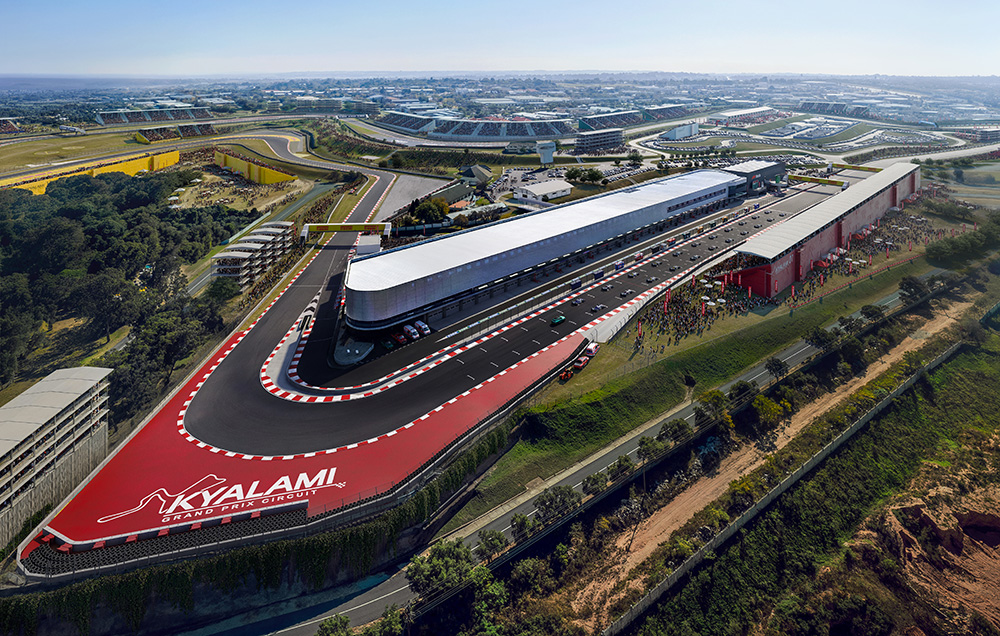
“This is a defining moment for South African motorsport,” said Venter. “When we acquired Kyalami in 2014, we made a commitment to restore it, not just as a world-class venue, but as a beacon for motorsport across the African continent. The FIA’s acceptance of our Grade 1 design is a major step forward in that journey.”
Yes, that’s right, the only FIA grade 1 circuit in Africa, with a further $5 to $10 million of upgrades left to do over three years, Toby Venter and the competent Clive Bowen and he’s team at APEX Circuit design will bring the Kyalami Grand Prix Circuit to the top level of racing.
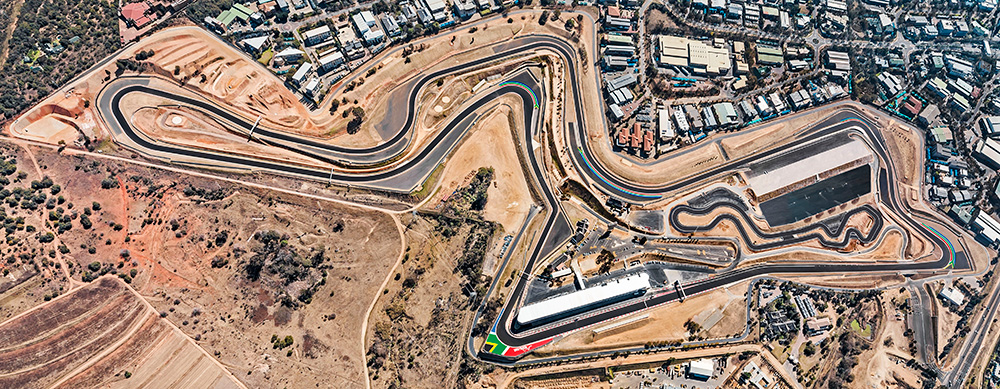
There will be no changes to the existing track layout, as the “light-touch” upgrades include modifications to runoff areas, bringing sand traps closer to the track curbs, increased debris catch fencing, upgrades to the barrier system, and enhancements to the drainage system. Now, the only hurdle remaining is whether the South African Government wants an F1 race on African soil?
What we must remember, in Venter’s own words, is that “racing doesn’t pay the bills”; the business of racing does, and bringing the track up to FIA Grade 1 status opens the doors to many avenues of opportunity. Not just for Toby Venter, but for every South African race promoter, festival organiser, and any international interest looking at Kyalami, this will be a world-class facility with a decorated history and a bright future. That future will only shine brighter if F1 wheels start rolling around Kyalami.
The question remains, ”Why would the government need to be involved in the first place, and why use taxpayers’ money on F1 when it can be used for so many other pressing South African matters?”

THE CASE FOR F1 ON HOME SOIL
Firstly, Formula One Management (FOM) prefers contracts with governments, as they ensure longevity, as almost all FOM contracts run for five to ten years. Private institutions rarely have the political influence and resources to guarantee hosting fees, which can go up to $57 million per year, without government backing. Secondly, negotiating visas and organising security immediately becomes a government issue as the number of people it requires to make F1 happen is staggering. Local police and traffic management are crucial and can not only be left in the hands of private security.
Thirdly, hosting an F1 race is an enormous tourism drawcard. With global exposure comes an increase in inbound tourism and the creation of both short-term and long-term job opportunities. On average, countries experience a 6% increase in tourism when they become a Formula 1 host country. Considering that tourism contributed $27.4 billion to South Africa’s GDP in 2019, a 6% increase starts looking very acceptable to any government.
The benefits of hosting the world’s most popular race series are undeniable, but it requires patience, a lot of hard work and significant commitments from a government that already has a lot of eyes on them.


All that aside, the excitement generated by Toby Venter’s announcement is a testament to the untapped passion South Africans have for F1, and clearly, the world is listening, watching, and waiting for South Africa to raise its hand!
Report by RUBEN VON STEEN | Images © KYALAMI GRAND PRIX CIRCUIT