There was a time when Volkswagen’s SUV hierarchy was fairly easy to understand. Then came the T-Roc in 2017, looking less like a traditional SUV and more like someone had taken the attitude of a sporty hatchback, raised it slightly and given it a wardrobe with considerably more colour. It worked.
The T-Roc quickly carved out its own space within Volkswagen’s expanding SUV family, compact enough for everyday urban life, practical enough to justify the SUV badge and stylish enough not to disappear into the increasingly crowded crossover parking lot.
Eight years and more than two million first-generation T-Rocs later, the name needs little introduction. Volkswagen says it is its most successful SUV worldwide after the Tiguan, which gives the 2nd-generation a rather important pair of shoes to fill.
South Africans have already had their first look. Volkswagen revealed the newcomer at the Festival of Motoring before opening pre-orders, giving us a taste of what is coming before the media gets behind the wheel. And there is considerably more here than a fresh face.
A FRESH FACE AND THEN SOME
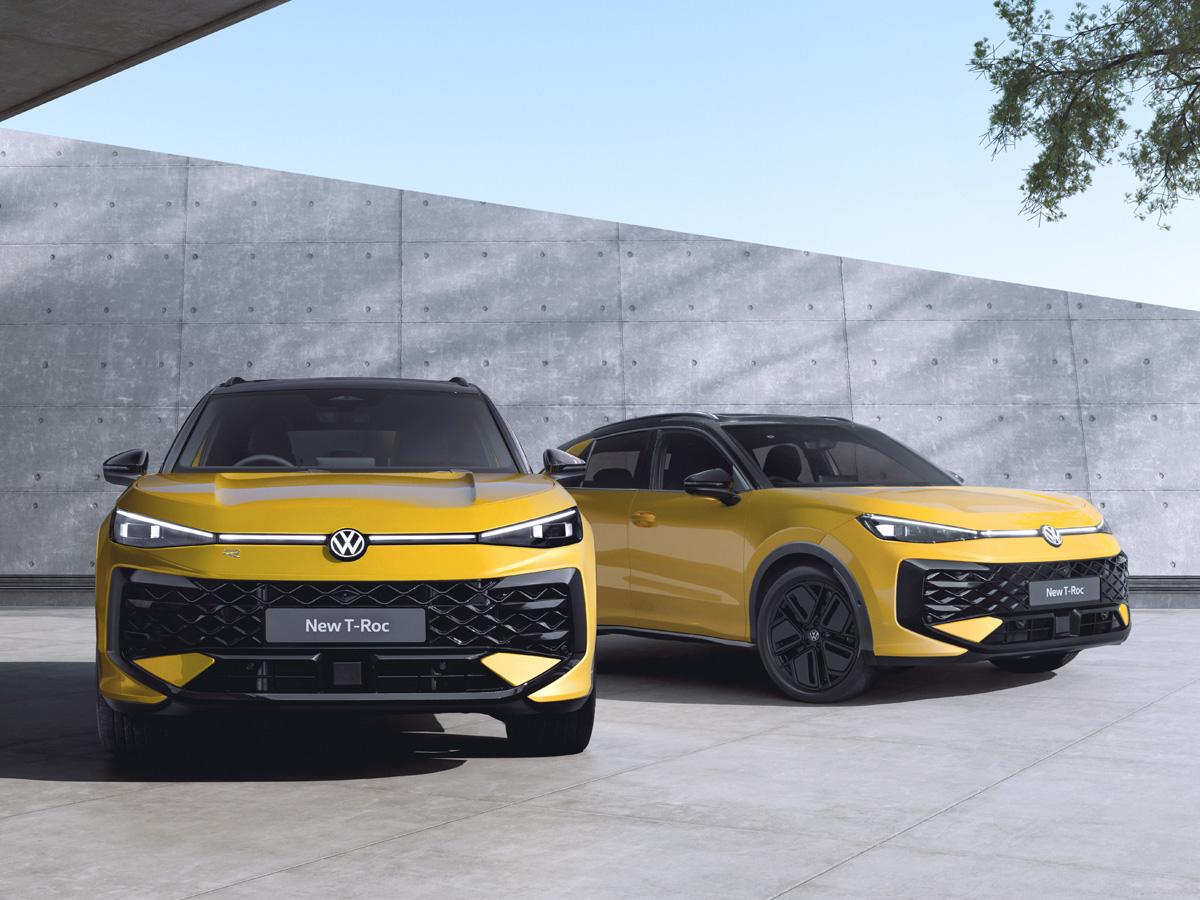
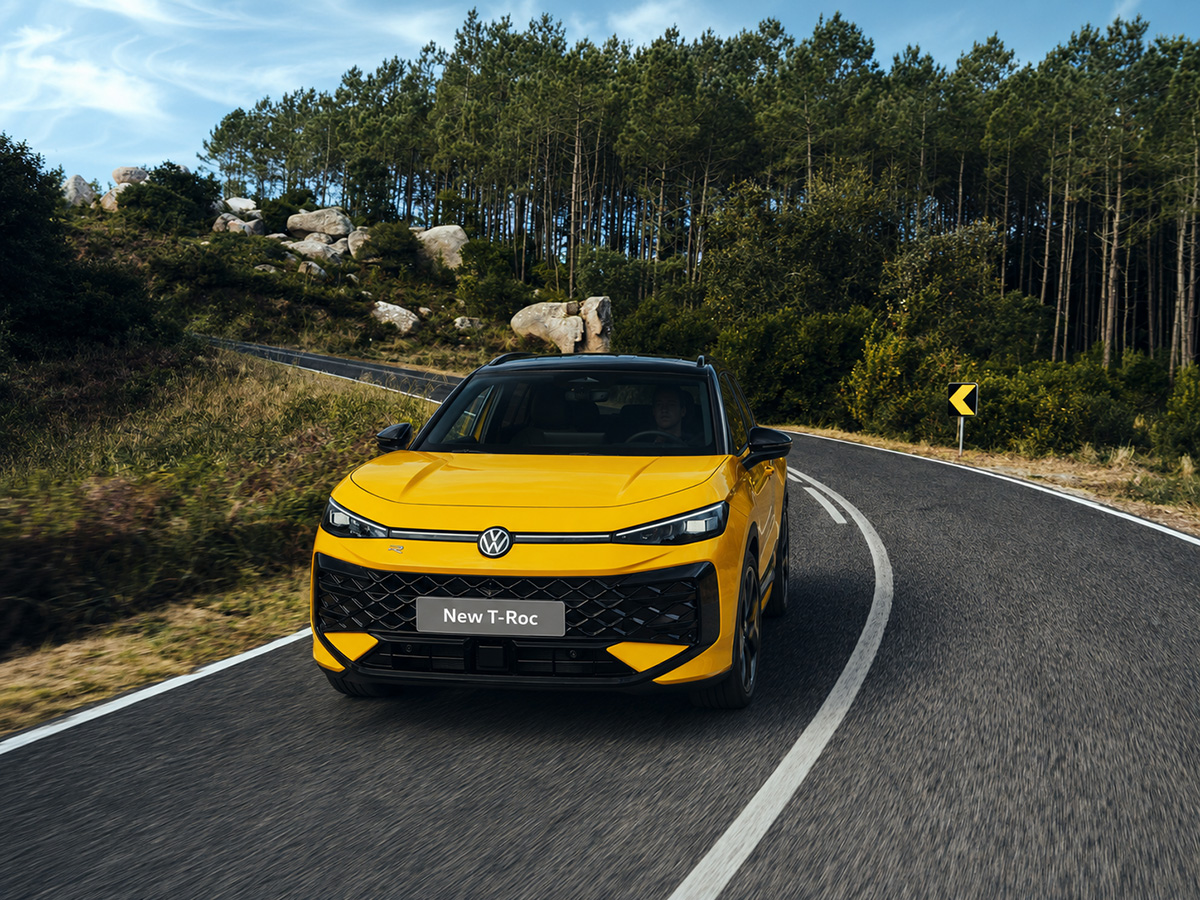
The second-generation T-Roc is a completely redesigned vehicle, though Volkswagen has wisely resisted reinventing something buyers clearly liked. The familiar coupé-inspired silhouette remains, but the proportions have matured. The nose is cleaner, the stance broader and the lighting treatment considerably more distinctive.
At 4,373 mm long, the new T-Roc is 122 mm longer than its predecessor, while the wheelbase has increased by 28 mm. Those extra millimetres give it a more substantial road presence and create additional interior space.
The design still carries one of the T-Roc’s defining features, the characteristic “hockey stick” line running from the A-pillar towards the rear. Muscular shoulders add weight to the rear, while the new lighting signature firmly pulls the design into Volkswagen’s latest generation.
Higher derivatives add continuous illuminated light strips and illuminated Volkswagen logos front and rear. It is more sophisticated, certainly, but still recognisable as a T-Roc. That matters because this wasn’t a design desperately in need of reinvention.
FROM NEWCOMER TO MAINSTAY
When Volkswagen revealed the original T-Roc in 2017, it positioned it as a crossover combining SUV presence with the agility of a compact car. What initially looked like another addition to Volkswagen’s rapidly expanding SUV family became one of the brand’s major global products.
The range evolved throughout its first generation, with international markets receiving everything from the performance-focused T-Roc R to the unusual T-Roc Cabriolet. More importantly, customers bought the regular T-Roc in serious numbers.
The new model therefore arrives in a very different position from its predecessor. It doesn’t need to establish the T-Roc name. It needs to move it forward.
Within South Africa’s current Volkswagen T-SUV family, it slots between the Taigo and Tiguan, joining the T-Cross, Taigo, Tiguan, Tayron and Touareg. The family is crowded these days, but the T-Roc still occupies its own space.
ALL GROWN UP
While the design and technology have taken a considerable step forward, Volkswagen has kept things familiar under the bonnet for South Africa.
All three derivatives use the turbocharged 1.4 TSI producing 110 kW and 250 Nm, with maximum torque available from 1,500 to 3,500 rpm. An eight-speed Tiptronic transmission handles the drive.
Those numbers won’t start a pub argument, but they suit the T-Roc’s purpose. This isn’t a hot hatch wearing hiking boots. For most owners, life will involve commuting, school runs, shopping centres, highways and weekends away, exactly the sort of environment where accessible torque and an automatic transmission make sense.
How it all comes together on the road is another question. We haven’t driven it yet, so we’ll save that conversation until Volkswagen hands us the keys.
The bigger generational leap may actually be waiting behind the doors. One criticism levelled at the original T-Roc internationally was that parts of the cabin didn’t always feel as premium as its exterior suggested. Volkswagen appears to have listened.
The dashboard is completely redesigned, with soft-touch materials and a cleaner, more driver-focused layout. A Digital Cockpit and 10.3″ infotainment system are standard across the range, along with wireless App-Connect, while higher specifications can stretch the infotainment display to 12.9 inches.
The new Drive Experience Dial provides access to driving profiles and infotainment functions, while ambient lighting brings some theatre after dark. Life and R-Line receive 10-colour ambient lighting, while R-Line Black Style increases that to 30 colours across the dashboard and doors.
Practicality hasn’t been sacrificed for the coupé-inspired profile either. It seats five and offers a 475-litre luggage compartment, making it as much an everyday family crossover as it is a styling exercise.
THREE WAYS TO ROC
South Africa gets three derivatives: Life, R-Line and R-Line Black Style.
Life opens proceedings with 16″ Bilbao alloy wheels, LED headlights, black roof rails, Park Assist, a rear-view camera, Digital Cockpit and the 10.3″ infotainment system.
R-Line turns up the attitude with R-Line exterior and interior styling, IQ. Light LED Matrix headlights, 18″ Coventry alloy wheels and sports comfort seats. At the top is the R-Line Black Style, with black exterior detailing, black mirror housings, black roof rails, privacy glass, and 19″ York Aero alloy wheels.
Technology runs deeper than the screens. Park Assist and a rear-view camera are standard, while the optional IQ.DRIVE package adds Adaptive Cruise Control, Front Assist with Pedestrian and Cyclist Monitoring, Side Assist, Rear Traffic Alert, Lane Keeping System with Traffic Jam Assist, and Emergency Assist.
And now we know what all of this costs.
The T-Roc 1.4 TSI Life starts at R599,900, followed by the 1.4 TSI R-Line at R689,900, while the 1.4 TSI R-Line Black Style tops the range at R709,900.
SEEN, BUT NOT YET DRIVEN
The timing makes this particular story slightly unusual. Volkswagen has already pulled the covers off the new T-Roc at the Festival of Motoring. The specifications are out, the prices are confirmed, and customers can order.
What hasn’t happened, as this issue of Driven goes to print, is the media launch.
So we could tell you how the new T-Roc looks, what Volkswagen has changed and exactly what your money buys. What we won’t tell you is how beautifully it corners, how composed it feels at 120 km/h or whether 110 kW and 250 Nm feel just right in the real world.
LAST WORD
Eight years and more than two million T-Rocs later, the second-gen has little to prove, but plenty to live up to. It is bigger, sharper, more practical and considerably more sophisticated, while remaining unmistakably T-Roc. At R599,900 for the Life, the conversation now moves from what Volkswagen has built to how it performs where it matters. We’ve seen it. We’ve studied the numbers. Now, hand us the keys.
Report by BRYAN KAYAVHU | Images © VOLKSWAGEN GROUP AFRICA