It’s not every day that two direct rivals in the budget sedan segment launch within a week of one another, but that’s precisely what happened when Suzuki introduced the new DZire and Honda followed swiftly with its updated Amaze. With pricing, specification, and positioning now clearly on the table, we put these two front-runners through their paces to see which one deserves your driveway space.
While the recently updated Suzuki DZire and Honda Amaze compete in South Africa’s tight B‑segment, and both cater to buyers looking for compact dimensions, generous cabin space, and solid value, their interpretations of what a sub-R300k sedan should offer differ quite a bit couldn’t be further apart: the DZire targets budget-conscious buyers, and the Amaze aims for refinement, albeit at a clear premium.
THE BUDGET WORKHORSE
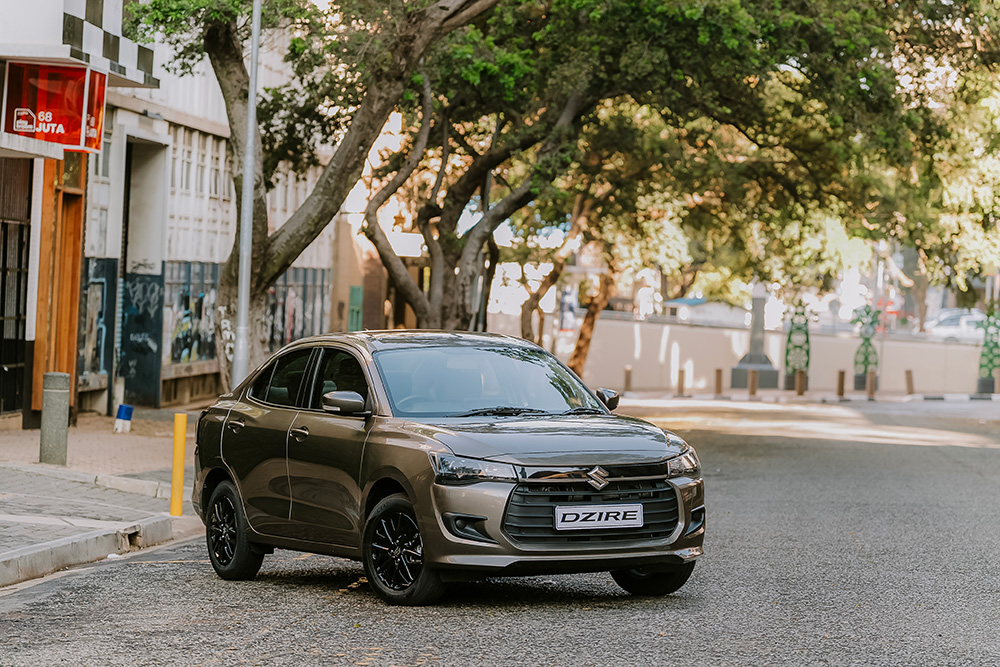
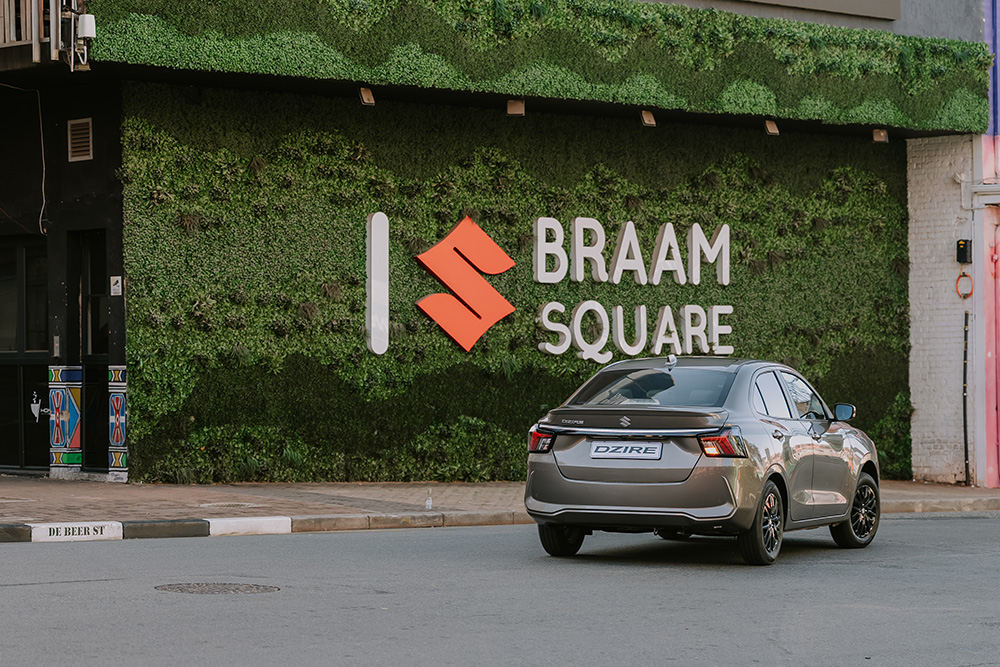
Suzuki’s fourth‑generation DZire launched in South Africa on 12 May 2025, aiming directly at value‑driven buyers, ride‑hail operators and small‑family users. Built on the Swift’s HEARTECT platform, it delivers a familiar drive feel with commendable efficiency. The 1.2-litre three-cylinder petrol engine, offering 60 kW and 112 Nm, is available with a five-speed manual or CVT (on GL+), generating a claimed combined fuel consumption of 4.4 l/100 km. Real‑world driving during launch, especially under load, nudged that closer to 6 l/100 km – still impressive.
Pricing starts at R224,900 for the GA manual, R246,900 for the GL+ manual, and R266,900 for the GL+ CVT. All come with a class-leading five-year/200,000 km warranty and a four-year/60,000 km service plan. This entry-level strength extends to safety, featuring six airbags, ESC, ABS with EBD, hill-hold assist, and a five-star adult and four-star child rating from Global NCAP.
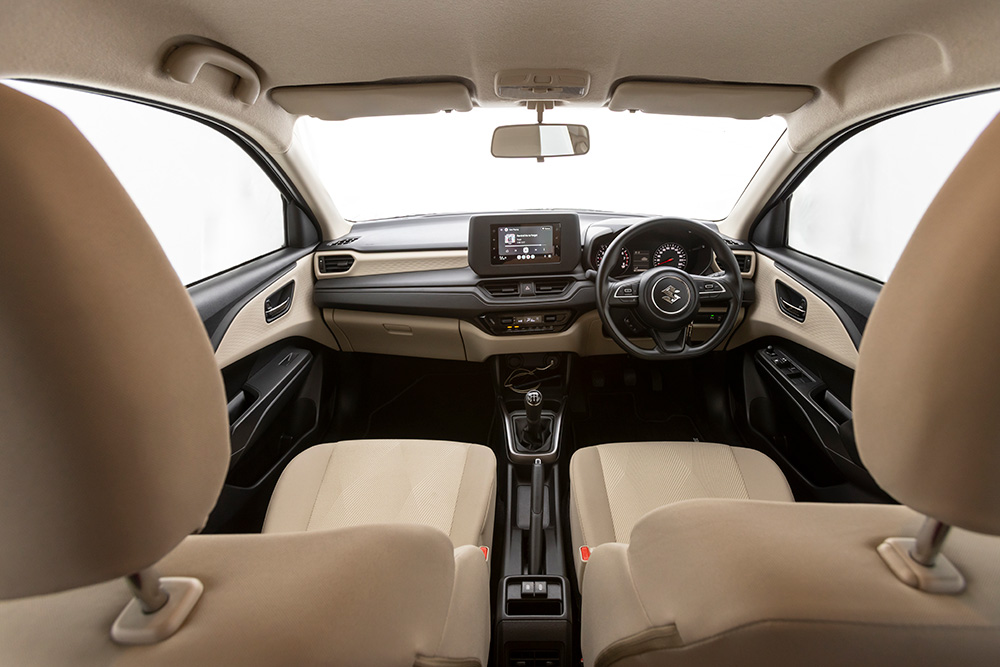
Inside, the DZire mirrors the Swift’s design – a wrap-around dash, analogue dials, a driver-angled centre stack, and a beige-and-black scheme that feels roomy but relies heavily on hard plastics. The GL+ adds a 7″ touchscreen with wireless Apple CarPlay/Android Auto, cruise control, reverse camera, hill‑hold and rear USB vents. Rear passengers benefit from good legroom, a centre armrest with cup‑holders and dedicated vents, although fixed rear seats limit boot flexibility. The boot capacity is a generous 378 litres.
On the road, the DZire delivers nimble urban dynamics thanks to its Swift‑based chassis. That said, the underpowered 1.2-litre engine needs revving up in hilly Joburg driving, and the CVT can bog down under load. In its core role – as a commuter, courier, or first-time family car – it impresses with efficiency, adequate performance, and excellent after-sales support.

THE REFINED CONTENDER
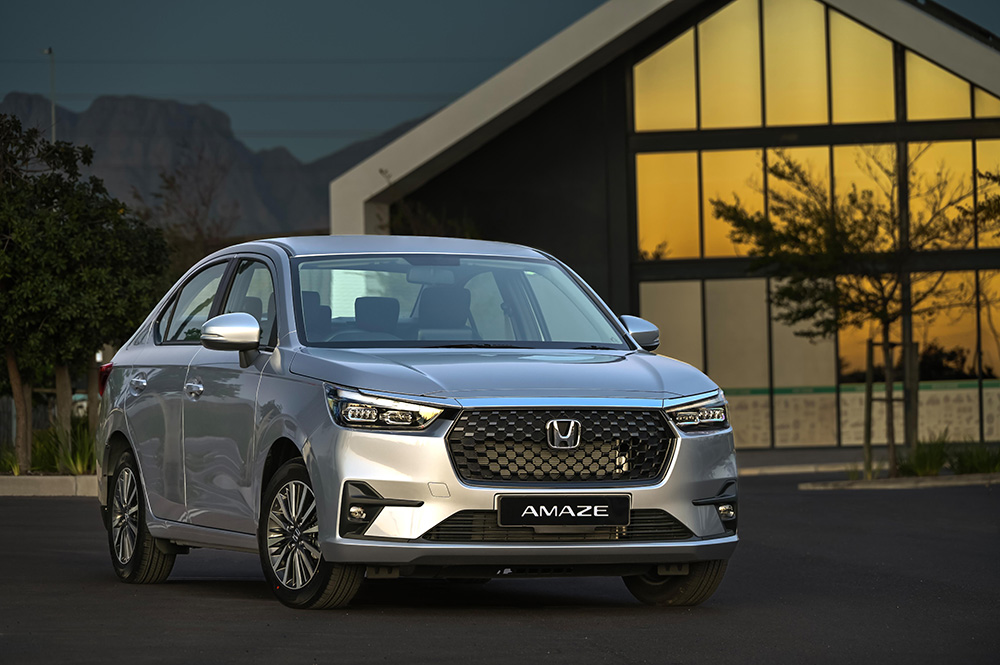
Debuting in South Africa a week after its main segment rival, the new Honda Amaze arrived with a sharper look, smarter cabin, and elevated refinement. It retains its 1.2-litre i-VTEC four-cylinder engine, producing 66 kW and 110 Nm, available with either a five-speed manual or a CVT that simulates seven ratios. Fuel economy is officially rated at around 5.5 l/100 km.
The entry‑level Trend manual is priced at R254,900, followed by the Comfort manual at R274,900, and topping out at R294,900 for the Comfort CVT. Ownership includes a five-year/200,000 km warranty, four-year/60,000 km servicing, and three years of AA roadside assistance.
Inside, Honda’s “Man Maximum/Machine Minimum” philosophy delivers a more refined cabin space with a broader body and improved elbow room. The dashboard styling borrows from Civic and CR‑V, featuring a full‑width vent bar, an 8″ touchscreen infotainment system and a 7″ TFT driver display. Trend spec offers keyless entry, auto climate control, wireless CarPlay/Android Auto, reverse camera, LED lights, and vehicle stability assist. Stepping up to Comfort adds LED fog lights, auto‑on headlights, wireless charging, paddle shifters with the CVT, and six airbags.
With 416 litres of boot space, the Amaze leads the class by a clear margin. On the move, its composed ride was a real winner, offering steady high-speed stability, smooth steering, and well-controlled body motion – even in wet and windy coastal conditions on launch day. The CVT can drone under hard acceleration, but for relaxed everyday driving, it remains hushed and effortless. One note: at Johannesburg’s altitude, engine output drops by around 17%, which, with four adults aboard, might make it feel underpowered.

WHICH ONE SHOULD YOU CHOOSE?
Both sedans bring significant value and proven reliability, but their strengths diverge. The DZire is the smart-money pick: R30,000 to R70,000 cheaper across comparable trims, it still delivers six airbags, ESC, hill-hold, wireless Apple CarPlay, and excellent fuel usage. It may feel plasticky inside and work harder on Gauteng’s hills, but it delivers the essentials with Suzuki’s trusted after‑sales support.
The Amaze, however, is the choice for those who prioritise cabin quality, comfort and refinement. Its thoughtfully styled, quieter interior is more supportive of long‑distance commuting. Higher-spec models add thoughtful tech features such as wireless charging, auto lights, and paddle shifters, while the 416-litre boot is hard to beat. Its ride quality and NVH insulation also feel a step above.
LAST WORD
In short, if your priority is value without sacrificing quality or safety, the Suzuki DZire is an outstanding B‑segment proposition. However, if you care more about interior ambience, ride refinement, and top-tier convenience features (and can justify the price premium), the Honda Amaze delivers a notably more polished experience. Both will serve dependably for years, but the choice comes down to savvy frugality versus elevated everyday comfort.
Report by BERNIE HELLBERG JR | Images © SUZUKI AUTO SOUTH AFRICA / HONDA SOUTH AFRICA