



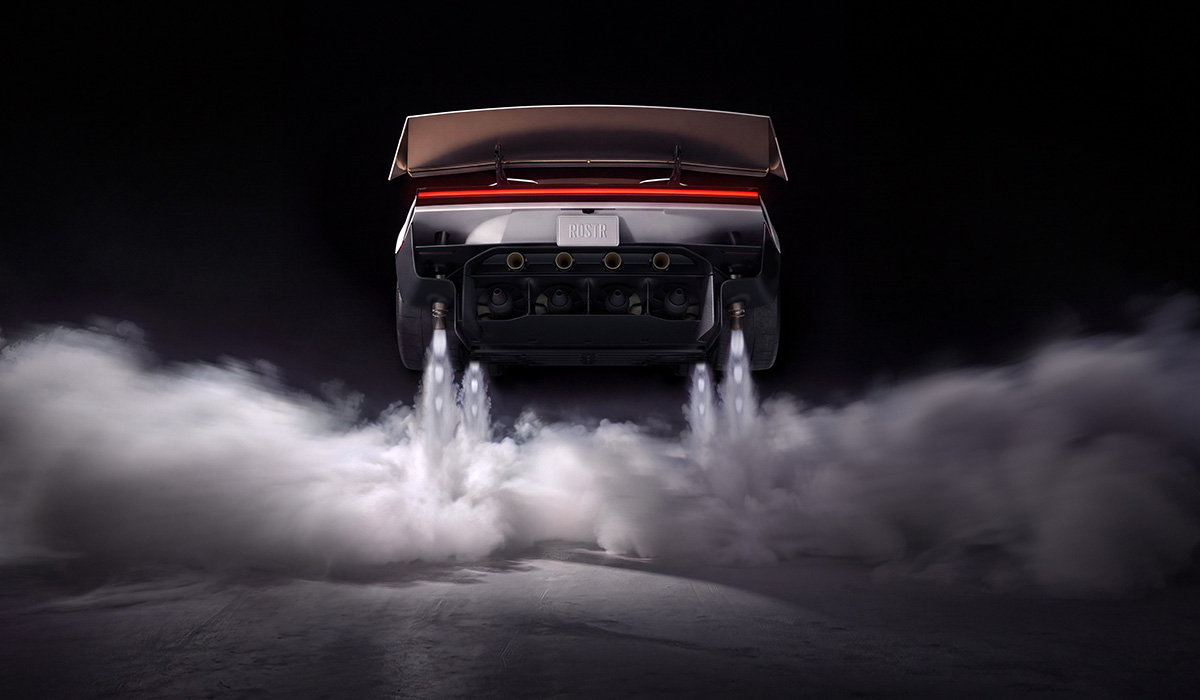
Complete with suction fans, cold gas thrusters and a spectacular disregard for convention, Tesla’s long-awaited Roadster promises more than hypercar-shattering acceleration. It dares to imagine a future in which the only limits are the laws of physics.
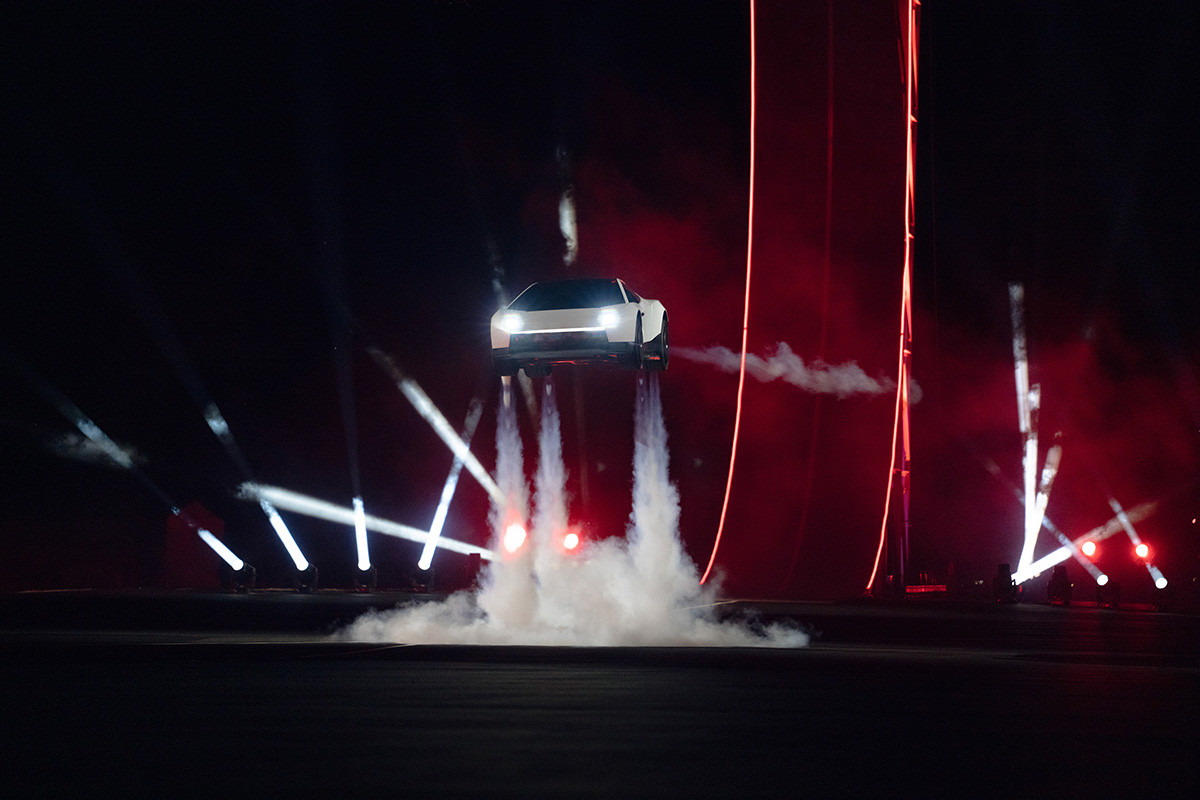
Under a Texas night sky on 15 October 2026, a white two-seater Tesla Roadster slowly rolled up a curved ramp, clung to it upside down, and then executed a controlled barrel roll and returned to earth, gently landing on all four wheels. No, this was not a scene from a science-fiction blockbuster. It was presented as a demonstration of the new Tesla Roadster, a machine that promises to blur the boundaries between road car, engineering experiment and outright spectacle.
After almost a decade of delays, Tesla’s electric sports car is back in the spotlight, and subtlety is evidently not part of the brief.
Tesla’s original Roadster, produced between 2008 and 2012, was essentially a Lotus Elise reimagined with an electric powertrain. Around 2,450 examples were built, proving that an electric car could be desirable, exciting and genuinely quick. It helped establish Tesla’s credibility at a time when electric mobility was still widely regarded as an exercise in compromise.
Then came November 2017. At the launch of Tesla’s Semi electric truck, a sleek grey Roadster prototype emerged from the trailer. The promised figures were astonishing: zero to 60 mph (0-96 km/h) in 1.9 seconds, a range exceeding 1,000 km, and seating for four. Production was initially expected in 2020. Deadlines came and went as Tesla focused on batteries, volume cars, autonomy and AI.
Freud highlighted the value of “delayed gratification” in early childhood development. Tesla applied that same principle to engineering. The wait has delivered something far more radical.
MORE AEROSPACE THAN AUTOMOTIVE
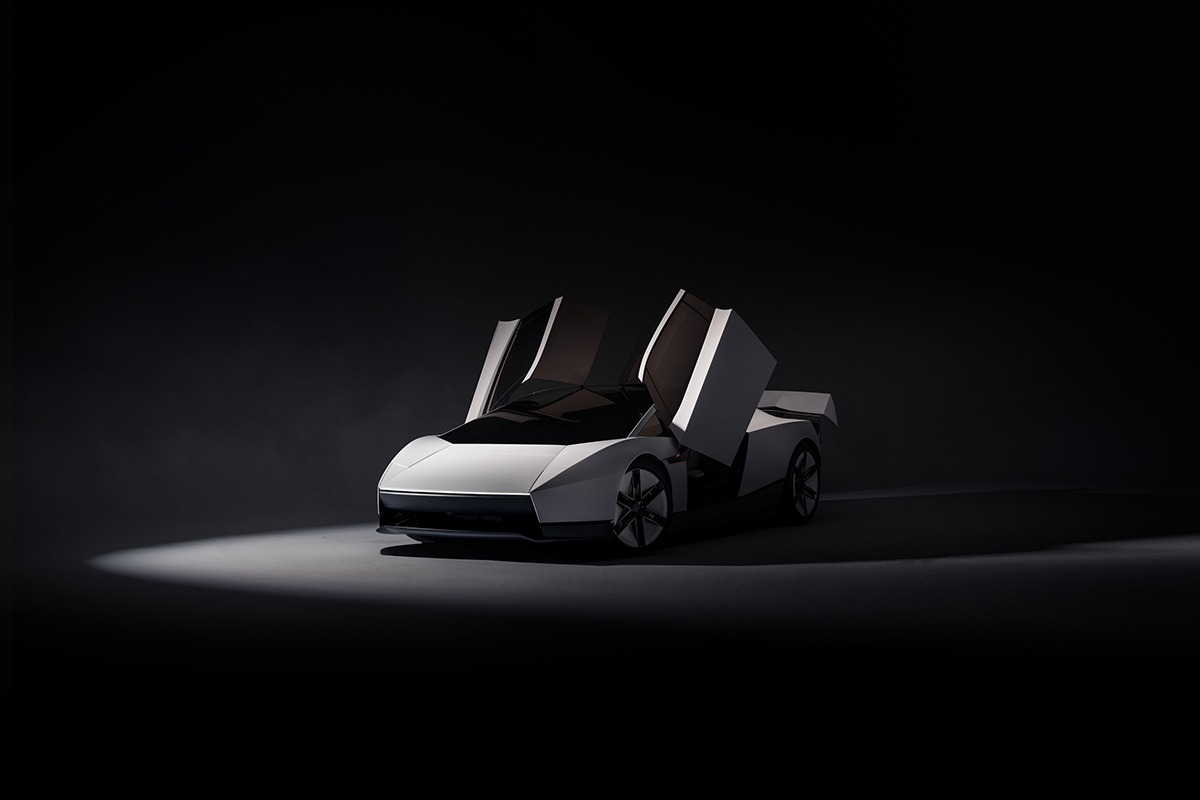
Finished in Ano White aerospace paint, with gold-tinted glazing and titanium accents, the angular new Roadster looks closer to military aerospace hardware than a conventional sports car. Design chief Franz von Holzhausen’s team has created a machine that appears to have arrived from a future in which supercars are designed as much like aircraft as automobiles.
Pop-down headlights, fixed structural seat shells (with adjustable back), a steering yoke with steer-by-wire, drive-by-wire, and brake-by-wire systems reinforce the impression.
Performance claims are extraordinary: more than one megawatt of power, over 1,400 Nm of torque, a top speed beyond 370 km/h, and range exceeding 500 km. An 800-volt architecture, Tesla designed and manufactured 4,680 cells, and advanced thermal management target a 15-80% charge in around ten minutes. Weighing in at under 1,700 kg, it aims straight at the exclusive supercar elite.
THE ART OF STICKING TO THE ROAD
The most intriguing aspect of the Roadster may not be its acceleration, but its proposed approach to generating grip.
Suction fans are not new. Gordon Murray’s 1978 Brabham BT46B “fan car” extracted air from beneath the chassis for downforce and won its only F1 Grand Prix before controversy forced its withdrawal. The McMurtry Spéirling has since shown fan-generated downforce can produce astonishing low-speed grip.
Tesla’s achievement lies in the ambition to combine these established ideas with extreme electric performance, active aerodynamics and, in certain configurations, rocket-style propulsion.
Its multi-mode suction system is claimed to generate up to 2 Gs of downforce, allowing the car to remain attached to an inverted surface. Adaptive spool-valve dampers are said to lower the ride height by 40 mm in Track mode, while increasing stiffness by three times. Active aerodynamic surfaces would adjust between road, high-downforce, and low-drag configurations.
It is an extraordinary collection of technologies. Making them work together reliably, safely and repeatedly in a production car will be the real engineering challenge. In the words of Elon Musk – “Prototypes are easy. Production is hard.”
ELECTRIC POWER MEETS ROCKET SCIENCE
For those who consider conventional hypercars insufficiently dramatic, Tesla has another proposition: the SpaceX package. Cold-gas thrusters fed by carbon-fibre pressure vessels deliver additional bursts of thrust, marrying electric motors with aerospace technology. Tesla’s claimed sub-second zero to 100 mph (0-96 km/h) figure for the most extreme versions looks legitimate after a 0.81-second demonstration.
The concept is fascinating. The Roadster is not simply extracting more from motors and tyres. It is exploring entirely different ways of generating force. And that raises a rather unexpected question. What if the most interesting implications of the Roadster extend beyond the Earth’s atmosphere?
The more radical implications invite speculation beyond Earth’s atmosphere. There is no evidence Tesla intends the car as a lunar or Martian test bed, yet SpaceX involvement and Elon Musk’s habit of thinking far into the future – the very definition he applies to intelligence – make the connections hard to ignore.
The Moon has no roads, no chargers, and one-sixth Earth’s gravity. Cold-gas thrusters suggest the possibility of short, controlled hops over obstacles rather than pure wheel-driven travel. Sustained hovering would drain propellant fast, so wheels remain practical for routine movement, but auxiliary propulsion could have specialised uses.
These ideas remain speculative. The Roadster is not a lunar rover in disguise. Still, when electric vehicles, robotics, tunnelling expertise, and interplanetary transport share the same ecosystem, technologies inevitably migrate.
LAST WORD
Production is targeted for 2028 at Gigafactory Texas, and even with prices still unconfirmed, you can pre-order your Roadster on the Tesla website.
It is tempting to dismiss the entire project as elaborate publicity. The claims are bold enough to invite scepticism, and the long wait has earned every observer the right to demand evidence over promises. Yet motoring history is littered with once-improbable ideas that were mocked before they rewrote the rules. Turbocharging, carbon-fibre monocoques, and the modern electric performance car itself all began as radical experiments. Tesla, more than any other company, made the last of those possible.
The Roadster does not need to become a flying car or hit every headline number to matter. If Tesla translates even a fraction of these radical ideas into a dependable, usable performance machine, it will challenge the industry far beyond acceleration times.
There is something refreshing about a project that makes engineers argue, competitors watch closely, and enthusiasts wonder what comes next. Keep one eyebrow raised until the production car arrives. The other can stay firmly in the air.
Report by WILHELM LOOTS | Images © TESLA