For much of its long history, Changan Automobile was not a carmaker in the contemporary sense. Founded in 1862 as a military supply workshop, the company spent decades producing weapons, machinery and industrial equipment. Automobiles were not yet part of its core identity. That changed in 1959, a year that stands as the first real pivot towards vehicle manufacturing.
The catalyst was the Changjiang Type 46, a light utility vehicle developed and produced under state direction. While little photographic or technical detail remains today, its importance is unquestionable. The Type 46 marked the first time Changan designed and built a complete vehicle, taking responsibility for engineering, production and assembly. Shown publicly during the People’s Republic of China’s tenth anniversary celebrations, it carried symbolic weight far beyond its modest mechanical brief. For Changan, it represented entry into the automotive world rather than simply supporting it.
Yet the Type 46 did not instantly transform Changan into a modern car company. In the years that followed, vehicle production remained limited and largely functional, focused on state and commercial needs. The real evolution came in the 1980s, when China’s automotive landscape began to open up, and consumer demand started to shape product development.
THE MODERN ERA
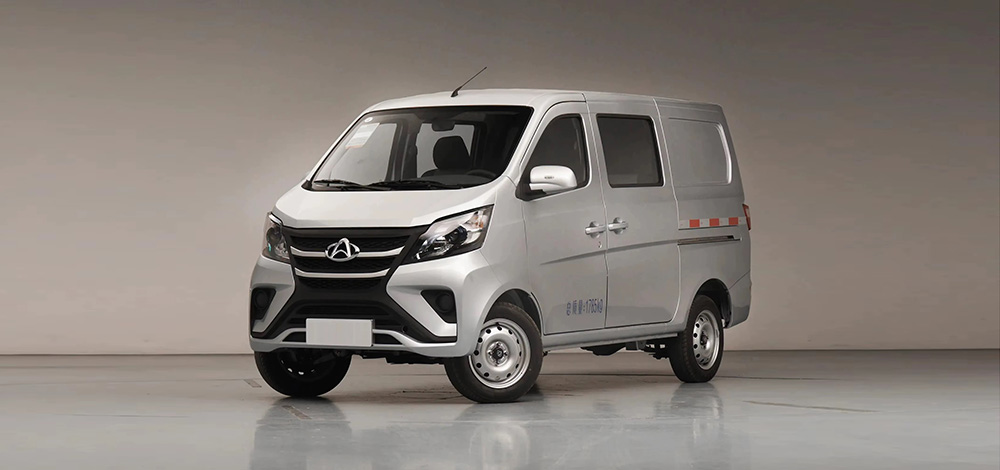
A decisive step arrived in 1984 with Changan’s technical cooperation agreement with Suzuki. This partnership served as the bridge between early vehicle manufacturing and modern automotive production. Through Suzuki’s platforms and engineering expertise, Changan gained access to proven small-vehicle architectures, production techniques, and quality control processes. The result was a range of compact commercial and passenger vehicles aimed at everyday users rather than state fleets.
Models that emerged from this period, including early microvans and pick-up derivatives that would later evolve into the Star line, signalled a fundamental shift. Changan was now designing vehicles for private ownership, building dealer networks and learning how to compete in a market environment. Engineering discipline improved, manufacturing volumes increased, and brand recognition began to grow beyond industrial circles.
By the late 1990s and early 2000s, Changan had established itself as a credible passenger vehicle manufacturer within China. Continued investment in research and development, combined with further joint ventures, accelerated that progress. The company’s modern identity, defined by in-house platforms, contemporary design and growing export ambitions, can be traced directly back to the groundwork laid during the Suzuki partnership era.
In hindsight, the Changjiang Type 46 remains the starting point, the moment Changan proved it could build a vehicle. But the transition into a modern automotive company was shaped by what followed. The move into passenger cars, the embrace of international collaboration and the shift towards market-driven products are what truly set Changan on the road it travels today.
Report by BERNIE HELLBERG JR | Image © CHANGAN