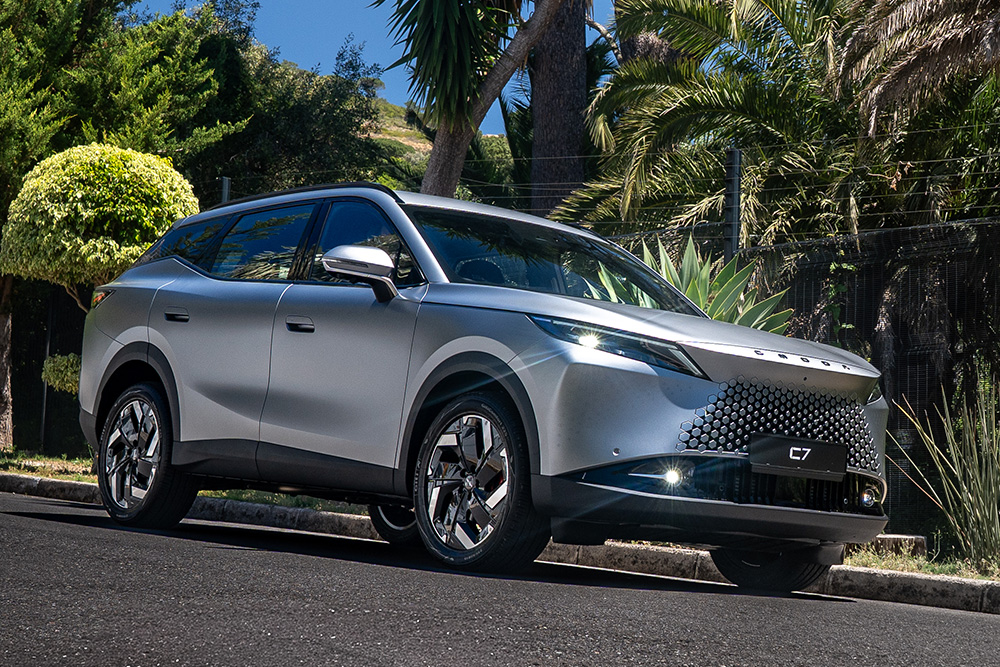
In 2025, Omoda quietly expanded its footprint, stepping up the pace and showcasing a noticeably sharper sense of identity. A rapid rollout of new models and meaningful updates has shifted the brand closer to the mainstream, forcing it into conversations previously dominated by more established names. Within that momentum, the C7 stands out as one of the clearest expressions of where Omoda is headed.
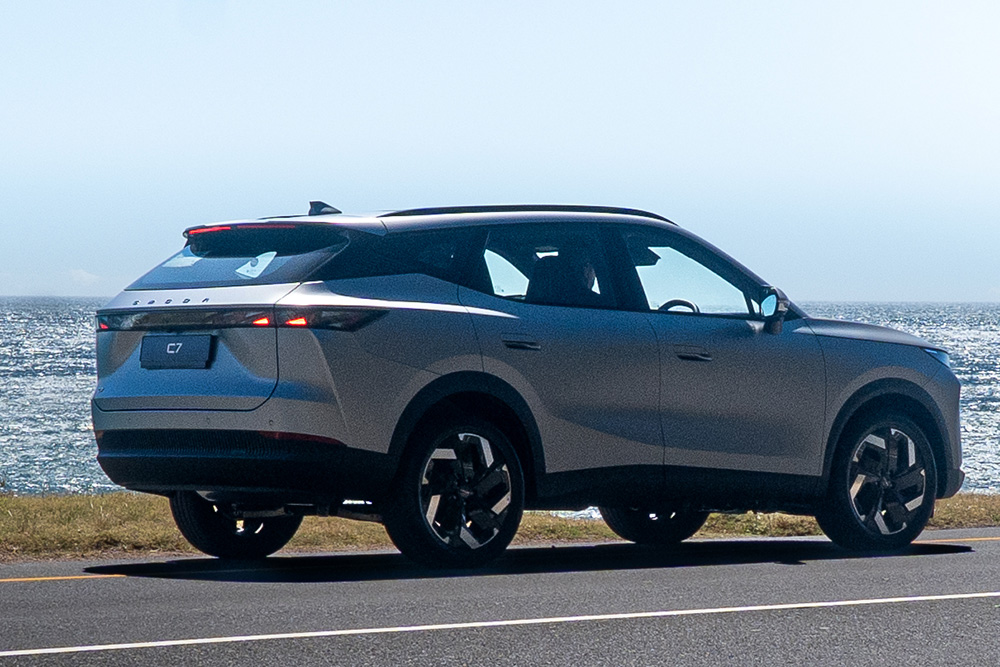
From a design perspective, the C7 feels like a turning point. It is one of the most resolved vehicles the brand currently offers, and certainly one of the most visually convincing. Where the C5 now feels anchored to an earlier design chapter, the C7 leans fully into a futuristic aesthetic that feels intentional rather than experimental. The surfaces are crisp, the proportions are balanced, and the overall silhouette carries a sense of purpose that translates well on the road.
It does not rely on shock value or excessive detailing to make its point. Instead, the C7 looks confident in its own skin, which is why it works so well. In a segment where many rivals default to conservative shapes, the C7 manages to look modern without becoming polarising.
A CABIN THAT MOSTLY GETS IT RIGHT
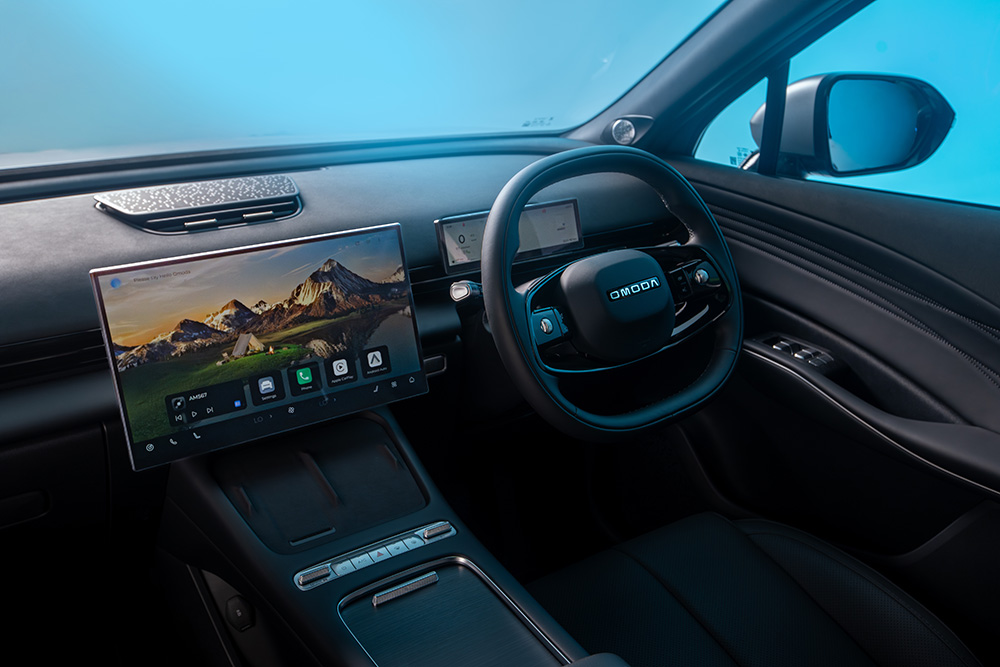
Inside, the C7 continues to build on that confidence. The cabin design is clean and contemporary, dominated by a large central touchscreen and a neatly integrated digital driver display. Importantly, it avoids the trap of feeling like a tech demo. Everything is logically placed, easy to operate and visually cohesive.
Material quality is better than expected at this level. Soft touch surfaces appear where your hands naturally fall, and there is a sense that the interior was designed to be lived in rather than merely admired under showroom lights. Front seats offer electric adjustment, heating, and ventilation, reinforcing the value proposition.
Space is another strong point. Front occupants are well catered for, while rear seat passengers benefit from generous legroom and a comfortable seating position. Headroom is adequate, even for taller adults, and the rear bench feels like a space designed for regular use rather than occasional necessity. Boot capacity is equally practical, adding to the C7’s credibility as a genuine family vehicle.
Technology performance during my test drive was largely faultless. Infotainment responded quickly, smartphone connectivity remained stable and none of the strange electronic quirks that have occasionally surfaced in Chinese vehicles made an appearance. In that respect, the C7 feels mature, and that maturity is one of its most important attributes.
OUT OF STEP
Power comes from a 1.6-litre turbocharged petrol engine producing 145 kW and 290 Nm, paired with a seven-speed dual clutch transmission. On paper, it sits neatly within the segment’s expectations, and on the road, it delivers competent, predictable performance. It is not a drivetrain that excites, but it does not frustrate either. Acceleration is sufficient for daily driving, highway cruising is relaxed, and the engine rarely feels out of its depth.
Ride quality is well sorted. The suspension deals effectively with poor road surfaces, maintaining composure without becoming overly soft. At speed, the C7 feels settled and refined, with wind and road noise kept largely in check. Steering is light and easy, prioritising effortlessness over engagement, which aligns with the vehicle’s intended role.
Fuel consumption, however, proved less impressive. Despite more optimistic official figures, real-world driving averaged around 9.0 L/100 km across a mix of urban and highway use. Although not unreasonable, it is noticeably higher than advertised, and worth factoring into the buying decision.
The most disappointing aspect of the driving experience, though, was the adaptive cruise control system. During extensive testing, it behaved unpredictably, struggling to maintain a consistent set speed. The system would accelerate slightly beyond the selected limit, then abruptly cut power, dropping below the set speed before repeating the cycle. The constant surging and hesitation made for an uncomfortable, at times irritating, experience.
This is particularly frustrating because the same Chery-sourced system performed flawlessly in the Jetour T1 tested over the festive season. That points towards a calibration or software issue rather than a fundamental flaw. Whether the behaviour is isolated to the specific unit I drove or more widespread remains unclear, but it is something Omoda needs to address, ideally through a software update.
LAST WORD
The C7 is, in many ways, a strong statement of where Omoda currently stands. It looks the part, feels well put together and offers a level of technology and comfort that places it firmly alongside more established rivals. More importantly, it feels cohesive, which suggests a brand that is beginning to understand itself.
Fix the adaptive cruise control behaviour and narrow the gap between claimed and real-world fuel consumption, and the C7 would be far easier to recommend without caveats. Even so, it remains one of the most convincing Omoda products to date and a clear indicator that the brand’s rapid rise is no longer a novelty to be dismissed.
Report by BERNIE HELLBERG JR | Images © OMODA SOUTH AFRICA