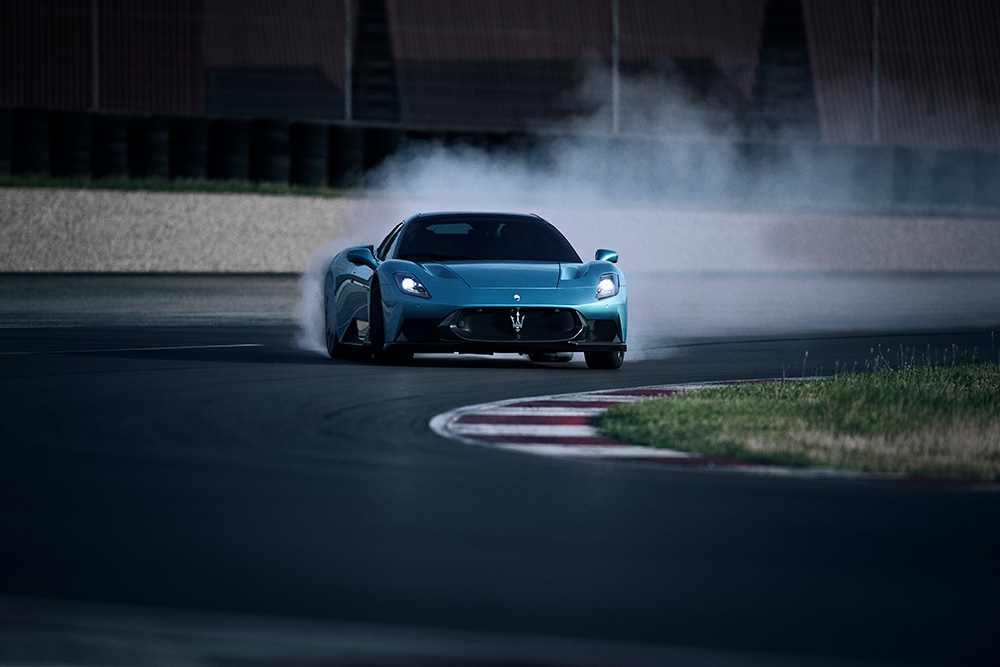
Maserati’s latest release, our cover model, the MCPURA, is the newest example of sustainability driving ingenuity and creative thinking in the face of the barrage of environmental laws impacting the automotive industry. Rather than complain, though, Maserati decided to get creative and copy a page out of Honda’s book, a book the Japanese brand wrote way back in the 1970s.
The “Clean Air Act”, coming directly from the United States Congress, was responsible for cajoling car manufacturers in the USA to rethink what comes out of their cars’ exhausts. Honda, like Toyota, GM, and Ford, had the same problem: “How do we get our cars compliant by the 1975 deadline without just making our cars slower?”.
What was Toyota, GM, and Ford’s answer? The catalytic converter, exhaust gas recirculation systems, and crude fuel-injection systems. None of those worked properly. You see, catalytic converters don’t like a lean-running engine, and leaded fuel was still a common fuel type back then. Honda had to solve all those problems and do it with a fraction of the resources or manpower, after all, all they made were motorcycles and tiny cars.

BACK IN THE PRESENT
You may ask why we’re talking about Honda and the 1970s “Clean Air Act” when this article is about the gorgeous Maserati MCPURA and its V6 Nettuno engine?
Honda’s solution to its conundrum was called the Compound Vortex Controlled Combustion system (CVCC), or as we know it today, the “pre-ignition chamber system”.
The premise, use a minimal amount of rich fuel/air mixture, force that mixture into a tiny pre-ignition chamber and ignite it, resulting in powerful, precisely directed flames that shoot out of orifices built into the pre-ignition chamber, those flame fire into the main ignition chamber, cleanly and simultaneously igniting the rest of the mixture, creating more power because the air/fuel mixture simply ignites faster, reducing knock, and saving fuel at the same time. Wow!
With Honda’s innovative approach to igniting fuel, they not only met the new clean air emission standards but were also the first to do so. Additionally, Honda did not need a catalytic converter; the technology could be adapted to existing engines with minimal redesign and was compatible with regular leaded gasoline.
Today, the MCPURA is the only road-going car with pre-ignition chamber technology, which is unusual because, from 2014 onwards, every F1 team has gradually shifted to pre-ignition chamber systems, helping reach 2014 F1 Hybrid regulation standards, keeping emissions down, and creating more power from smaller engine sizes. That is one of the most significant advantages of pre-ignition chamber technology.
To sum up, Maserati is offering us an Italian Trifecta engine, featuring fundamental F1 technology at its core, which enables it to produce 463 kW and 720 Nm of torque. If you want to know why this car and engine exist, the answer is in the first paragraph you’ll find on their website:
“An unfiltered conduit to the very soul of Maserati, feel energy spark to life – raw and immediate. Born from racing passion, Italian artistry and untamed ingenuity, here, beauty fuels adrenaline and moments are lived in heartbeats. MCPURA. Your return to pure driving emotion begins now.”
FUELLING DEBATE
F1’s Carbon-neutral Fuel from Thin Air
Image: Supplied
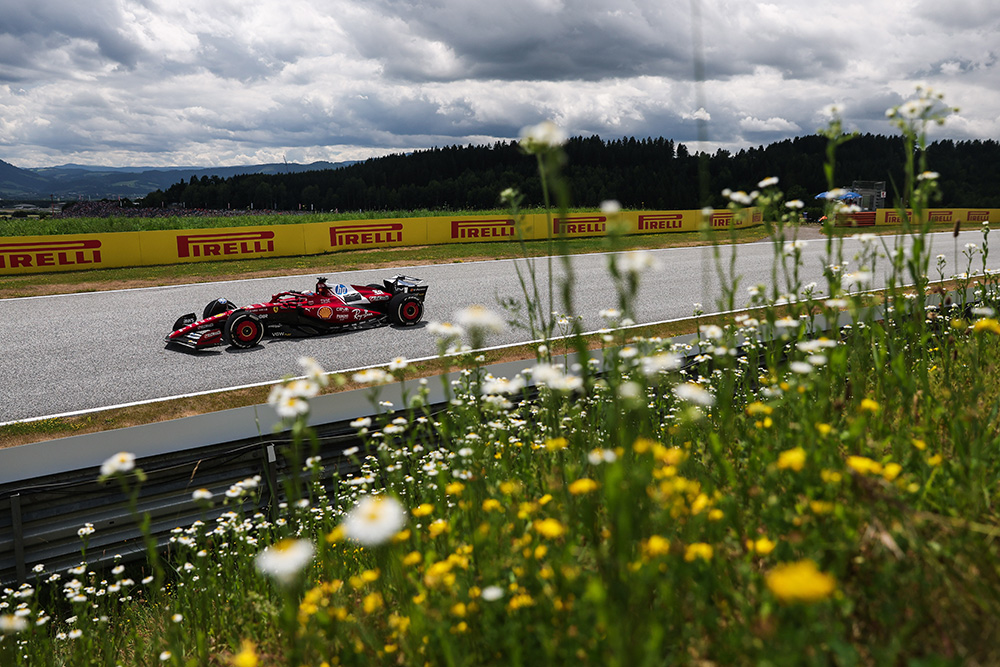
There’s another advancement in the F1 world that could have a very real impact on you and me – and it’s literally made out of thin air.
Formula One aims for net zero carbon emissions by 2030, and in 2026, it’ll take a significant step by introducing a net zero fuel alongside the new regulations.
This fuel behaves just like regular petrol, and uses the same building blocks of traditional fuel, but the way it is made is where things get interesting.
First, it requires a carbon source, which, typically, would have come from crude oil. But F1 will use Direct Air Capture (DAC) machines that extract carbon dioxide directly from the atmosphere.
Next comes hydrogen, the fuel’s energy carrier. Traditionally, it’s derived from fossil fuels, but F1 will get theirs from water via electrolysis, powered by renewable energy – replacing the hydrogen typically obtained from crude oil.
Then comes the magic… Combining these two elements through a process called Fischer-Tropsch synthesis, the hydrogen and carbon dioxide are fused using heat and pressure to create a fuel chemically almost identical to gasoline or kerosene – but carbon-neutral.
Currently, it’s not inexpensive – ranging from $8 to $12 per litre – so we won’t be filling up our cars with it anytime soon. However, the fact that F1 is investing in this technology shows that they’re putting their money where their mouth is, and using racing as a test bed to help the world shift to cleaner fuels.
Report by RUBEN VON STEEN