



Having ended local production in South Africa after 60 years, Nissan faces a huge challenge to retain local customer confidence and goodwill. The African division of the Japanese manufacturer is acutely aware of this and is actively broadening its local product offering as part of the Re:Nissan strategic plan.
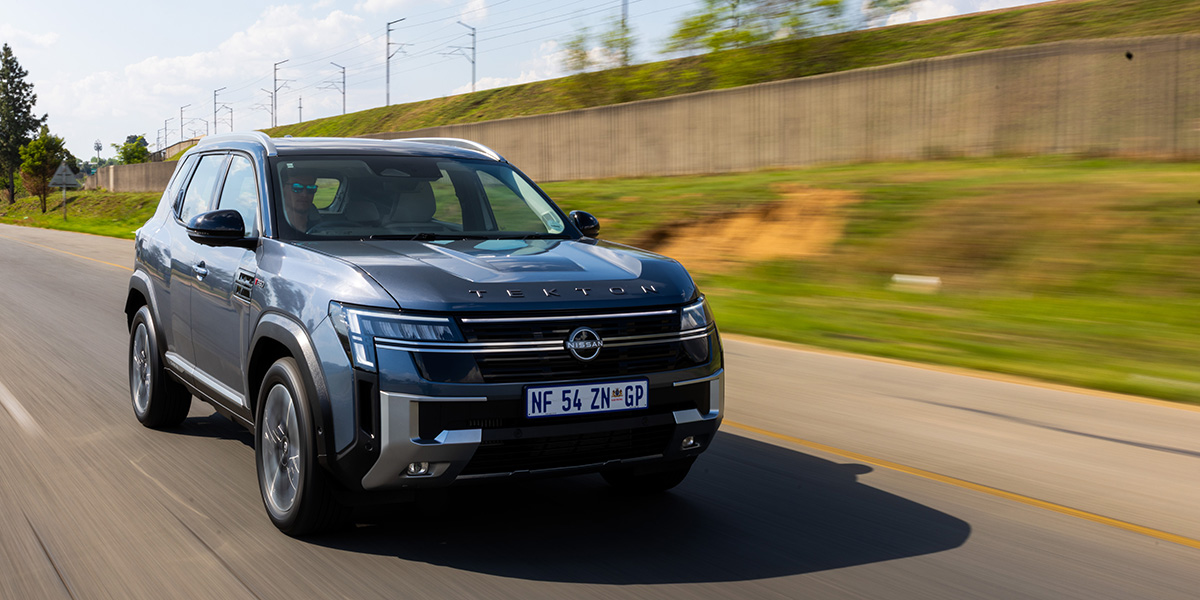
The new Nissan Tekton, launched during a three-day festival of Nissan at Gallagher Estate in Midrand (with the Nissan Patrol, expected early next year, as well as a special X-Trail derivative, the Rock Creek, also on show), is an important model in this strategy to show Nissan’s commitment to Africa and South Africa.
However, with the Tekton based on the CMF-B platform shared with the third-generation Renault Duster, now (again) manufactured in India, thus sharing many parts from the Duster and combining it with a contemporary Nissan-ised design, I initially wasn’t quite sure what to expect from this model.
Developed in partnership with Renault, South Africa is the first market after India, out of fifty global markets across the Middle East and Africa, to receive the Tekton – an indication of its importance in strengthening Nissan’s SUV portfolio and (hopefully) accelerate growth.
Competing with the Hyundai Creta, Kia Seltos, Toyota Urban Cruiser, Tata Sierra, Suzuki Across, and a plethora of Chinese C-SUVs, the Tekton combines Nissan Patrol-inspired styling, advanced technology such as Google-powered connectivity, advanced driver assistance technologies, and a spacious, premium cabin in a package tailored to evolving customer expectations.
Offered locally in four trims (Visia, Acenta, Tekna, and Tekna+), the Tekton’s Patrol-inspired design features sculpted lines, muscular arches, aero-tuned spoilers, flush roof rails, and a full-width chrome-accented grille with signature C-shaped LED connecting front headlamps with daytime running lights.
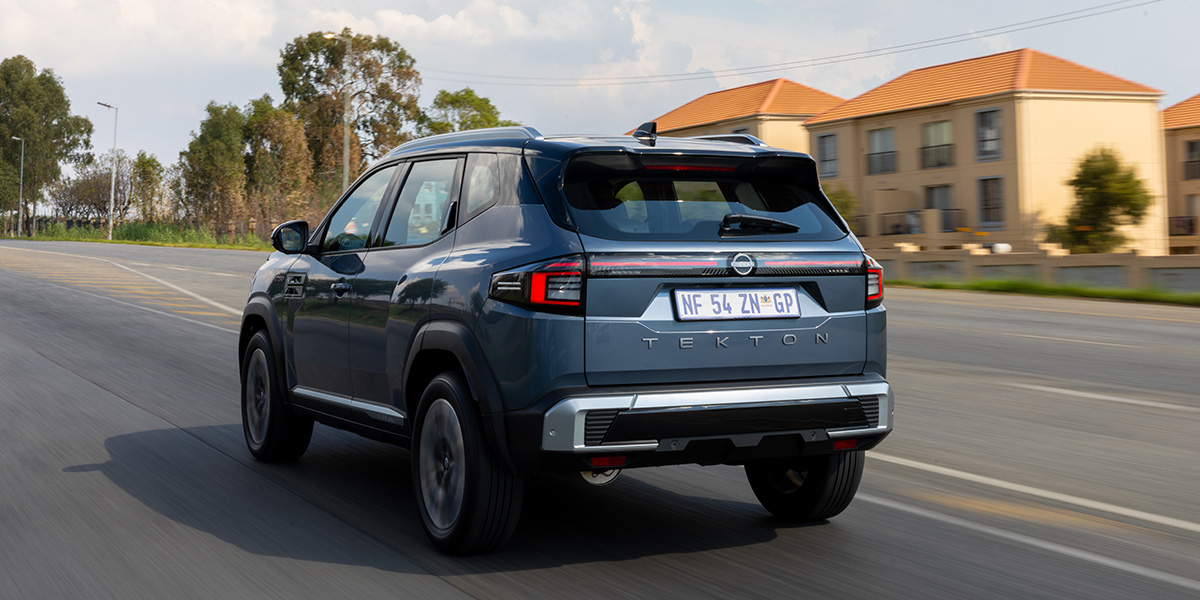
At the rear, the vehicle’s proportions are anchored by SynchroFlow C-shaped connected LED tail lamps and a double-C contrast skid plate. All models in the line-up are equipped with LED lights both front and rear. The design is further emphasised by the squared-off bonnet and fenders, a faux skid plate integrated into the front bumper and full-width light bars at the front and back.
TURBO-PETROL ENGINES
Like the Duster, the Tekton is offered with turbo-petrol engines exclusively across the range. The Renault-sourced 1.0-litre three-cylinder turbo engine delivers 74 kW and 160 Nm of torque and is paired with a six-speed manual gearbox. The 1.3-litre four-cylinder turbo-petrol engine delivers 120 kW and 260 Nm to the front wheels via a six-speed Dual Clutch Transmission (DCT).
Safety equipment across the range includes six airbags, electronic stability control (ESC), ABS with all-round disc brakes, hill-start assist, rear parking sensors, a reversing camera, and tyre-pressure monitoring. Higher trim levels receive a multi-view camera, rain-sensing wipers, and a wide and advanced suite of driver assistance systems (Level 2 ADAS).
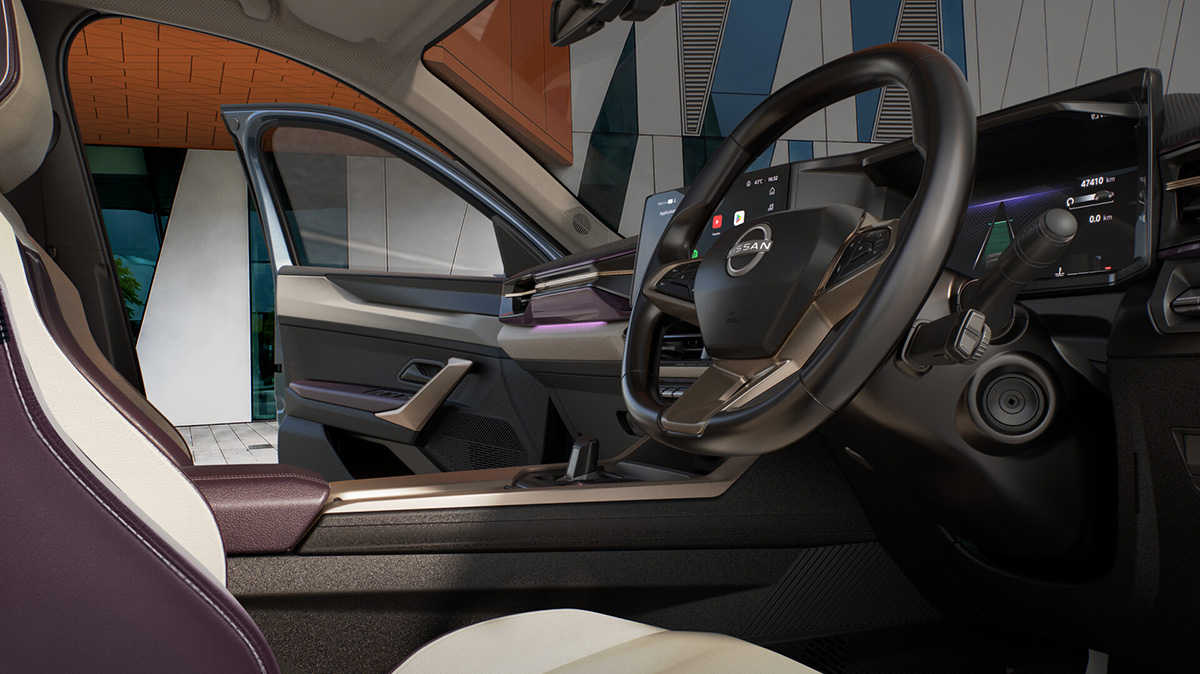
As in the Duster, the interior of the top-model Tekton Tekna+ (the model available for short test drives at launch) has a fully digital driver’s display, auto-aircon, ambient lighting, a premium sound system, a wireless smartphone charger, push-button engine start/stop, six airbags, and a panoramic sunroof. It comes in a wide range of colours, including two-tone Pearl White, Red, Silver, Blue and Moonbow (Grey) for the Tekna and Tekna+ models.
On the road, the Tekton surprisingly felt more solid and well-built than its Renault counterpart, with a smoother ride-quality although handling and steering wise there was no perceptible difference. Even so, the Chennai-built Nissan felt like a quality product, good enough to challenge the overabundance of rivals in its segment.
LAST WORD
Still, our drive experience was limited, necessitating a longer test period to really form a cognisant opinion. Yet, despite my initial doubt, the Tekton was more impressive than I expected, and with prices ranging from R400k to R530k, it is also competitive in terms of specifications and value.
With so many alternatives in the C-SUV space, it remains to be seen whether the Tekton, in support of the Magnite, will initiate a significant shift in Nissan’s local fortunes.
PRICING: NISSAN TEKTON
Tekton 1.0 Visia (Manual): R339,999
Tekton 1.3 Visia (DCT): R399,999
Tekton 1.3 Acenta (DCT): R459,999
Tekton 1.3 Tekna (DCT): R499,999
Tekton 1.3 Tekna+ (DCT): R529,999
Report by FERDI DE VOS | Images © NISSAN SOUTH AFRICA