



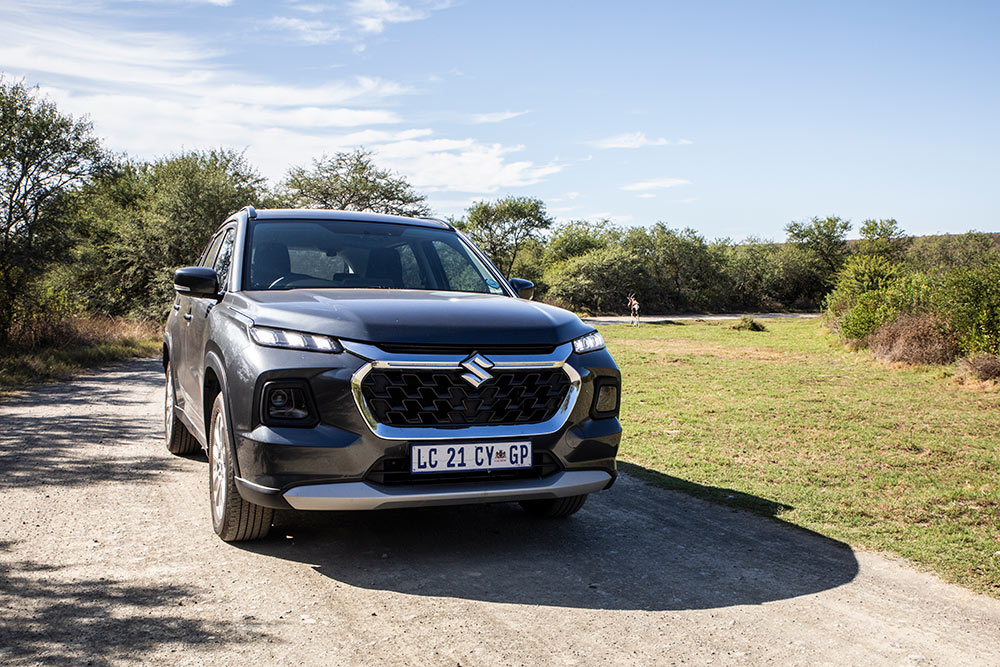
Interesting parallels can be drawn from the somewhat irregular history of Suzuki’s Vitara and Grand Vitara models and the Bontebok, the provincial animal of the Western Cape Province. To recount how the nameplate and the indigenous antelope faced near-extinction but were then revitalised, we visited the Bontebok National Park close to Swellendam in the latest Grand Vitara.
The Suzuki Vitara, first introduced in 1988, pioneered the compact SUV segment, preceding competitors such as the Kia Sportage (1993) and the Toyota RAV4 (1994). However, the body-on-frame vehicle, developed to slot in above the Jimny, was initially sold as the Escudo in Japan and as the Sidekick in North America.
The Vitara nameplate was only introduced in 1992 with its European release, yet it carried a variety of badges, as it was sold as the Santana 300 and 350 in Spain and with Suzuki still part of General Motors (GM), it was known as the Chevrolet, Geo and GMC Tracker in the US, Pontiac and Asüna Sunrunner in Canada, and the Chevrolet Vitara in select South American markets.
The compact SUV was also produced in China as the Wanli WLZ5020XLD and Guangtong GTQ5020XLZ. While replaced by the second generation model in 1998, the original proved so popular it was produced in Indonesia until 2001 and in Spain until 2006.
The first three-door, 1.6-litre Vitaras arrived in South Africa in 1989, courtesy of Delta Motor Corporation. The following year, a lengthened five-door version was introduced in Japan as the Escudo Nomade. European deliveries of the Vitara five-door derivative began in 1991 and were made available in South Africa the following year.
In 1994, a 2.0-litre V6 model (the first six-cylinder engine from Suzuki) and a 2.0-litre turbodiesel model were added in Japan but were not made available locally. However, following a facelift in 1996, the V6 (now upsized to 2.5 litres) and a 2.0-litre four-cylinder model slotted into the local range.
VITARA TO GRAND VITARA, AND BACK
In 1998, the second generation was launched – now named “Grand Vitara” in most markets. This range was accompanied by an even larger version known as the Suzuki XL-7 (Grand Escudo in Japan), and this seven-seat derivative was also locally available for a while.
Launched overseas in 2005, the third generation kept the Grand Vitara name. In 2008, the facelifted version became the first model introduced locally by the newly formed Suzuki Auto South Africa. Facelifted in 2012, this model’s production (except for export markets) was discontinued in Japan in 2017 and in Indonesia a year later.
By now, the Vitara nameplate’s continued existence was uncertain, as no plans for a future Japanese-built model were forthcoming. Yet, locally, it was only officially discontinued in October 2019, although sales continued well into 2020.
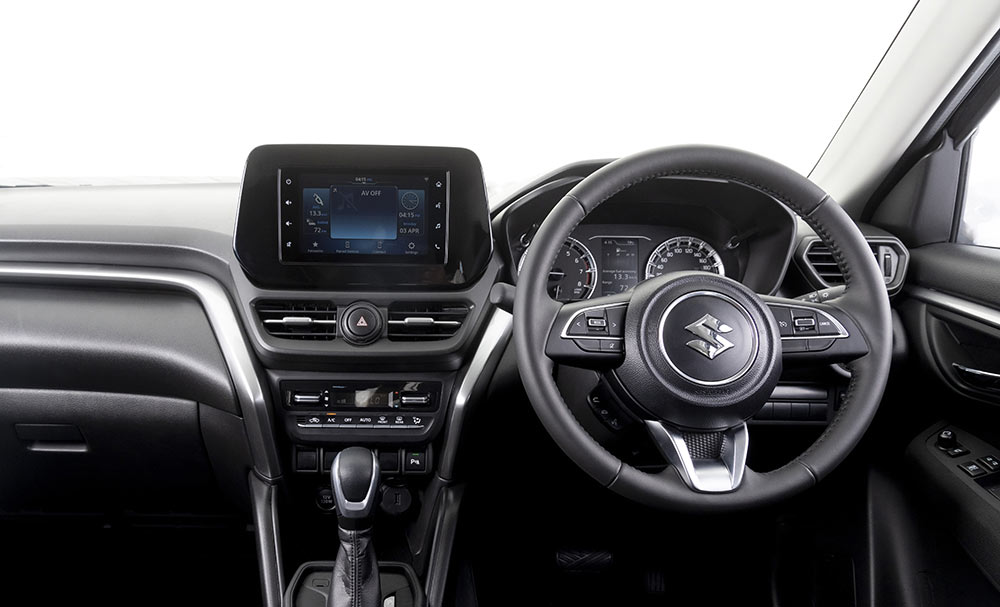
A DIFFERENT LINE
Inexplicably, the fourth generation, introduced in 2015 and sharing its platform with the SX4 S-Cross, again relinquished the “Grand” prefix. This range moved away from an off-road SUV and toward a more road-oriented crossover vehicle, but to further complicate matters, an Indian-built model, the Vitara Brezza, was unveiled in 2016.
While built on the global-market Vitara’s platform, this model was the first from Suzuki in the sub-four-metre subcompact crossover SUV segment and spawned a Toyota derivative, the Urban Cruiser. It also heralded a split in the Vitara heritage, as the second-generation model, unveiled in 2022, was badged Brezza only, without the “Vitara” moniker.
However, virtually simultaneously, the Grand Vitara moniker was revived for a model replacing the S-Cross in India, while its Toyota twin, the Urban Cruiser Hyryder (only called Urban Cruiser in South Africa), indirectly replaced the rebadged Vitara Brezza.
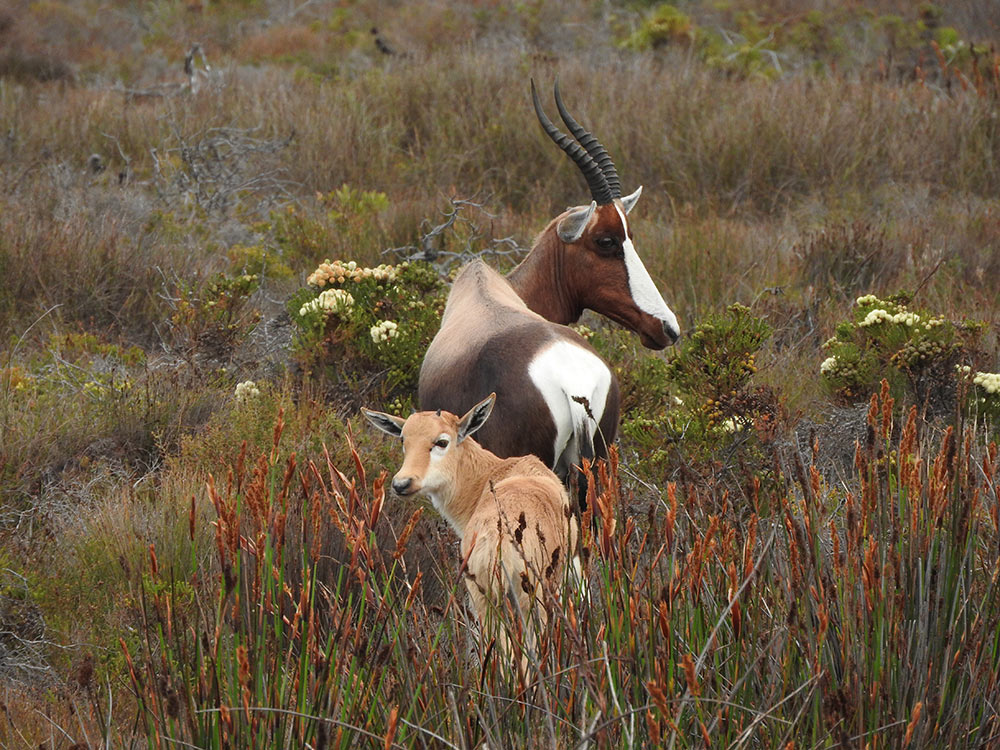
THE BONTEBOK STORY
The bontebok is one of a handful of antelope species endemic to South Africa and occurs naturally in the Fynbos and Renosterveld areas of the Western Cape. With the arrival of Dutch farmers in the area, bontebok were extensively killed as pests, and by the early 20th century, it was considered the rarest antelope in the world.
With the last blue buck shot in 1799 and the quagga becoming extinct in 1883, the bontebok faced the same fate, with a wild population of only 17 individuals remaining – much like the Vitara moniker faced eradicated when the Brezza nameplate became a standalone model line, and no successor for the Japanese Grand Vitara was imminent.
Also, much like the model name morphing from Vitara to Grand Vitara and Vitara Brezza, the bontebok has a subspecies, the blesbok, which occurs in substantial numbers on the Highveld. Interestingly, both are related to the common tsessebe.
They also share another unique trait: Unlike most antelope species, like eland, kudu, springbok, and impala, they are not good jumpers…and it is this inability to jump fences that helped in the bontebok’s conservation, as they could be contained by ordinary livestock fencing.
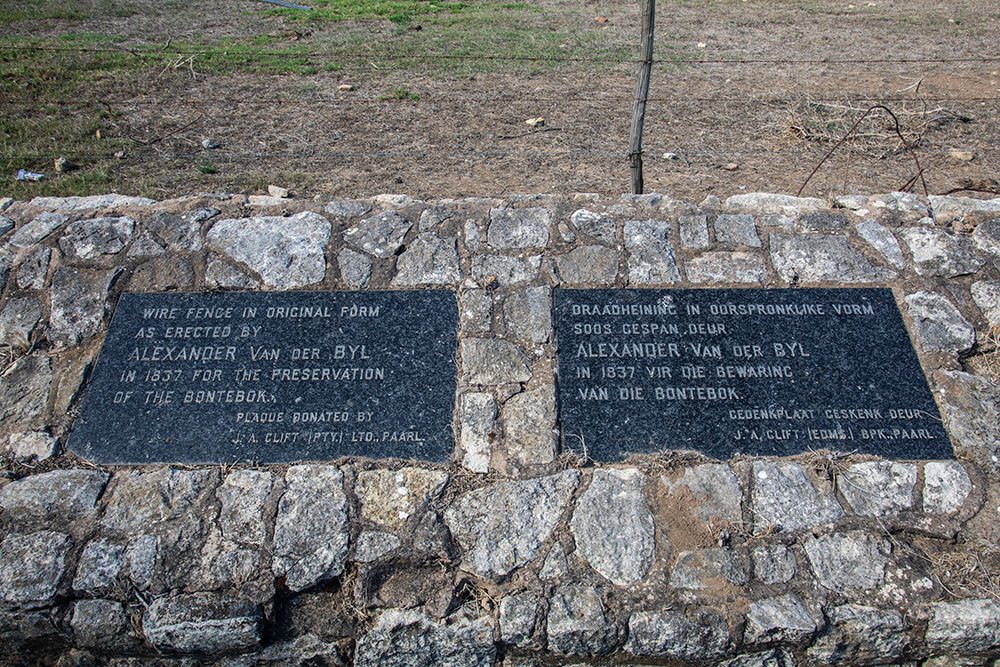
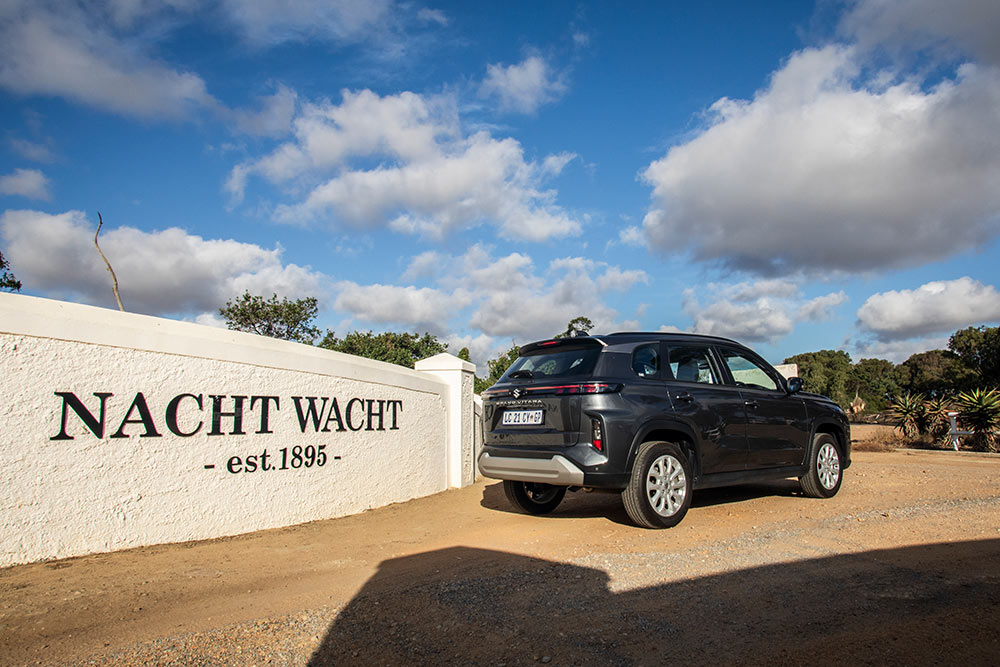
With only 17 bontebok remaining on Earth, Dutch farmer Alexander van der Bijl saved the species from inevitable extinction in 1837 by corralling them and fencing them off on his farm Nacht Wacht near the town of Bredasdorp in the Overberg region.
COMMEMORATIVE TRIP
On learning that the original fence poles erected by Van der Bijl still exist, as well as a plaque commemorating the event, and considering the parallels between the Vitara and bontebok, we took the road from Cape Town to Bredasdorp in the latest Grand Vitara to locate the fence and monument.
Endowed with the venerable 1.5-litre four-cylinder K15B engine used in most local Suzuki models, the new flagship SUV buzzed along quite leisurely on the N1 highway towards Worcester. With only 77 kW available at 6,000 rpm and 138 Nm of torque at 4,400 rpm, it is no speed demon, but its ride quality and calm interior ambience made up for its lack of pace.
The five-speed manual transmission in our GLX model was smooth, with easy, slick changes. However, it needed some vigorous stirring to keep the engine on the boil, particularly on steep inclines, long climbs, and when overtaking other vehicles.
In this respect, the new Grand Vitara is indeed a different breed (as Suzuki describes it) when compared to predecessors like the 2019 Vitara Turbo (103 kW and 220 Nm of torque), the 2014 Grand Vitara Summit 2.4 (122 kW and 225 Nm) and even the 2015 Vitara 1.6 GLX (86 kW and 156 Nm).
However, the top AllGrip model is available with the K15C 1.5-litre petrol engine with mild hybrid electric power – a first for Suzuki in South Africa. This engine has a higher compression ratio (12.0:1) and an always-on mild-hybrid system, with a power output of 75.8 kW at 6,000 rpm and 136.8 Nm at 4,400 rpm. This mild-hybrid system continuously supports the engine across a wide torque band, lowering fuel consumption and emissions.
FINDING THE PLAQUE
After reaching Bredasdorp, we continued straight on the Arniston road. Not even four kilometres out of town, we located the plaque and fence pole very close to the gate of the Nacht Wacht farm. The plaque also mentions the efforts in the late 1920s to make land available on the farm Zeekoevlei, close to the De Mond estuary, to relocate the bontebok.
Numbers differ, but in 1931, between 17 and 22 bontebok were herded by men on horseback to this 700-hectare refuge, established for the explicit purpose of conserving the species. The population grew steadily; by 1939, the number had grown to 123.
However, due to the area not being suited to hosting bontebok during rainy years, their numbers started to decline. They were moved again to the present-day Bontebok National Park, close to Swellendam, in 1961. The park started with a population of only 61 animals, and today, there are over 200 in the park itself and an estimated 3,500 in various conservation areas in South Africa.
LAST WORD
Like the revival of the bontebok (the species is still listed as vulnerable but not in danger of extinction), the Vitara moniker has been revitalised with the latest model generation.
By repositioning the Grand Vitara, making it more affordable (the GLX manual now retails for R426,900), yet still well-equipped, comfortable, and more spacious than the Fronx, the Vitara legacy is set to continue for decades to come.
Report by FERDI DE VOS | Images © RYAN ABBOTT/SUZUKI AUTO SOUTH AFRICA

