



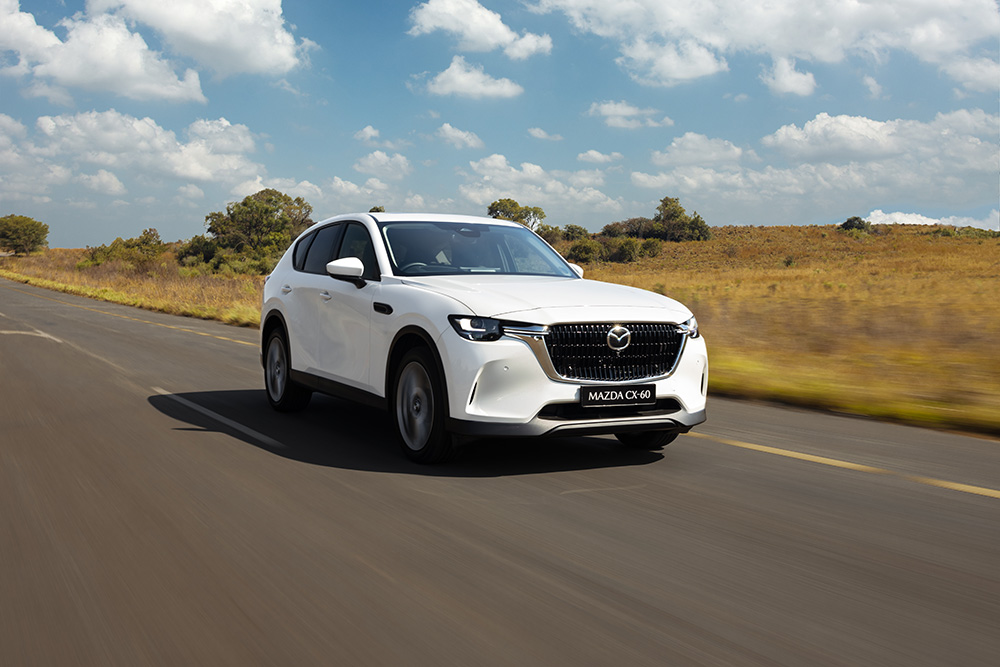
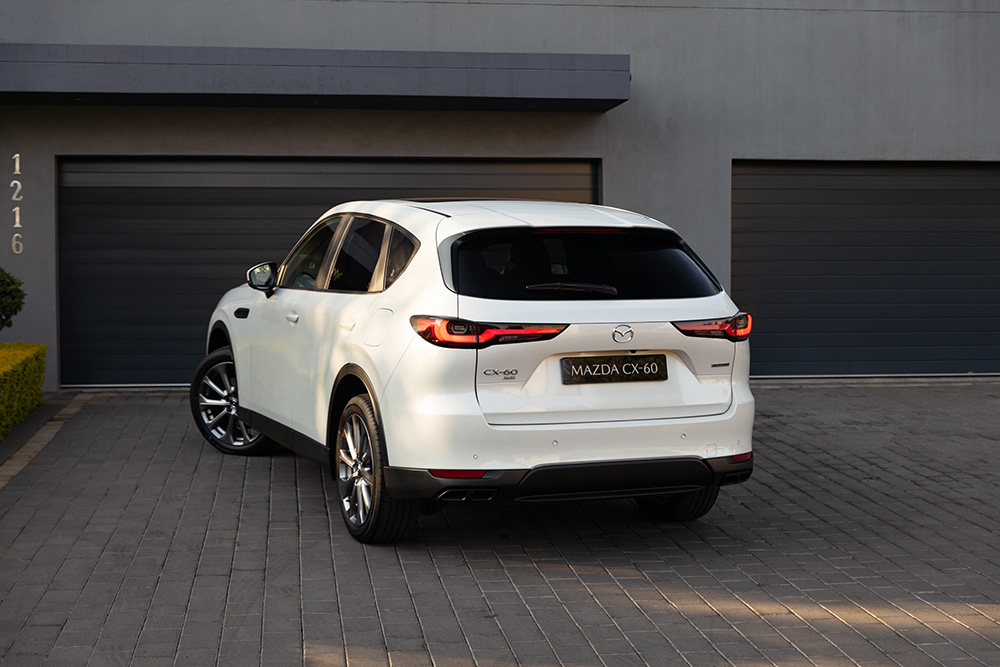
The Mazda CX-60, embodying the Jinba Ittai philosophy of driver-vehicle unity, was our chariot for an epic 2,500 km road trip from Franschhoek’s wine-soaked valleys to the vast Tswalu Kalahari Reserve and back to Langebaan’s coastal serenity, threading through the timeless Karoo. This high premium SUV, powered by a 2.5-litre engine producing 141 kW and 261 Nm, marries Japanese craftsmanship with cutting-edge technology, making it the ideal companion for South Africa’s kaleidoscope of landscapes.
KAROO CRUISING
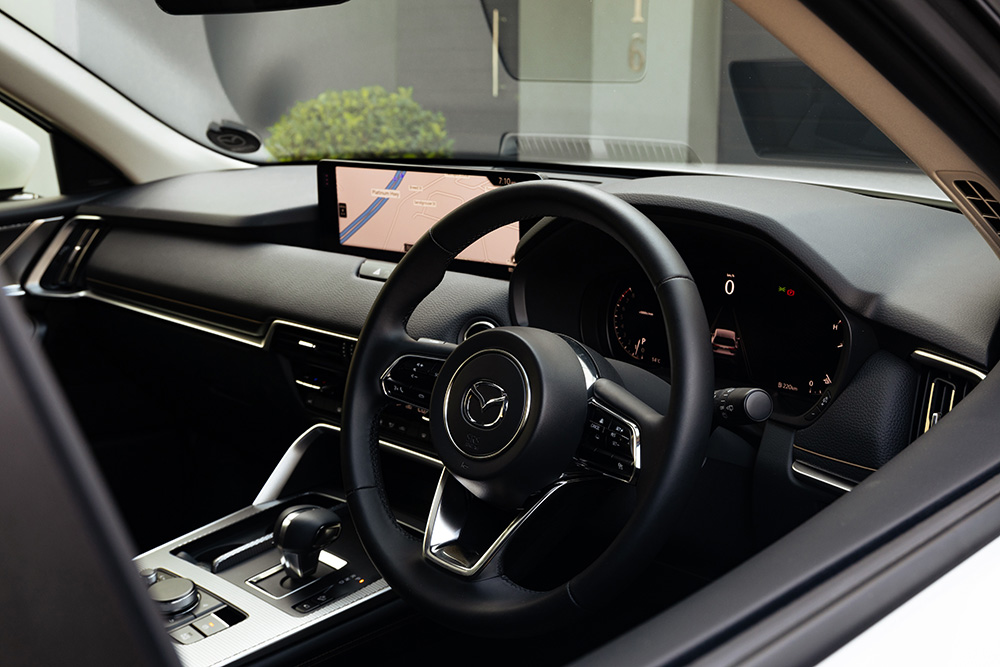
Starting in Franschhoek, the CX-60’s Driver Personalisation System greeted me like an old friend, using facial recognition to adjust over 200 settings – seat position, steering wheel, mirrors, and even the Bose 12-speaker sound system’s equaliser – to my preferences. The 12.3-inch infotainment display, supporting wireless Apple CarPlay and Android Auto, paired with the enhanced Mazda Harmonic Acoustics system, filled the cabin with rich sound as we wound through Clanwilliam’s citrus orchards. The Karoo’s sprawling emptiness unfolded, its rust-hued plains stretching endlessly past Calvinia’s sleepy streets, where quaint colonial buildings whispered history. The CX-60’s eight-speed automatic gearbox kept the ride whisper-quiet, optimising fuel efficiency, while its 570-litre boot – expandable to 1,726 litres – swallowed our luggage effortlessly, complemented by the hands-free power tailgate, standard on the Individual trim.
Pressing deeper into the Karoo, we passed through the dusty outpost of Kenhardt before traversing Kakamas’s vineyards and Upington’s palm-lined riverbanks, the CX-60’s long wheelbase and wide berth offering spacious comfort. In Kathu, surrounded by iron-ore mines, and Kuruman, with its ancient Eye of Kuruman spring, the SUV’s Hill Descent Control came in handy on a rugged detour, maintaining steady speeds between 3 and 20 km/h. The See-Through View 360° monitor, an evolution of Mazda’s four-camera system, made navigating the bustling town of Kuruman on a Saturday morning a breeze, displaying corners as if the bodywork were transparent. On open highways, Mazda Radar Cruise Control maintained an optimal speed and distance, easing the strain of long stretches, while the triple-sized head-up display minimised eye movement, thereby enhancing safety.
Sanctuary in the Kalahari
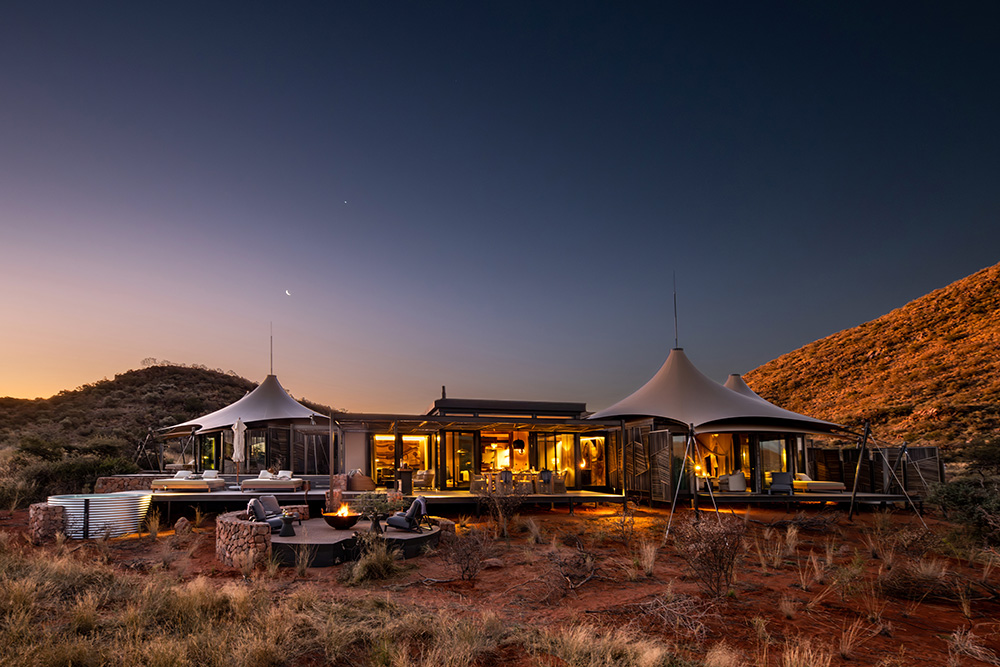
Arriving at Tswalu Kalahari Reserve, a 120,000-hectare sanctuary of dune and thornveld, we settled into Loapi, a cluster of six eco-conscious villas crafted from steel, canvas, and glass. Designed to leave no trace, these modular retreats rested lightly on steel foundations, their stone-packed fire pits and plunge pools blending into the Kalahari’s austere embrace. Our host, Mo, anticipated our needs with intuitive warmth, while Chef Tshepo’s springbok tartare, infused with wild rosemary, and pavlova, topped with desert figs, married the land’s ruggedness with culinary finesse. From Loapi’s verandah, the horizon stretched unbroken, a testament to Tswalu’s dual soul: a haven of serenity and a crucible of conservation.
Game drives revealed the Kalahari’s raw drama. Dawn dust swirled as we shadowed a pack of wild dogs, their mercurial hunt a dance of chaos and precision. They circled a gemsbok, its pointed horns glinting defiantly, but the antelope’s resolve sent them slinking back into the scrub. Undeterred, they targeted a wildebeest calf, only to be thwarted by the herd’s protective phalanx. A black-maned lion, silhouetted against a molten sunset, embodied the savannah’s majesty, while a black-backed jackal darted through the thornveld, its amber eyes wary. Most unforgettable was a lioness, her gaze both tender and fierce, watching her cubs wrestle in the dust – a fleeting moment of joy in the Kalahari’s unyielding terrain.
LIVING LABORATORY
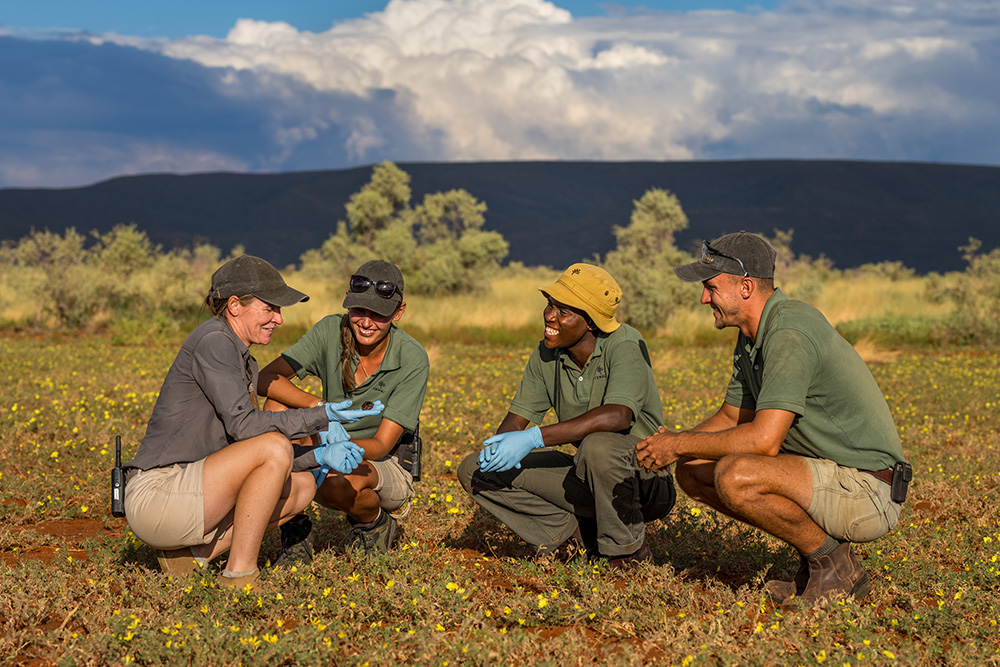
Tswalu’s research stations, tucked among the dunes, unveiled its deeper mission. Scientists studying puff adders, pangolins, sparrow-weavers, and a host of other species shared insights over coffee: a snake’s genome could unlock coexistence strategies, while aardvarks were revealed as soil engineers. This living laboratory, where beauty and inquiry collide, stitches together a narrative of resilience, mapping biodiversity with precision that reverberates globally. As guests, we felt like stewards, our presence woven into Tswalu’s conservation tapestry.
MAZDA BLISS
The return to Langebaan’s turquoise lagoon was as seamless as the outbound journey. The CX-60’s ergonomic seats, designed with human-centric research to support natural posture, reduce fatigue, as we discovered across near-endless Karoo stretches. The i-Activsense safety suite, targeting a Euro NCAP 5-star rating, including Advanced Smart City Brake Support and Blind Spot Monitoring, ensures confidence in bustling towns. Structural innovations, such as a multi-path frame for frontal collisions and axial deformation for rear impacts, underscore Mazda’s safety commitment. The 11.7-metre turning circle navigated tight coastal roads effortlessly, while the cabin’s sound insulation created a serene cocoon, amplifying the Bose system’s clarity, perfect for reflecting on Tswalu’s wild encounters.
LAST WORD
Available in Dynamic (R739,800) and AWD Individual (R844,500) trims, the CX-60 proved a masterful blend of technology, comfort, and soul. From Franschhoek’s vines to Tswalu’s arid savannah and Langebaan’s shores, it transformed our road trip into a harmonious dialogue with South Africa’s landscapes, proving that the journey is as profound as the destination.
Report by Wilhelm Loots | Images © Mazda South Africa & Supplied

