



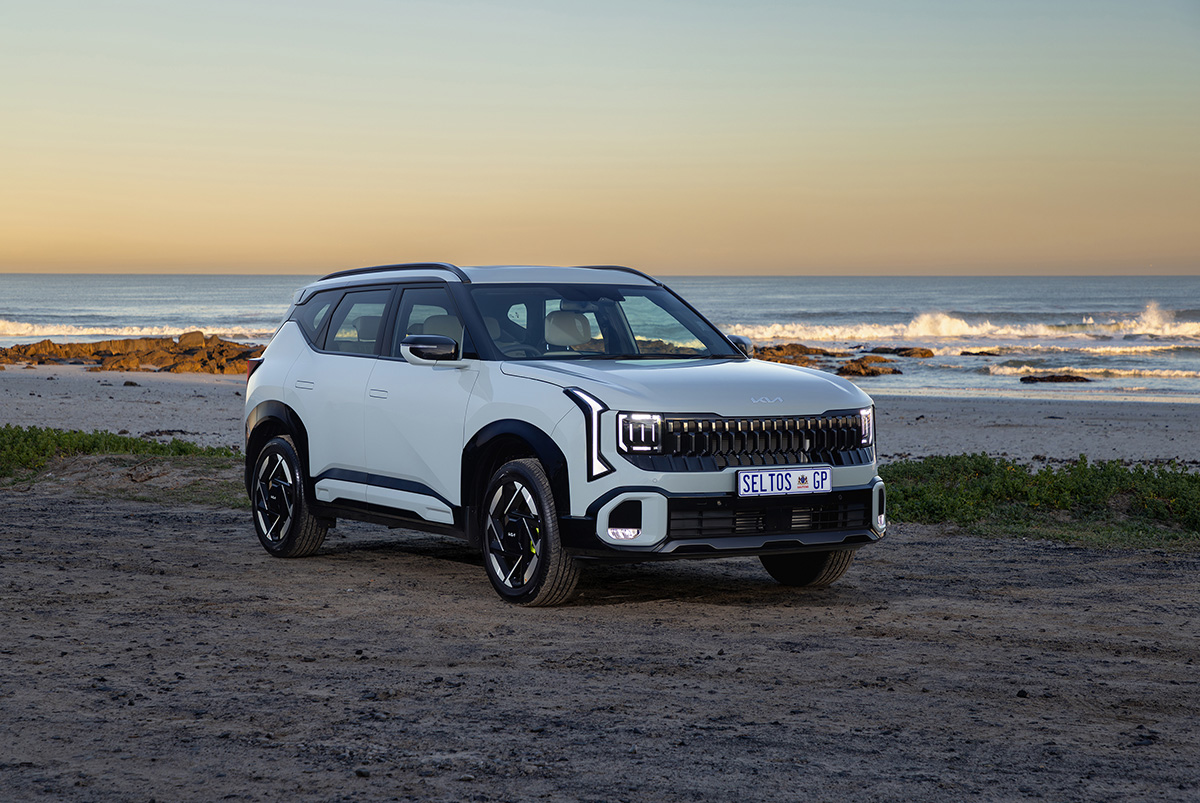
The second-generation Kia Seltos arrives in South Africa with sharper styling, more technology, three engine choices and pricing that could make it a serious headache for the Chinese competition.
There was a time when the Kia Seltos was one of the cars to watch in South Africa’s rapidly expanding compact SUV market. Launched locally in November 2019, it slotted neatly between the smaller Sonet and larger Sportage and quickly found favour with buyers looking for something stylish, practical and well equipped. Globally, it has been an even bigger success, becoming Kia’s second-best-selling nameplate worldwide and the fastest Kia to reach one million sales.
Now, Kia is hoping the all-new, second-generation Seltos can restore some of that momentum locally, and we think it stands a very good chance.
The recipe is surprisingly simple. Make it good-looking, give it the technology buyers have come to expect, offer a sensible spread of powertrains and, crucially, price it competitively. At R389,995 for the entry-level normally-aspirated manual 1.5 LS, stretching to R614,995 for the flagship turbo-petrol GT-Line S and turbodiesel X-Line, Kia has certainly paid attention to the value equation. Most derivatives are actually cheaper than their outgoing equivalents.
BIGGER, BOLDER AND BETTER EQUIPPED
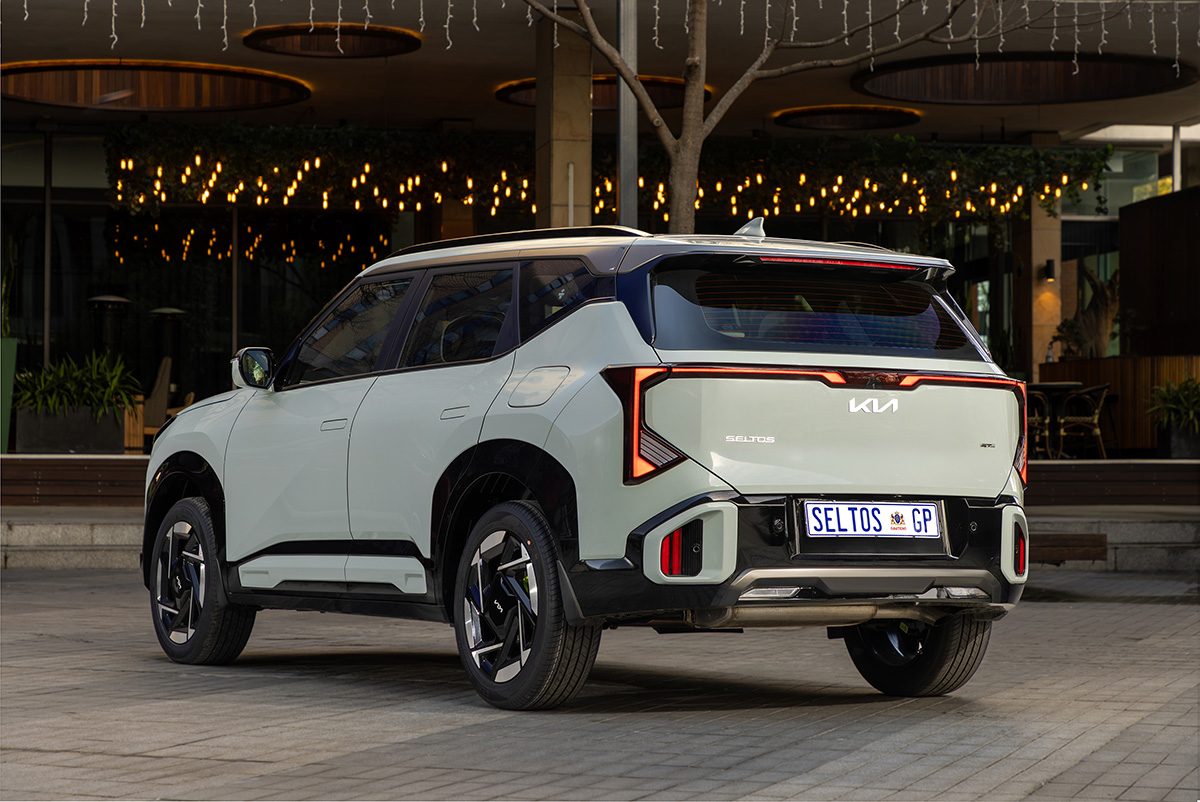
The new Seltos is built on Kia’s K3 platform and is larger than before, bringing more interior space and a 536-litre boot. The styling is arguably its biggest improvement, with Kia’s Star Map lighting signature, a more upright stance, flush-fitting door handles and a more sophisticated interpretation of the brand’s current design language.
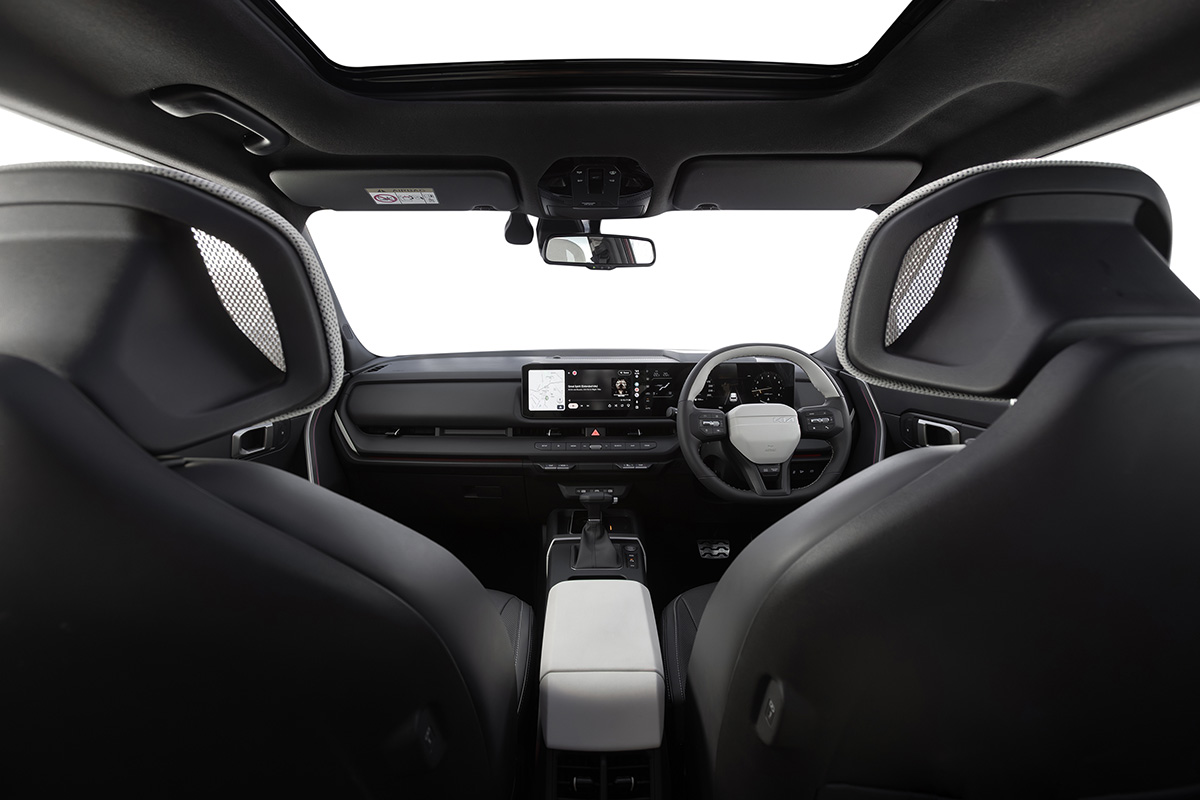
Inside, it has moved firmly into the digital age without becoming unnecessarily complicated. Depending on specification, there is a 10.25″ or 12.3″ infotainment display, digital instrumentation, wireless smartphone connectivity, smart-key access, ambient lighting, wireless charging and, higher up the range, a Bose sound system and powered, ventilated front seats.
The grade walk is particularly interesting. The LS is hardly a stripped-out entry point, offering 17″ alloys, LED lighting, a 10.25″ infotainment screen, wireless Apple CarPlay and Android Auto, six airbags, rear parking sensors, a reverse camera, cruise control, and roof rails.
The LX adds the larger 12.3″ display, dual-zone climate control, smart key and push-button start, an upgraded digital instrument cluster and front parking sensors.
Move to GT-Line, and the Seltos gains 18″ alloys, a panoramic sunroof, rain-sensing wipers, ambient mood lighting, wireless smartphone charging and a more upmarket interior.
At the top, the GT-Line S upgrades the 1.5-litre petrol engine with a turbocharger, adds powered and ventilated seats, and includes a comprehensive suite of driver assistance systems, including adaptive cruise control with Stop & Go, lane following, lane keeping, forward collision avoidance, and blind-spot collision avoidance. The X-Line shares the advanced safety technology, but adds a more rugged visual treatment and exclusive matte paint option.
CHOICE REMAINS A KIA STRENGTH
Perhaps the most compelling aspect of the new Seltos is that Kia hasn’t abandoned engine choice in the rush towards electrification.
The naturally aspirated 1.5-litre petrol produces 85 kW and 144 Nm and is available with either a six-speed manual or CVT. The 1.5-litre CRDi turbodiesel produces the same 85 kW but a considerably healthier 250 Nm, paired with a six-speed automatic. At the sharp end, the 1.5-litre T-GDi turbo-petrol produces 119 kW and 253 Nm, driving through a seven-speed dual-clutch transmission.
We sampled only the range-topping turbo-petrol and turbodiesel derivatives during the launch in a cold and windy Western Cape, so a definitive assessment of the entire range will have to wait for a more comprehensive test. Even so, the turbo-petrol GT-Line S impressed with its combination of punch, refinement, and confident handling, while the diesel’s strong mid-range torque makes obvious sense for long-distance driving.
I’d also single out the Seltos for its ride comfort, composure that’s more akin to a larger SUV, and intuitive controls. Although the windy conditions during our launch drive didn’t do the Seltos’ fuel consumption any favours, we consistently returned close to Kia’s official fuel use numbers (6.3 l/100 km and 5.3 l/100 km in the petrol and diesel, respectively).
LAST WORD
The reality of the local new car market is that the influx of Chinese brands has forced established manufacturers to rethink what South Africans expect for their money. The good news for Kia is that the Seltos looks very much like a solid response to that challenge.
It is good-looking enough, well-priced enough, technologically convincing enough and, with three distinctly different powertrain choices, competent enough to take the fight directly to these (and other) rivals. In fact, the new Seltos might be about to beat them at their own game.
KIA SELTOS PRICING
Kia Seltos 1.5 LS manual: R389,995
Kia Seltos 1.5 LS auto: R414,995
Kia Seltos 1.5 LX: R464,995
Kia Seltos 1.5 GT Line: R514,995
Kia Seltos 1.5CRDi GT Line: R544,995
Kia Seltos 1.5T-GDi GT Line S: R614,995
Kia Seltos 1.5CRDi X Line: R614995
Report by BERNIE HELLBERG | Images © KIA SOUTH AFRICA

