



Few new-vehicle reveals have excited me as much as Toyota’s announcement of the all-new Land Cruiser FJ in Tokyo last year. I was fortunate enough to join Toyota on its expedition to Japan, where we witnessed the unveiling of several new Toyota and Lexus products and concepts ahead of the Japan Mobility Show 2025.
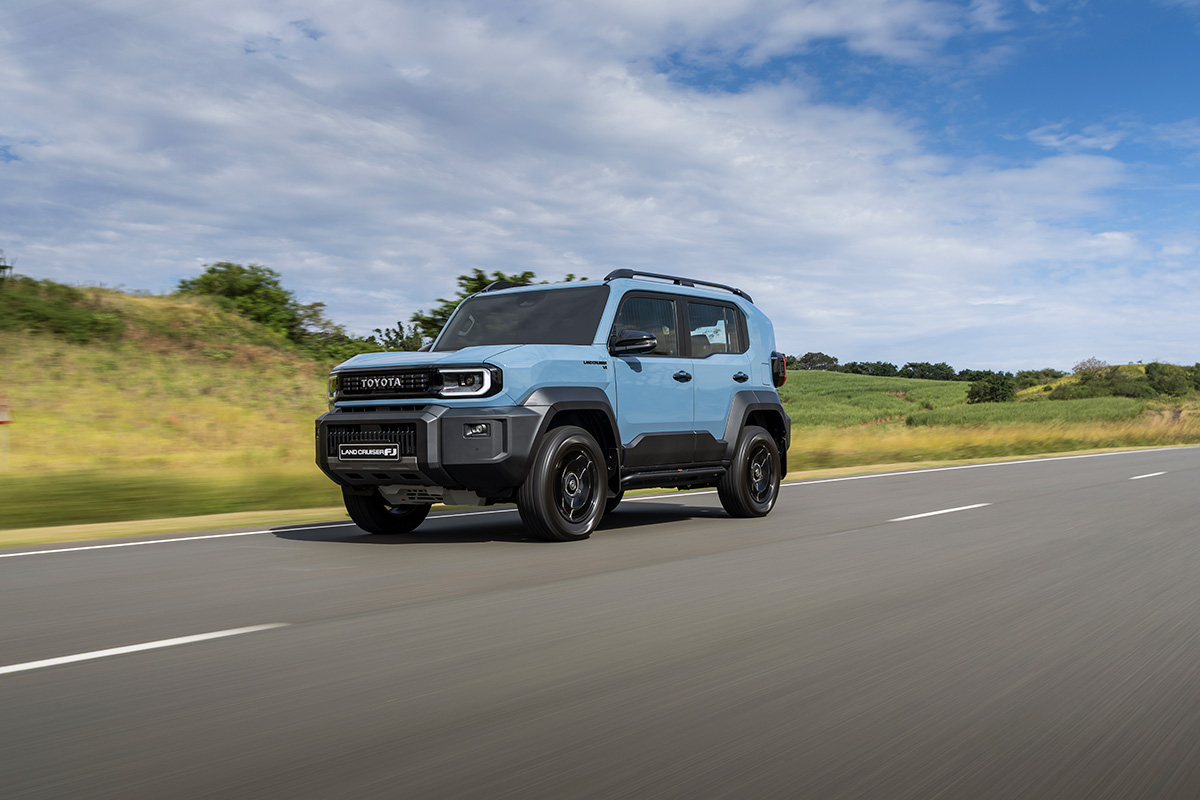
I must admit, I was swept up in the moment when I first laid eyes on the Toyota Land Cruiser FJ at the Japan Mobility Show last year. With its boxy proportions, retro-inspired styling, and unmistakable off-road intent, it looked every bit the compact Land Cruiser many enthusiasts had hoped for.
Toyota was also quite deliberate about its naming convention. This was the Land Cruiser FJ, not the FJ Cruiser. Despite the obvious visual and philosophical connections, it was a new addition to the Land Cruiser family rather than a successor to the popular FJ Cruiser, which had developed a loyal following of its own.
At the unveiling, Toyota confirmed that the FJ would use its familiar 2.7-litre naturally aspirated four-cylinder petrol engine, paired with a six-speed automatic transmission and a part-time four-wheel-drive system. Producing around 122 kW and 245 Nm, the engine has a well-established reputation for durability, but it is hardly the most exciting powertrain in Toyota’s arsenal.
I was surprised by the decision, but remained optimistic. Surely, I reasoned, Toyota South Africa Motors (TSAM) would recognise the local market’s appetite for diesel-powered off-roaders and introduce a more suitable alternative for South Africa?
Unfortunately, that has not (yet) happened. The locally available FJ remains petrol-powered, with no confirmed diesel derivative. The decision is understandable from a cost perspective, particularly when developing an entry point into the Land Cruiser range. However, affordability means little if the resulting product leaves its intended audience wanting more.
Fuel consumption is another concern, particularly in the current high-cost environment. The thirsty petrol engine is likely to deliver anything between 13.5 and 17-l/100 km depending on the driving environment and your driving style, something that will curb the enthusiasm of even the most enthusiastic Land Cruiser fan who uses their FJ as a daily driver, especially when diesel-powered alternatives offer a more appealing balance of range and running costs.
CAPABLE, BUT WITH COMPROMISES
There is plenty to like about the FJ. Its compact dimensions make it easier to manoeuvre than larger Land Cruisers, while its shortened wheelbase, ladder-frame construction, low-range gearing and rear differential lock provide the mechanical foundations for genuine off-road ability. Toyota has clearly done its homework, and its claims of serious off-road capability are easy to believe.
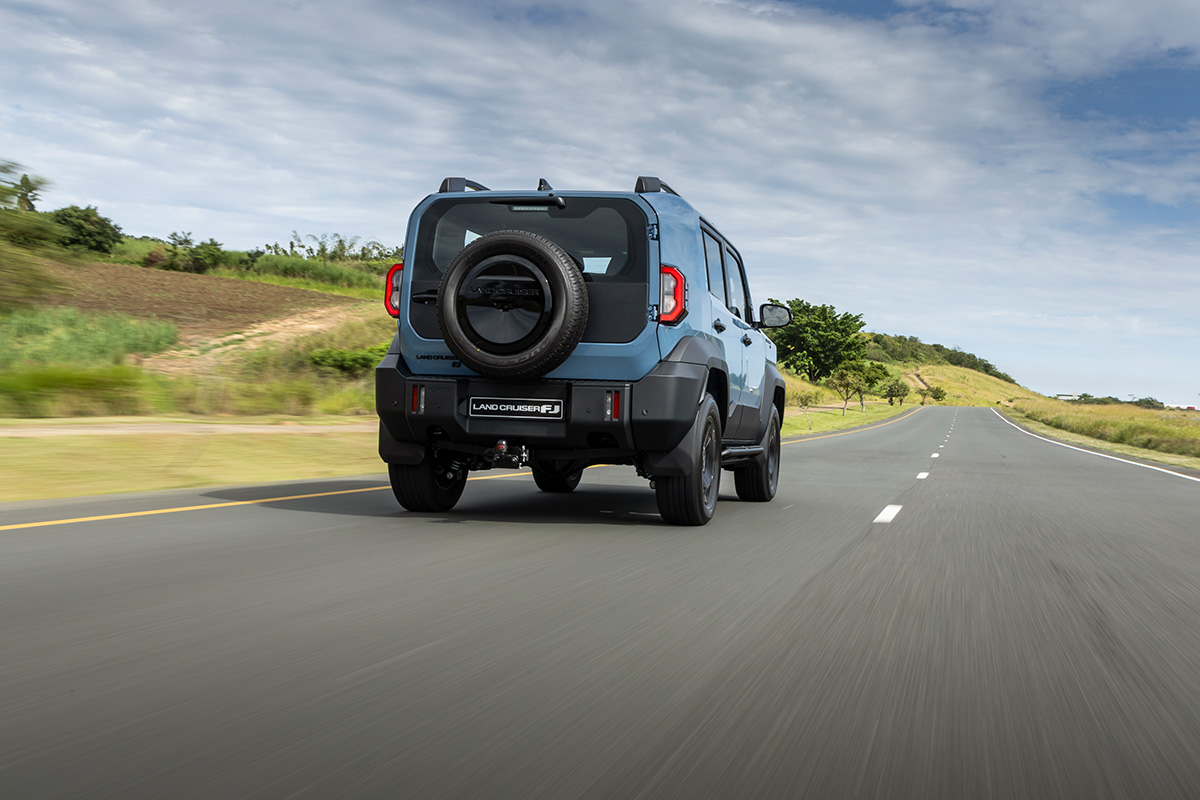
Yet, spending time with the vehicle exposed some shortcomings. Its upright stance and relatively narrow track make it look like it could benefit from a wider footprint. Bigger wheels and tyres would also improve its visual proportions, although tyre choice should never come at the expense of off-road performance.
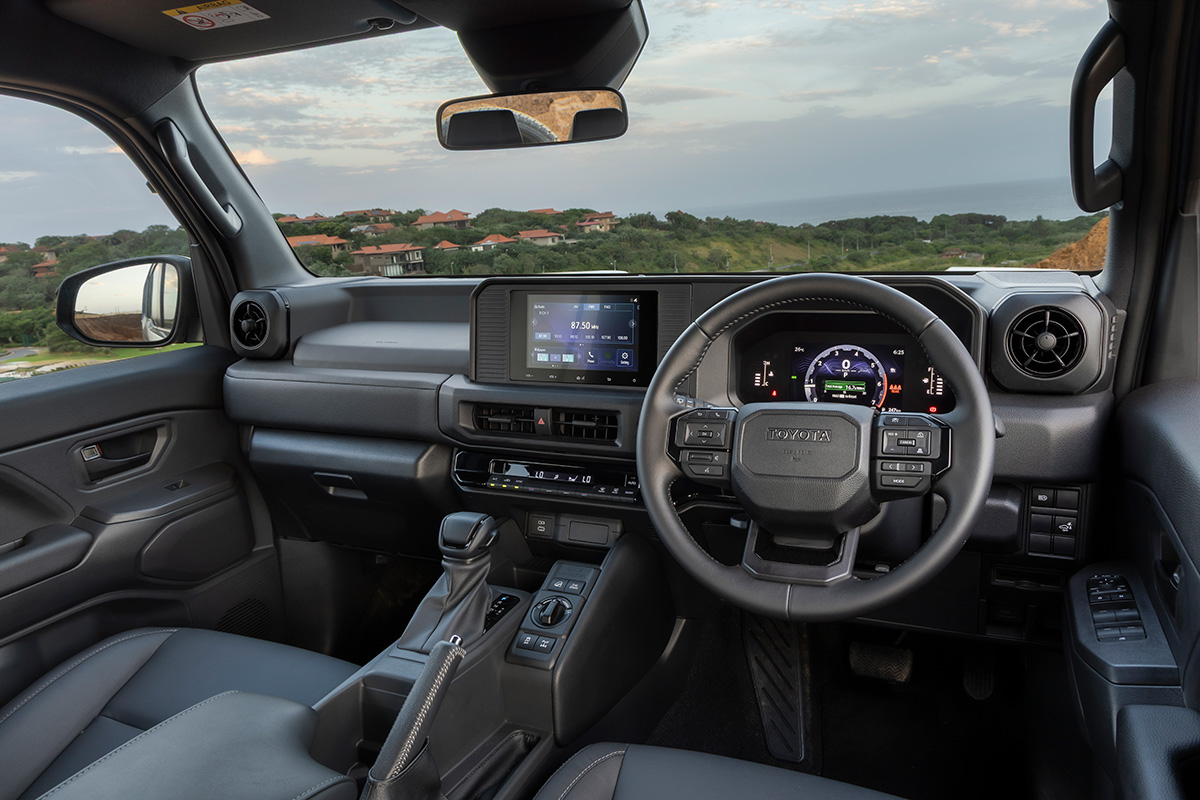
Inside, the packaging is less convincing. The high roof suggests generous space, but rear legroom doesn’t match expectations. The standard touchscreen also feels undersized and underwhelming in terms of presentation and quality for a modern vehicle in this price bracket.
These are not deal-breakers individually, but together they dilute what is otherwise an appealing proposition.
WHERE DOES IT LEAVE THE FJ?
South African pricing starts at R714,000 for the Land Cruiser FJ 2.7 GX and rises to R761,400 for the VX we tested. At these prices, buyers have alternatives worth considering, including Toyota’s own Fortuner. The Fortuner offers a more conventional SUV package, greater interior practicality, and, at comparable prices, diesel power. For buyers who need a family vehicle that can also tackle demanding terrain, it makes a compelling case.
That does not diminish what the FJ represents. I enjoyed my time with it, and its distinctive styling, compact dimensions, and authentic off-road hardware give it a character many modern SUVs lack. It also provides a more accessible entry into the Land Cruiser family.
LAST WORD
I cannot help feeling that Toyota has left some potential untapped. The concept is right, but the execution could have been better, particularly in the powertrain department.
There is a glimmer of hope, though. TSAM has not ruled out a diesel version. Until such a model materialises, I suspect the FJ’s reception among serious Land Cruiser enthusiasts will remain lukewarm. It deserves to be more than an appealing shape wrapped around a set of compromises.
Report by BERNIE HELLBERG JR | Images © TOYOTA SOUTH AFRICA MOTORS