



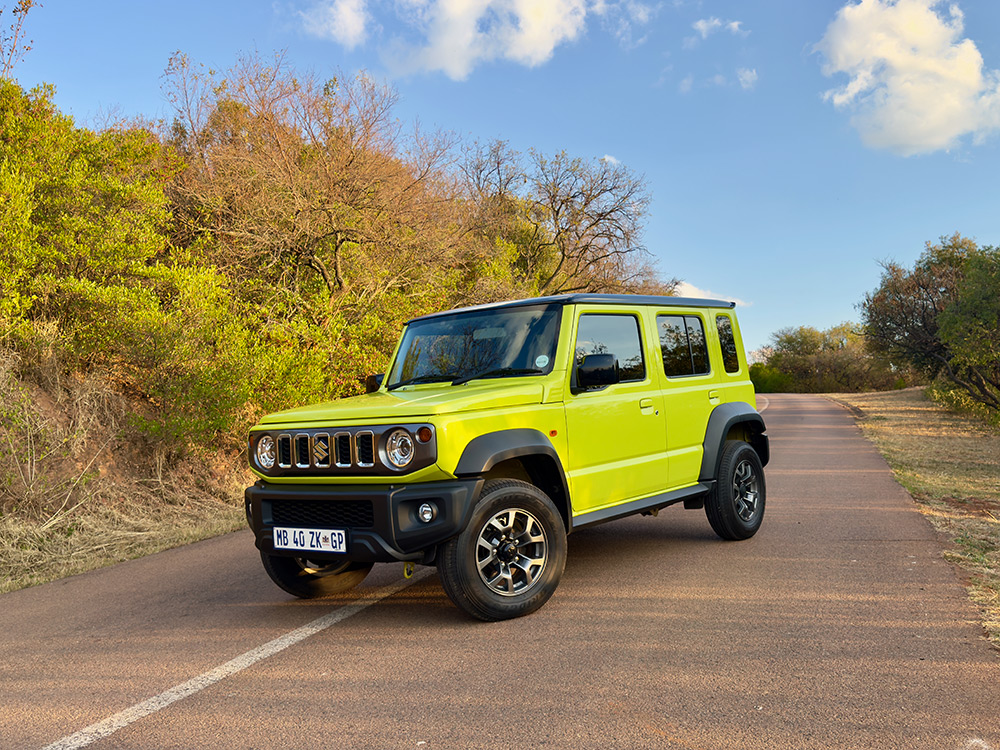
The Suzuki Jimny has gone from a quirky runabout to one of South Africa’s most recognisable off-roaders. When the five-door model arrived in late 2023, it had become more practical and more desirable than ever, offering a choice between three grades, and either a five-speed manual for purists or a four-speed automatic for those who value convenience. We recently put both to the test to help you decide.
For much of its life in South Africa, the Suzuki Jimny was the sort of car you either “got” or didn’t. Students loved it for its affordability and charm, while a handful of die-hard off-roaders used it as a lightweight weekend toy. Capable, yes, but hardly practical, and certainly not a mainstream choice.
That all changed with the arrival of the third-generation Jimny, and more dramatically with the fourth-gen model in 2018. Suddenly, everyone wanted one. Suzuki dealers couldn’t keep up with demand, and the Jimny went from cult curiosity to an automotive phenomenon.
ENTER THE FIVE-DOOR
The next logical step was to give the Jimny the one thing it had always lacked: space. In November 2023, the five-door version made its local debut, instantly becoming the flagship of the range. Longer, more usable, and still every bit a Jimny, it struck the balance buyers had been asking for.
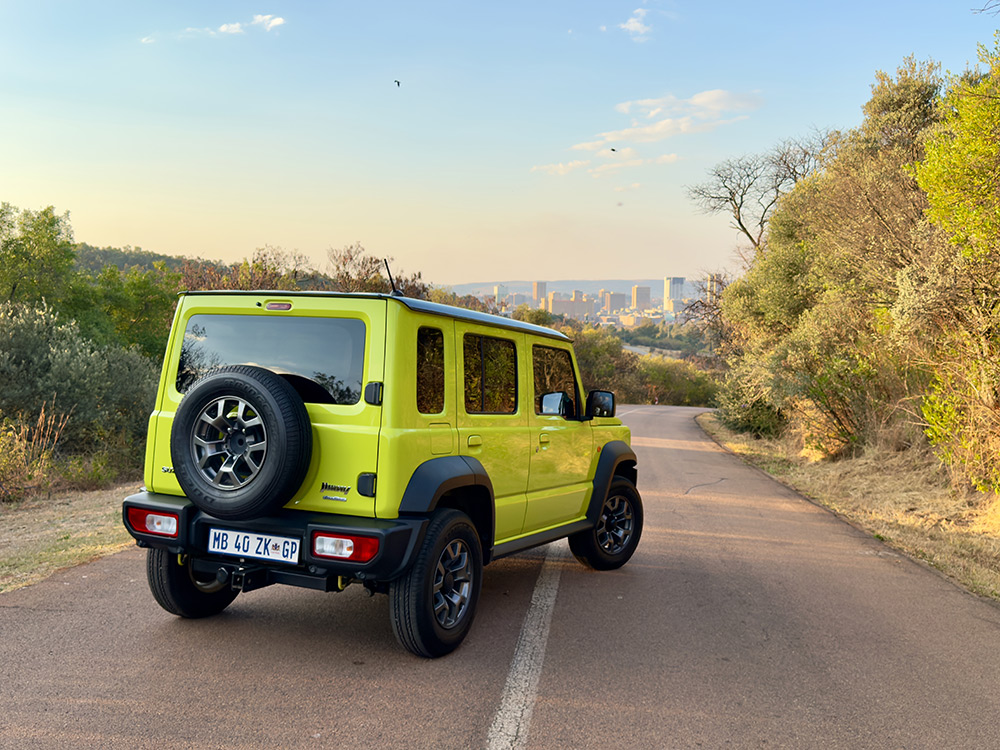
The 5-Door adds 340 mm in length, a stretched wheelbase, and far more practical boot space. Rear passengers finally get proper legroom, while the rear seats can be folded to unlock over 200 litres of usable luggage volume. For more than two people, this is the Jimny you want.
Interestingly, the three-door still comes from Japan, while the five-door is built in India by Maruti Suzuki. That has not diluted its character one bit.
AT ITS HEART
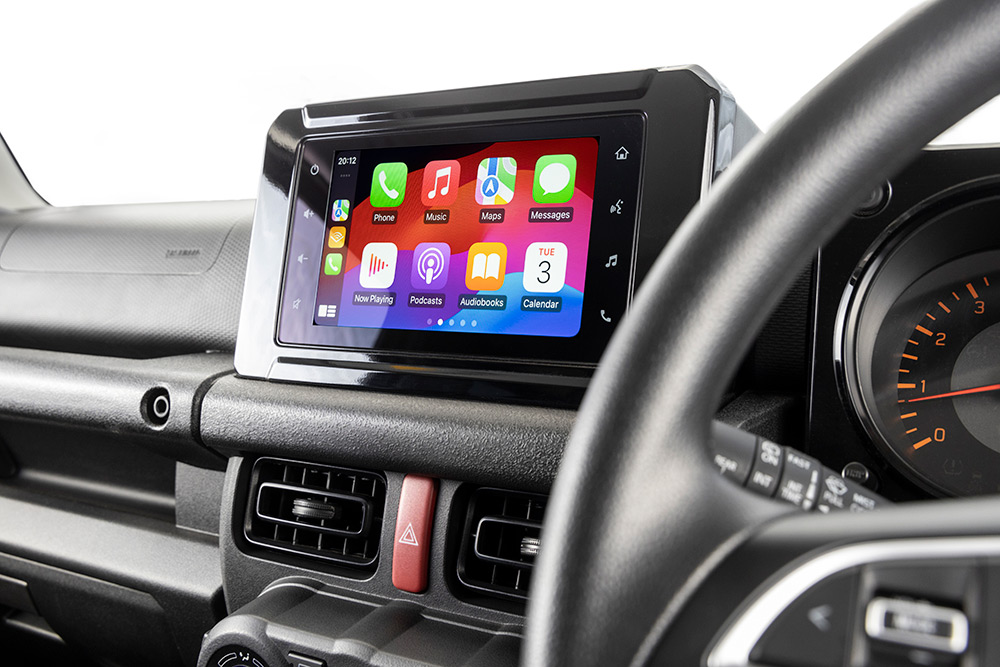
Both the GLX manual and automatic use the familiar 1.5-litre K15B petrol engine, good for 75 kW and 130 Nm. Power is sent to all four wheels via Suzuki’s AllGrip part-time 4×4 system, complete with a low-range transfer case.
On paper, the difference comes down to the gearbox: a five-speed manual in one corner, and a four-speed automatic in the other. In reality, they deliver quite different experiences.
For purists, the manual is the Jimny at its best. The gearbox is light and easy, with ratios that allow you to work the little four-cylinder hard when needed. Off-road, it gives you more control over momentum and engine braking. On technical climbs or descents, being able to choose your gear makes all the difference.
On the road, the manual is engaging enough to keep you involved without being tiring. Fuel consumption sits at about 6.3 l/100 km, which is reasonable for something with the aerodynamic profile of a shoebox.
It is my pick of the two because it feels more like the Jimny experience should: basic, mechanical, and fun.
Many buyers, however, disagree with me. The automatic version is actually the more popular choice, thanks mainly to how easy it is to live with. In traffic, it is effortless. Off-road, the torque converter smooths things out, making low-speed crawling surprisingly simple.
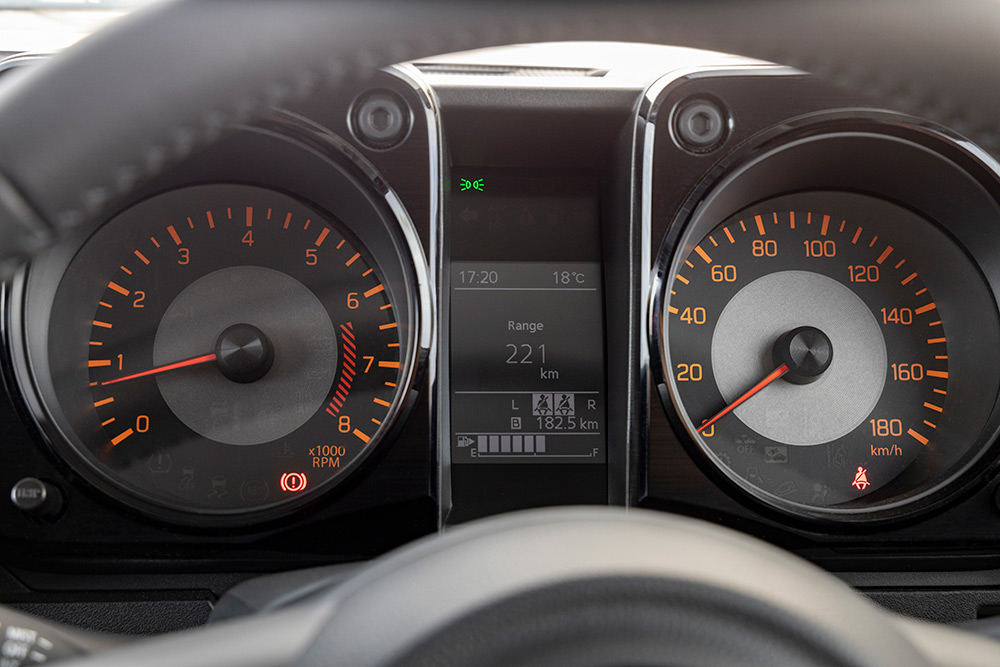
The trade-off is that four gears simply are not enough in 2025. On the highway, the auto can feel busy, hunting between third and fourth, and overtaking requires patience. Fuel consumption is slightly higher at 6.8 l/100 km, though still acceptable. It is also slower at the top end (140 km/h versus 150 km/h for the manual), although haste is something you leave at home when you own a Jimny.
For those who value convenience above involvement, the automatic makes perfect sense. But it does blunt some of the charm.
BEHIND THE WHEEL
Whichever transmission you choose, the five-door Jimny still drives like a Jimny. The steering is vague, the ride is bouncy, and the solid axles jiggle over bumps. None of this is new, and none of it matters. That is because the Jimny’s strengths, its compact size, short overhangs, and genuine off-road hardware, remain intact.
It will still go places that would leave far bigger, pricier SUVs scratching their differentials. Approach and departure angles are slightly compromised compared to the three-door, and the break-over angle drops from 28° to 24°, but you would have to be tackling some very specific obstacles to notice.
In day-to-day life, the bigger cabin makes the five-door infinitely more usable. It is no longer a two-person adventure box, it is a car you can take on a road trip without leaving half your luggage at home.
The Jimny has always punched far above its weight in South Africa. More than 20,000 units have been sold locally over the past 15 years, a remarkable number for something so niche. The five-door takes that cult appeal and broadens it, turning the Jimny into a realistic daily driver for far more people. It is what the Jimny should have been from the start.
LAST WORD
Between the two GLX five-door models, I would still choose the manual. It suits the Jimny’s character, it makes the most of the engine, and it gives you more control when the going gets tough. But I cannot argue with the logic of the automatic. It is simply easier to live with, and that is why many buyers will go that route.
Either way, the Jimny 5-Door cements its place as one of South Africa’s most iconic off-roaders. What started as a quirky little student car has grown up into something genuinely desirable, and more popular than ever.
Report & Images by BERNIE HELLBERG JR

