



Where Four African Countries Meet |
To celebrate 75 years of Continental Tyres in South Africa, 50 years of the Isuzu KB and two decades of its D-Max successor, and to acknowledge exports of these one-tonners and all-terrain tyres to African destinations, we travelled to the continental conjunction where four countries meet.
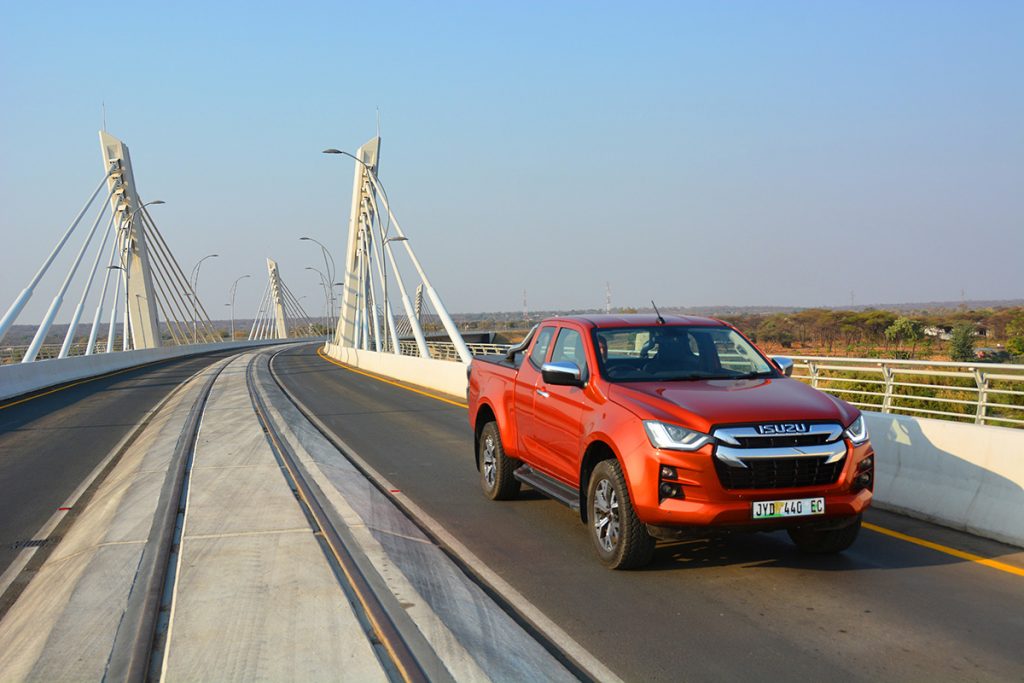
Standing on the landing where the now derelict yet still famous ferry used to berth on the Zambian side of the mighty Zambezi, we were dwarfed by the imposing structure of the new Kazungula Bridge, brightly reflecting the African morning sun.
It was a nostalgic moment, as I have been fortunate enough to traverse the Zambezi on board the Kazungula Ferry a few times, crossing the borders of at least three countries mid-river, before the ferry service was decommissioned with the opening of the new bridge in May 2021.
At Kazungula, the borders of Zambia, Botswana, Zimbabwe, and Namibia form a quadripoint at the confluence of the Chobe and Zambezi Rivers between Impalila Island, the extreme tip of the Caprivi Strip in Namibia, and Zimbabwe.
A QUADRIPOINT
It is the only place in the world where four international boundaries meet. However, technically it is a quasi-quadripoint, as the borders contain two tripoints joined by a short line of about 150 metres forming the boundary between Zambia and Botswana.
Interestingly, this technicality saved the whole project, as the initial plan was to build a straight bridge over the river (some of the bridge pillars for this trajectory can still be seen on the Zambian side), but Zimbabwe then claimed it would cross its territory.
Realising this, Botswana and Zambia requested permission from Namibia to use some of its land. Namibia agreed, and the bridge was re-designed to form a curve over the small border strip between the two countries, in the process skirting Namibian soil but avoiding Zimbabwean territory.
Construction of the 18.5-metre-wide, 923-metre-long bridge with two traffic lanes and a single-lane railway track was financed by the Japan International Cooperation Agency and the African Development Bank, and it is now fast becoming the preferred border crossing for traffic from South Africa, routing through Botswana to avoid the congested Beit Bridge border post.
A LONG AFRICAN LEGACY
The purpose of our trip from Gauteng to the African quadripoint in an extended cab Isuzu D-Max 3.0 Ddi LSE auto, shod with General Grabber AT3s (recently selected as the original equipment tyre for range-topping D-Max models), was to symbolise the growing exports of locally built Isuzu bakkies and Continental tyre products to countries such as Zimbabwe, Zambia, Botswana, and Namibia.
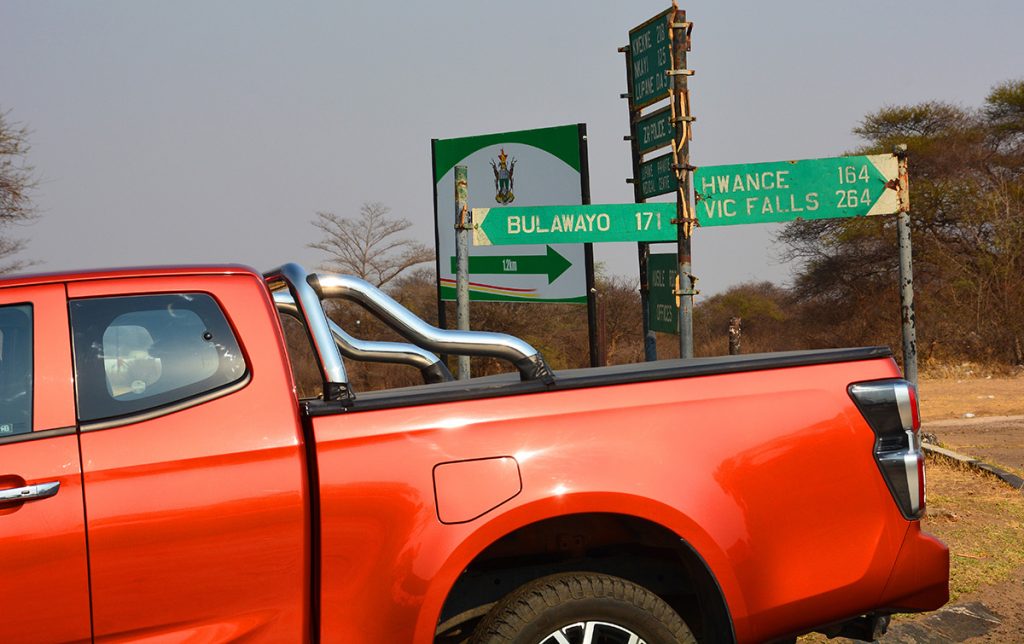
In a bright burnt orange-coloured seventh-generation D-Max bakkie, we also took the Botswana route. At the Grobler’s Bridge border post, we had to navigate our way around a seemingly endless line of trucks – including a car transporter laden with Isuzu pickups destined for Zambia.
The Isuzu legacy in Africa dates back over half a century when small Wasp and Florian pickups were exported to selected countries in small numbers. However, it was the Faster of 1972 (rebranded as KB or Chev LUV in export markets) that enhanced the Japanese manufacturer’s reputation on the continent.
Introduced locally as the Chev LUV in 1978, the success of the KB led to Isuzu (then still part of General Motors) setting up a manufacturing facility in South Africa, and from the popular third-generation model, every KB model range was locally built and exported to a growing number of African countries.
In 2002, the KB designation changed to D-Max overseas, although this switch only took place locally in 2018 with the introduction of the facelifted version of the sixth-generation KB (second-generation D-Max). Although the new, seventh-generation bakkie was already launched in 2019, we had to wait until this year for local introduction due to significant upgrades of the Isuzu plant in Gqeberha.
A full range, from single to double cab in 4×2 and 4×4 guise with three trim levels and two engine options, is now available – with our LSE derivative slotting at the top of the extended cab range. Besides LED headlights and tail lamps, a tow bar and a chrome sports bar, the LSE has a nine” screen infotainment system and eight-speaker sound system inside, as well as front and rear park assist, and dual-zone automatic air-conditioning.
After crossing the border, the efficient air-con and well-proven 3.0-litre turbodiesel engine of the D-Max, now delivering 140 kW and 450 Nm in a calm and leisurely manner, shortened the long, hot road to Nata Lodge. Here we overnighted before setting off towards Pandamatenga the following day.
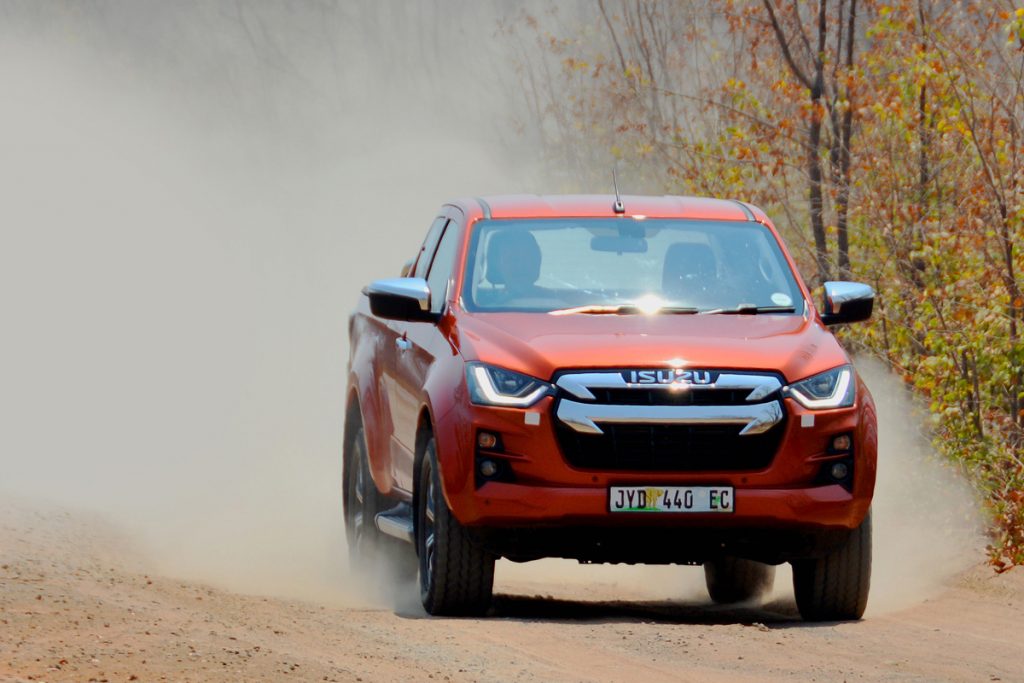
We crossed into Zimbabwe at Pandamatenga and followed the gravel road towards Matetsi and Victoria Falls. Even without four-wheel-drive, the D-Max and the Grabber AT3s were in their element on the undulating gravel track, the award-winning 18” tyres demonstrating its 75 years of African heritage, proving why it’s been the tyre of choice for the Isuzu bakkie range for the past seven years.

THE CONTI HISTORY
Continental Tyre has a rich heritage in Africa, beginning in 1947 with the founding of General Tire and Rubber Company South Africa in what is now known as Gqerberha. The local operation was acquired by Continental AG in 1998 and renamed Continental Tyre South Africa, helping cement its role as one of the leading tyre manufacturers in the country.
Celebrating its 75th anniversary this year, the only Continental tyre plant in Africa produces Continental and General Tire-branded tyres for some of the largest vehicle manufacturers in the country. Also, it exports tyres into Africa and around the world.
Renowned for outstanding all-around performance, durability and value for money, the General Grabber AT3 has become one of the most popular replacement tyres. The tyres feature ‘TracGen’, an open shoulder design with traction ridges for improved grip on all surfaces in its tread design, and sipes arranged at different angles to enhance water dispersion properties.
It also uses a robust rubber compound called ‘DuraGen’, providing excellent cut and chip resistance, and reducing tread block deformation. At the same time, its ‘ComfortBalance’ technology finds a good balance between on-road ride comfort and off-road grip.
The ride comfort of the D-Max was impressive on the good tar roads from Vic Falls to Kasane and over the Kazungula Bridge into Zambia. In contrast, the potholed track leading from Kazungula to Sesheke and Katima Mulilo in Namibia (a road in name only) allowed the General Grabbers to show their mettle in radically different road conditions as well.
LAST WORD
On our round trip of nearly 3,000 km to Kazungula and back, we encountered no problems with the vehicle or tyres (although we recommend dropping the tyre pressures slightly on bad roads). With 75 years of tyre experience in Africa, and a 50-year legacy of one-ton pickups, the combination of Isuzu D-Max and General Grabber AT3 proved perfect for conquering Africa.
Report by FERDI DE VOS | Images © JIM FREEMAN

