



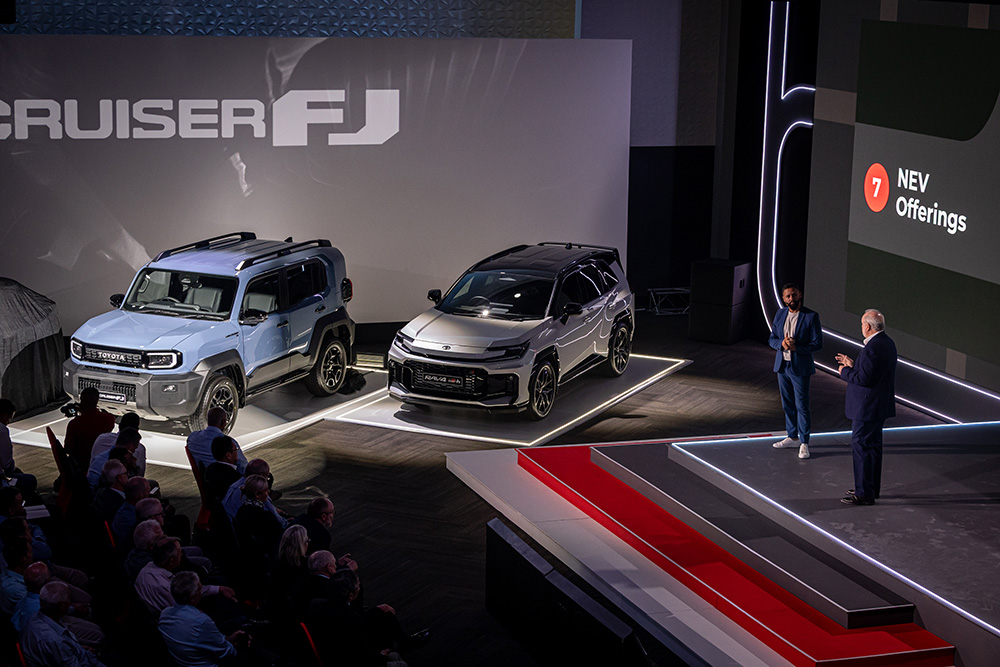
The tone at this year’s Toyota State of the Motor Industry event was not one of panic, nor unchecked optimism. It was measured. Grounded. Realistic about the headwinds facing the sector, yet quietly confident about the road ahead.
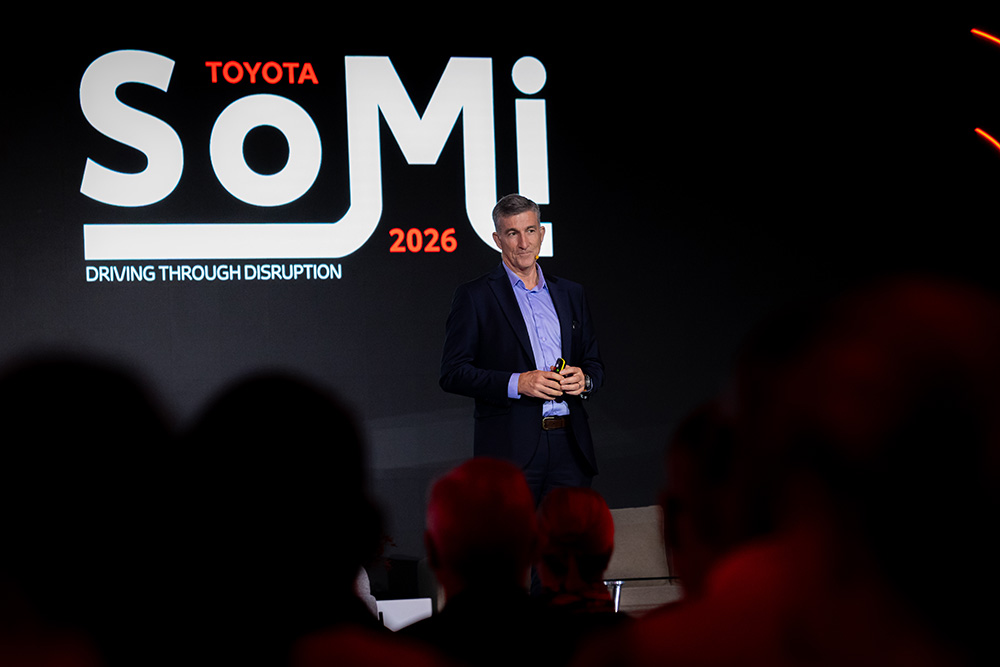
Toyota South Africa Motors President and CEO Andrew Kirby opened proceedings at Toyota’s ninth annual State of the Motor Industry (SOMI) presentation with a frank assessment of both the global and local landscape. Supply chains remain under pressure in pockets, logistics costs are volatile, and export markets are tightening emissions standards at a pace. With roughly 80% of local production destined for Europe and the UK, regulatory shifts abroad carry direct consequences at home.
Against that backdrop, Kirby forecast a modest recovery for the domestic market in 2026, predicting total industry sales could reach around 630,000 units if economic conditions stabilise and consumer confidence improves.
“We are cautiously optimistic that 2026 will show meaningful growth over the past year,” Kirby said. “The fundamentals are improving, but we must remain agile and competitive in a market that is changing faster than ever.”
That competitiveness, he suggested, will depend not only on product, but on policy alignment and the ability of local manufacturing to adapt to a lower-emission future without pricing itself out of reach.
Toyota’s answer is its now well-established multi-pathway approach. Rather than committing exclusively to battery-electric vehicles, the company will expand its mix of hybrids, plug-in hybrids, and fully electric models, while retaining internal combustion engines where market realities demand them. In a South African context, where charging infrastructure and affordability remain critical constraints, that balance appears deliberate rather than hesitant.
PRODUCT STRATEGY
The first major product highlight was the confirmation of the next-generation RAV4. For Toyota, it’s one of the brand’s global pillars, and in South Africa, it plays a vital role in the upper C-segment.
We caught (more than) a glimpse of the new RAV4 at the Japan Mobility Show last year, but now finally have confirmation that the new RAV4 will broaden its powertrain mix to include hybrid and plug-in hybrid derivatives, alongside conventional options. A GR Sport variant is also on the cards, aimed at buyers who want a sharper visual identity and a more focused driving character. Electrifying a volume seller such as the RAV4 is a clear signal that Toyota sees hybridisation not as a niche offering, but as a mainstream solution.
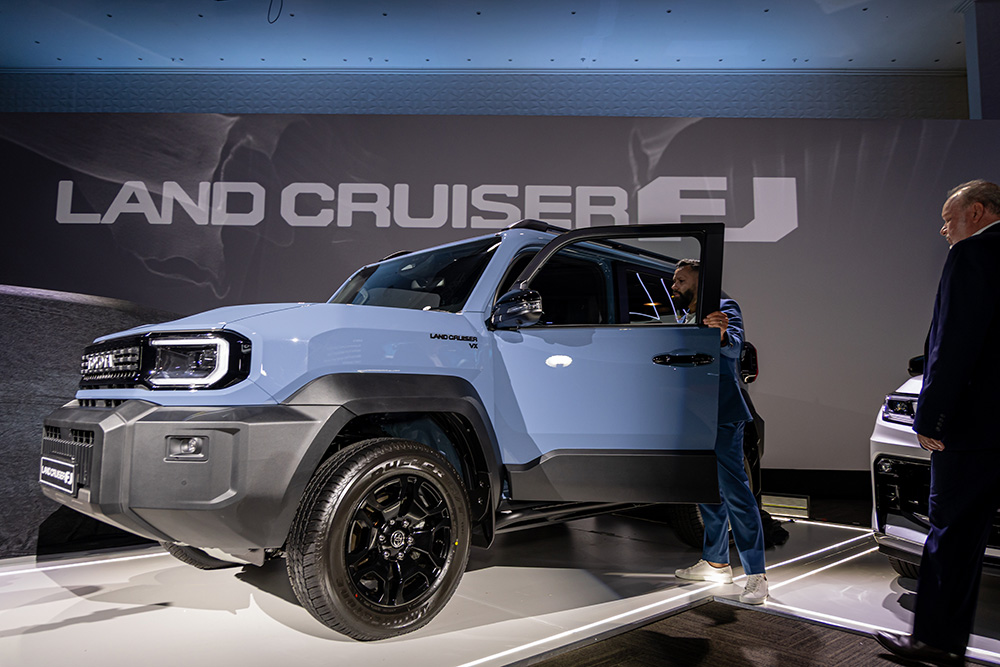
From there, attention shifted to the Land Cruiser FJ, arguably the most emotionally charged reveal of the day. Positioned below the Land Cruiser 300, the FJ adopts a ladder-frame platform and squared-off styling that leans heavily into heritage cues. It is more compact and more accessible than its larger siblings, yet it trades on the same reputation for durability and off-road credibility.
In a market where the Land Cruiser badge carries serious weight, the FJ fills a gap between urban crossovers and full-size off-roaders. It targets buyers who want authentic 4×4 underpinnings without stepping into the price bracket of a 300 Series. While debate continues over the initial engine configuration, from a portfolio perspective, the FJ broadens Toyota’s reach into the lifestyle-adventure space in a way few rivals can easily replicate.
ELECTRIFICATION AND EXPANSION
Beyond these two headline models, Toyota outlined a broader expansion of new-energy vehicles in 2026. The Corolla Cross, already a strong performer locally, will continue to anchor the compact SUV segment, including updates to its GR Sport hybrid derivative. By reinforcing hybrid options in high-volume nameplates, Toyota strengthens its claim that electrification should be accessible rather than exclusive.
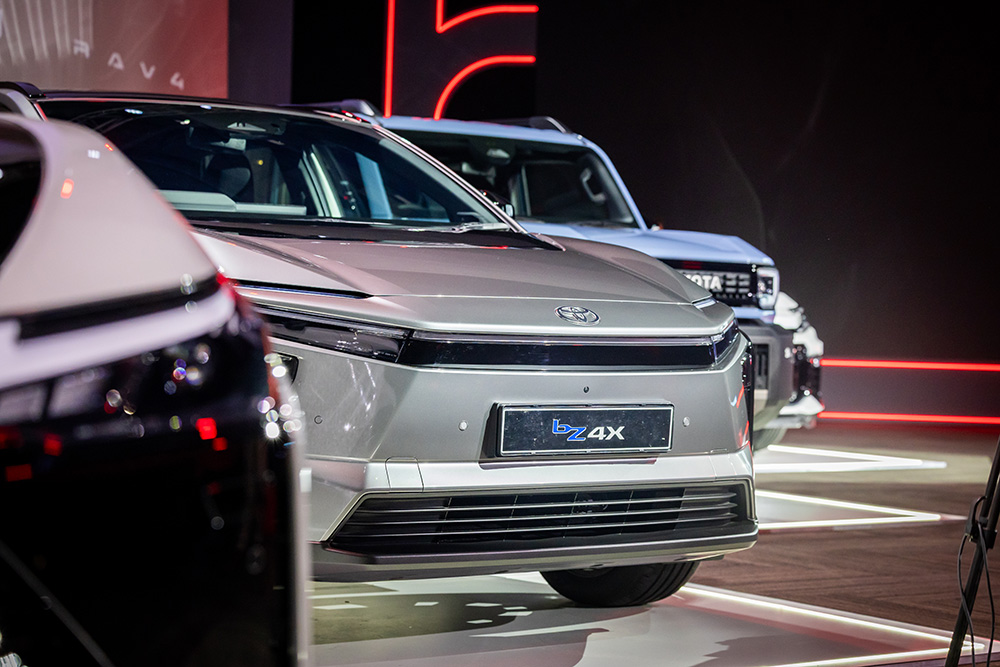
The confirmation of the bZ4X for South Africa marked another important milestone. As Toyota’s first dedicated battery electric vehicle on the local market, it signals a more visible commitment to the EV space. Detailed specifications will follow closer to launch, but strategically, the move ensures Toyota is represented in the growing electric crossover segment.
Additional hybrid and plug-in hybrid introductions across the broader range, as well as expanded electrification within the Lexus portfolio, round out the picture. The approach is incremental rather than dramatic. Familiar nameplates gain new drivetrain options, allowing customers to transition at their own pace.
LAST WORD
What emerged from SOMI 2026 was not a single headline-grabbing announcement, but a coherent blueprint. A cautiously optimistic sales forecast approaching 630,000 units. A call for structural alignment between industry and government. And a product strategy built on choice.
Kirby perhaps summarised it best when he noted that “disruption is not something to fear, but something to navigate with clarity and conviction.”
For Toyota, that navigation does not involve betting on one lane of technology. It involves widening the highway. Whether through a hybrid RAV4, a heritage-infused Land Cruiser FJ, or a fully electric bZ4X, the objective is clear. Meet the market where it is now, while preparing it for where it is heading.
Report by BERNIE HELLBERG JR | Images © TOYOTA SOUTH AFRICA

