



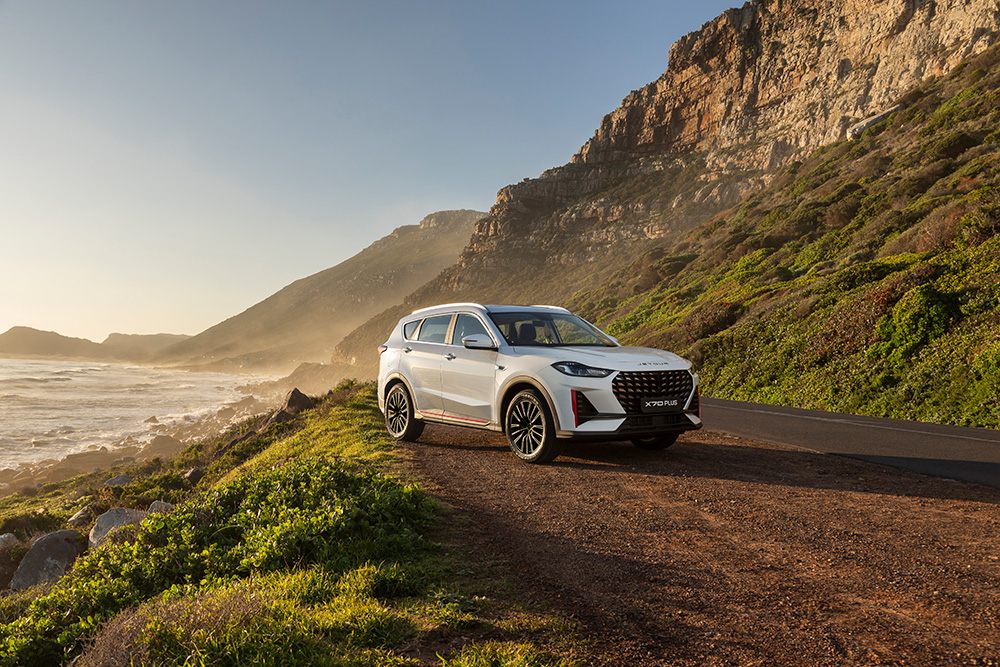
Initially branded Soueast DX8, the Jetour X70 was first introduced overseas in 2018, but the medium-sized seven-seat SUV has been facelifted twice since then, the last time in 2024 – just before the Plus model was released locally in Momentum and Deluxe trim.
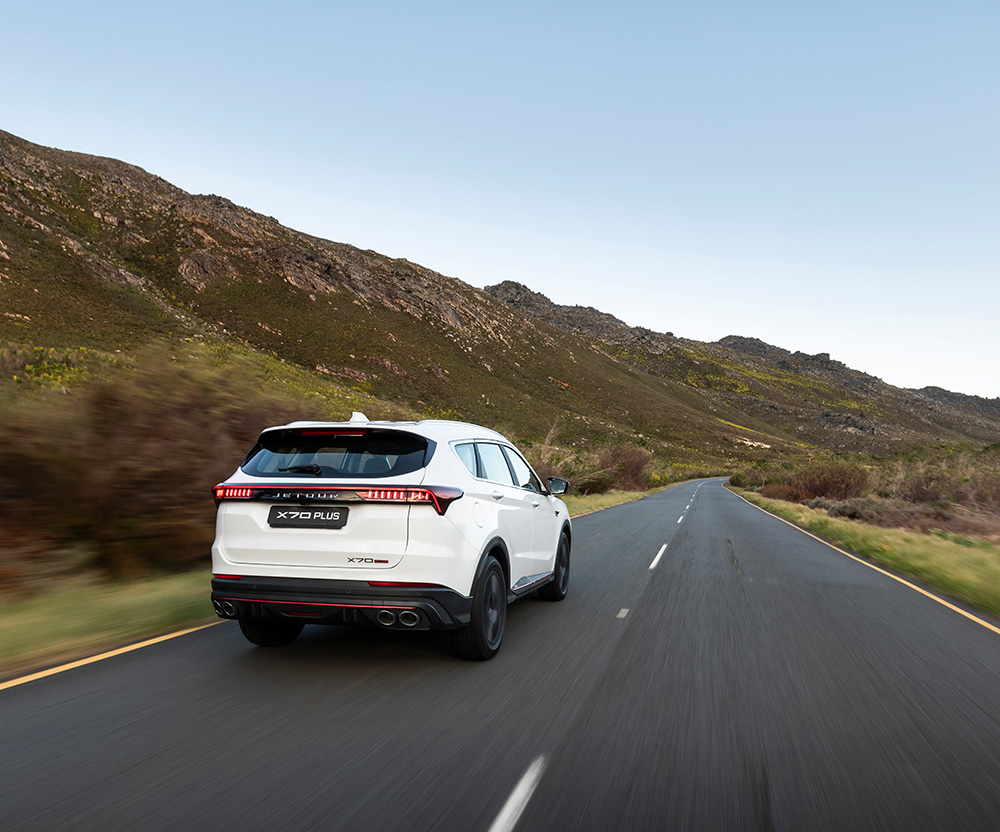
Following the familiar styling cues for Chinese SUVs, there isn’t much that sets the Jetour X70 Plus apart from its kin, except for some red accent stripes and quad exhausts at the rear. Even so, the X70 Plus is attractive in a generic sort of way, featuring a commanding grille, sleek, elongated LED headlights, bold chrome detailing, a diffuser, and a sleek light strip at the rear.
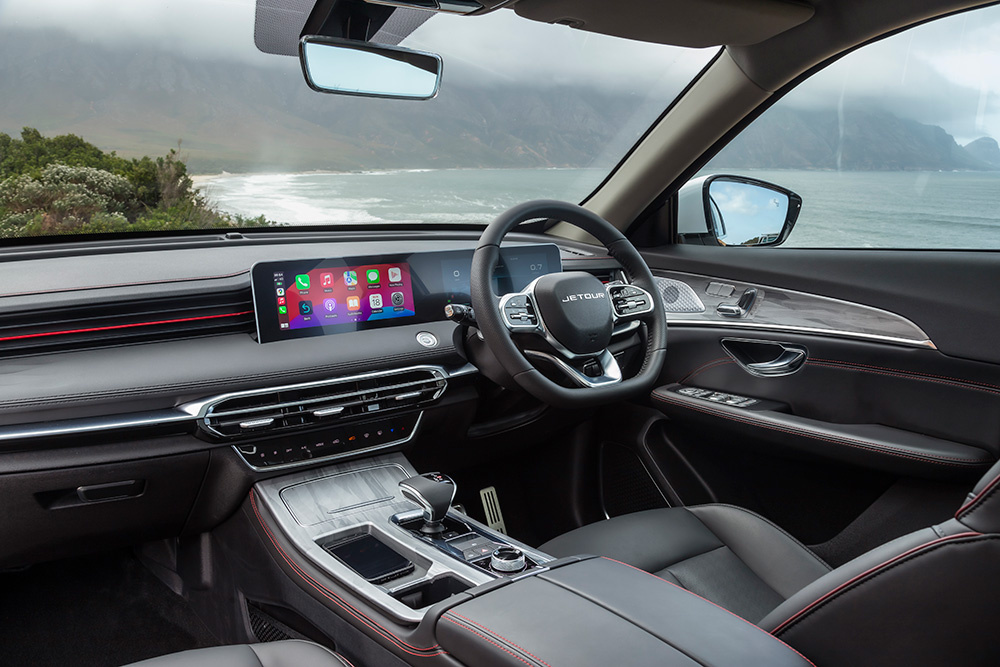
Much like the exterior, the in-cabin design closely follows the styling patterns found in other Chery-related models, with a clean and elegant look created by brushed aluminium for the centre console, a red strip on the front panel, and synthetic leather upholstery with detailed red stitching.
The cabin is spacious and comfortable, but the rear-most seats are quite cramped with limited legroom, and are really suitable for children only. Even so, the interior is extensively equipped and exudes an upmarket ambience, accentuated by a wide range of ambient lighting colours.
Our Deluxe test model came equipped with a standard 10.25″ instrument cluster and infotainment system, including 360-degree panoramic view parking assist, a panoramic glass sunroof, keyless entry, synthetic leather seats with a six-way electrically adjustable driver’s seat, automatic rain sensors, six speakers and an electric tailgate.
Other amenities include six airbags, wireless smartphone charging, automatic LED headlights, Isofix child-seat anchors, 19″ wheels, and a fusion of active and passive safety systems including blind-spot detection, lane-change assist and rear cross-traffic alert.
ON THE ROAD
Unfortunately, with virtually all functions in the X70 only accessible via touchscreen (incorporating voice AI assistance), these systems proved to be a source of frustration, as one had to navigate numerous content layers to find the correct control. Also, the touchscreen controls for air-con and fan speed are illogical as they were not adapted for right-hand drive.
Also, as with most Chinese SUVs, the safety systems were highly intrusive, and deactivating them proved challenging. We’ve pointed out before that we do not favour touchscreen controls, as they can be highly distracting and challenging to access accurately while your vehicle bounces around on undulations.
Sharing its drivetrain with the Dashing but weighing nearly 200 kg more, the seven-seater X70 felt heavier than its five-seat sibling on the road, although the power and torque delivery from its 1.5-litre four-cylinder turbocharged petrol engine (115 kW and 230 Nm) was quite sufficient.
Much like the Dashing (but perhaps slightly more so), the sensitive accelerator pedal and short initial gearing of the six-speed DCT made pulling away smoothly an art – as this manoeuvre, when not concentrating, was accompanied by a squeal of the front tyres.
Once on the move, though, the X70 proved pleasant enough, with a comfortable gait and pliant suspension on most road surfaces. But beware, it can become thirsty when pushed, devouring more than 10 litres per 100 km.
LAST WORD
At R484 900 for the Deluxe model, the seven-seat X70 Plus exemplifies value for money compared to some much fancier European models, as well as direct competitors such as the Hyundai Grand Creta Executive, Mahindra XUV700 2.0T AX7, the Proton X70 (confusing, isn’t it?) and the Chery Tiggo 8 Pro Executive Plus (R499,900).
However, the slightly cheaper five-seat Dashing (R469 900) most likely also cannibalises sales from the X70 Plus. Even so, if one can live with its quirks, the X70 is a very competent and gainfully versatile three-row SUV. Be aware, however, that a facelifted model and a plug-in hybrid are due to follow soon.
Report by FERDI DE VOS | Images © JETOUR SOUTH AFRICA

