



AUDI RS5 SEDAN AND AVANT
Hybrid High Performer
Image © AUDI
The third-generation Audi RS 5, introduced globally last month, is the first high-performance plug-in hybrid (PHEV) from Audi Sport. With genuine RS DNA and highly tuned hybrid technology to match, the RS 5 is available in both Saloon (sedan/Sportback) and Avant (wagon) body styles.
The high-performance PHEV is the first production RS model to feature a modular electrified powertrain, pairing an improved 2.9-litre twin-turbo V6 engine delivering 375 kW and 600 Nm of torque with a powerful electric motor providing an additional 130 kW and 460 Nm of torque. Total system output for the combination is up to 470 kW and 825 Nm of torque.
The V6 is noticeably more powerful (44 kW more) than the previous generation, due to a modified Miller cycle, two variable-geometry turbochargers, piping optimised for high pressures, upgraded fuel delivery through higher injection pressure, improved intake system, and water-to-air intercoolers (used for the first time in the RS5) to lower intake temperatures.
These components combined create a V6 that provides more power, operates more efficiently, and uses up to 20% less fuel under high loads than its predecessor. A 25.9 kWh (22 kWh net) battery powers the electric motor and the 400-volt electrical system, providing the basis for electric propulsion in the RS 5.
The system also contributes to the RS 5’s impressive 0-100 km/h acceleration time of only 3.6 seconds and (optional) top speed of 285 km/h. In terms of performance and fuel consumption, the new RS 5, according to Audi, sets benchmarks in its class and offers sportiness and high efficiency without compromise.
The electrical system also plays a key role in torque distribution via electro-mechanical torque vectoring – the defining feature of quattro with Dynamic Torque Control. Furthermore, the electric motor enables even better throttle response and acceleration off the line, and also starts the engine, negating the need for a 12-volt starter motor.
Power from the drivetrain is sent to the wheels via a hybridised eight-speed gearbox, a completely new quattro drivetrain with centre differential and Dynamic Torque Control, and a completely new rear transaxle with electro-mechanical torque vectoring – a world first in a production model.
The dynamics of the RS5 are optimised by RS-specific front and rear axles, RS sport suspension with innovative twin-valve shock absorbers, RS-tuned steering, large 20″ and 21″ wheels shod in specifically tailored tyres, and powerful steel or ceramic brakes.
Measuring around 90mm wider than the base-model A5 with flared fenders at the front and rear, the RS5 has a muscular stance. The three-dimensional Singleframe with a honeycomb grille and Air Curtains dominate the front. At the rear, the aerodynamic diffuser and RS sport exhaust system’s matte oval tailpipes ensure a sporty finish.
An optional Audi Sport package adds exclusive elements like bespoke front and rear bumpers, two-tone diamond-cut wheels with matte accents, and an RS sport exhaust system. Exclusive interior features include Serpentine green contrast stitching and a broad range of customisation options, including Bedford green metallic paint. RS ceramic brakes with bronze-coloured callipers and carbon camouflage elements.
The new Audi driving experience function enables drivers to view a detailed analysis of the routes driven, displayed on the 14.5” MMI touch display, and
When using the drive select mode RS torque rear, the system also displays statistics, such as the drift angle achieved.
European buyers can now order the RS 5 family, built in Neckarsulm, Germany. And the first deliveries are expected to start in June this year. Although not yet confirmed, the Audi RS5 models are expected to be made available locally, most likely by early next year.
NEW MPSUVS FOR MZANSI
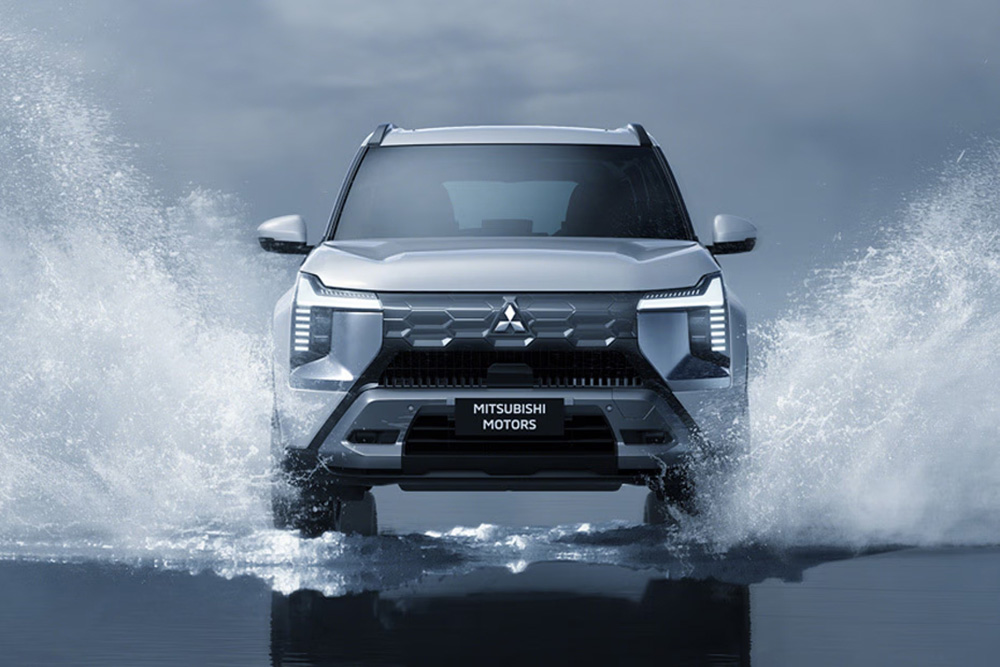
Mitsubishi Destinator
Image © MITSUBISHI
A new motoring trend is growing in India and Southeast Asia; the combination of attributes from MPVs – the dominant vehicle type in the ’eighties and ’nineties – with that of contemporary SUVs to create what could be called MPSUVs (Multi-Purpose Sports Utility Vehicles).
While it ultimately failed to make an impact locally, the Toyota Rush (essentially a Daihatsu Terios) was an early progenitor of the type, and the Mitsubishi Expander advanced the concept. Now, Mitsubishi has announced it will introduce the new Destinator, successor to the Expander, locally this month.
Designed for emerging markets such as Asia, Latin America, the Middle East and Africa, the seven-seat Destinator combines MPV practicality with SUV styling. It is powered by a 1.5-litre turbocharged four-cylinder petrol engine, delivering 120kW and 250Nm of torque to the front wheels via a continuously variable transmission (CVT) with five driving modes.
Creature comforts include a panoramic sunroof, 65-colour ambient lighting, a 12.3″ infotainment screen paired with an eight” digital instrument cluster, a Yamaha audio system, six airbags, and Active Yaw Control. and the newest ADAS technology. The new Destinator is built in Mitsubishi’s Indonesian plant, which also produces the Outlander Sport and Xpander.

Nissan Gravite
Nissan Motor India has recently launched the new Gravite, a seven-seater compact MPV based on the CMF-A+ platform as a sister model to the Renault Triber, specifically designed for emerging markets. Built in Chennai, the Gravite builds off the momentum of the Nissan Magnite and will most likely find its way to South Africa soon.
The Gravite will join an expanding Nissan model lineup that includes the Tekton C-SUV, slated for launch in mid-2026, and a seven-seater C-SUV in early 2027. Exterior design highlights include signature C-shaped elements, a piano-black grille, LED headlamps with integrated DRLs, LED taillamps, roof rails, and wide-opening doors.
It features technology such as a floating 20.3 cm infotainment display, wireless device charging, a a 17.7 cm fully digital multi-functional instrument cluster, auto-locking doors, front and rear parking sensors, and more than 30 safety features. The Gravite is powered by a 1.0-litre petrol engine delivering 53 kW at 6,250 rpm and 96 Nm of torque at 3,400-3,600 rpm and will be available with a five-speed manual or five-speed EZ-shift automated manual transmission (AMT).

VOLKSWAGEN CARAVELLE
PHEV Lux Bus
Image © VOLKSWAGEN
Building on decades of trusted mobility solutions stretching back to the iconic T1 through successive generations up to the T6.1, Volkswagen Commercial Vehicles at the recent VW Indaba in Kariega announced it will launch the all-new Caravelle plug-in hybrid 4MOTION locally towards mid-year.
The sophisticated T7 Caravelle reimagines the legacy of the Volkswagen Bus with a clear statement that the spirit of the original Bus lives on, now re-engineered for a cleaner, smarter future. As an electric all-wheel drive PHEV, the Caravelle combines a 1.5-litre four-cylinder TSI evo2 turbo petrol engine (130 kW and 250 Nm) with a front-axle electric motor (85 kW and 330 Nm), rear-axle motor (100 kW and 250 Nm), six-speed DCT and a high-voltage 19.7 kWh lithium-ion battery.
Together, the 1.5 TSI evo2 engine and the permanently excited synchronous electric motors at the front and rear deliver 180 kW of power and 350 Nm of system torque, with maximum power available almost from standstill. With a fully charged battery, up to 91 km on electric power only is possible, and the Caravelle has a top speed of 190 km/h.
Four driving profiles (Eco, Comfort, Sport and Individual) are available, and for efficiency reasons, the rear electric motor is only coupled when required above a speed of 65 km/h in the Eco and Comfort driving profiles; in the Sport driving profile, it is coupled up to 130 km/h. Above 130 km/h, the rear axle always remains deactivated.
Depending on the equipment, WLTP consumption values with a discharged battery are between 7.5 and 8.1 l/100 km. The Caravelle can charge up to 11 kW at AC charging points and up to 50 kW at DC rapid charging stations. With DC power charging, from 10 to 80% takes about 26 minutes. Pricing for the Caravelle eHybrid 4MOTION will be announced at launch.
Report by FERDI DE VOS

