



A STAPLE GOES PREMIUM
New Audi Q3
Images © AUDI AG
The Audi Q3 has been a long-standing bestseller in the premium compact segment for over ten years. Now, the third-generation SUV is setting new standards with its exterior design, conveying confidence and emotion both as an SUV and a Sportback. Numerous innovative digital system features provide a first-class user experience, greater comfort and safety, and the digitalisation of light, enhancing customer benefits.
A high degree of personalisation and adaptive, high-resolution light functions are made possible with the new micro-LED technology in the digital Matrix LED headlights. Another feature of the new Audi Q3 is an efficient, partially electrified combustion engine with mild-hybrid technology, as well as a plug-in hybrid model offering an electric range of up to 116 km.
FORM AND FEELINGS
Compared to its predecessor, the new Q3 has an even more emotional design. The wide Singleframe and the sleekly tapered headlights are fully integrated into the aerodynamic concept. Viewed from the side, a horizontal shoulder line between the headlights and rear lights visually divides the car into two parts.
The Q3 Sportback combines the strengths of an SUV with the aesthetics of a coupé. Its roofline, which slopes downward from the A-pillar, is 29mm lower than that of the SUV, giving the Sportback an even sportier appearance and a sleeker silhouette.
The rear section features digital OLED rear lights (optional on Edition 1), complemented by a continuous LED light strip and illuminated rings (standard on S line and above). This level of lighting technology offered in the new Audi Q3 is available for the first time in the Audi compact segment. The use of micro-LED technology for the first time in the Q3 significantly improves illumination and ensures a strong contrast on the road.
Inside, a new steering wheel control unit means more storage space in the centre console and also for the first time in the compact segment, acoustic glazing for the front side windows comes as standard. A total of 488 litres of luggage space (375 litres on the e-hybrid) demonstrates the practicality of the Audi Q3.
The entry-level model Audi Q3 TFSI 110kW has a four-cylinder petrol engine with mild-hybrid technology. The Q3 e-hybrid 200kW can charge at up to 50 kW with DC power and features a high-voltage battery with a capacity of 25.7 kWh (net 19.7 kWh), which enables an electric range of up to 116 km in the WLTP test cycle.
The RHD version of the new Audi Q3 SUV will launch in the UK in September, with the Q3 Sportback following in October, with deliveries due to start towards the end of the year. The new model range is expected to reach South Africa next year.
E5 FOR SA?
DFSK is Making NEV Waves
Images © DFSK MOTOR
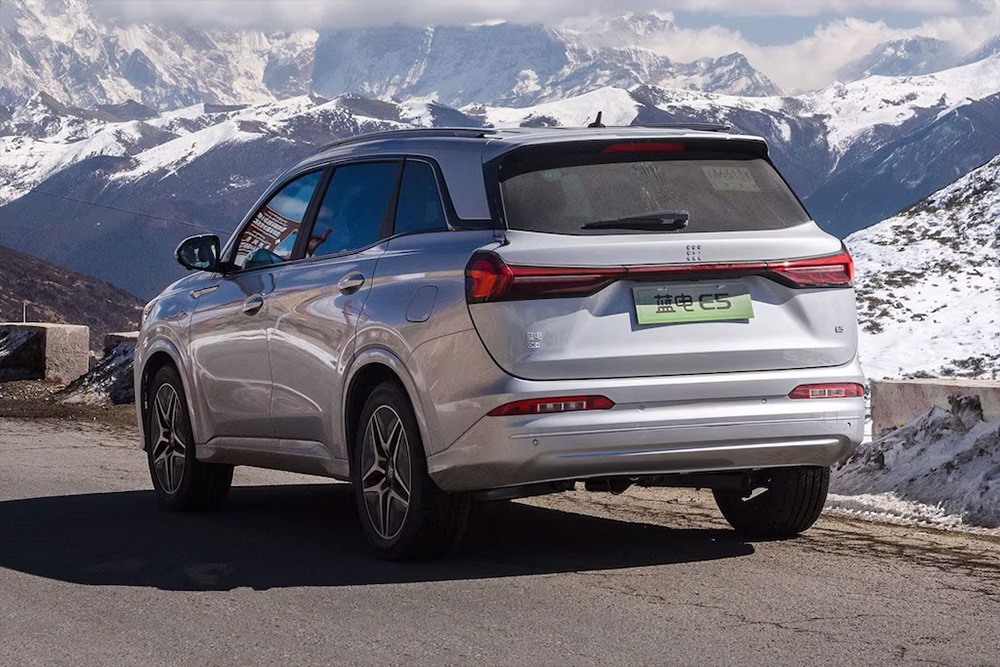
Chinese manufacturer DFSK Motor has launched its latest New Energy Vehicle (NEV), the E5, in select European countries, where it has been well received. The all-electric E5 is currently enjoying strong demand in the Italian market, where it is called the Cirelli 4. Known as the Landian E5 in PHEV form, the EV model is also available in Belgium and Finland.
Following its success in Italy, DFSK is now planning to replicate this in the Latin American market. The vehicle is already available in Mexico, Peru and other Latin American countries. It has recently also been introduced in Chile as the DFSK 600 – a key strategic expansion as DFSK strengthens its global NEV presence.
While the E5 is not yet available in South Africa, local interest in DFSK’s evolving range of sustainable vehicles continues to grow, and the success of the mid-size SUV overseas may lead to its introduction locally in future. Essentially, the E5 is based on the Dongfeng Fengguang or Fengon 580, with the second-generation Fengon 580 launched in the Chinese domestic market in 2021.
This updated 580, rebranded as the DFSK E5 or 600 in Europe, is equipped with a 1.5-litre TGDI engine with Miller combustion cycle, developing 137 kW and 300 Nm of torque. The PHEV variant is built on the DE-i super electric drive intelligent platform from Seres (DFSK’s parent company). It is equipped with a FinDreams Powertrain-sourced 1.5-litre plug-in hybrid engine and a DHT300 electric hybrid system sourced from Fudi Industrial, a subsidiary of BYD that specialises in electric vehicle technology.

ROC’N T-SUV REVEALED
New Volkswagen T-Roc
Images © VOLKSWAGEN AG
The world premiere of the second-generation Volkswagen T-Roc recently took place in Wolfsburg, the hometown of Volkswagen AG, with the company presenting a forward-looking successor to this popular model, which has sold more than two million units worldwide to date.
The new T-Roc, developed entirely from scratch, features an expressive design and innovative drive systems, along with a high-quality interior and a newly designed cockpit. It also boasts an infotainment screen measuring up to 33 cm and more space in both the interior and luggage compartment.
New assist systems and technologies from higher vehicle classes include Travel Assist and Driving Experience Control. Pre-sales of the new T-Roc have started in Germany, with the market launch scheduled for November. At this stage, it is unclear whether the new T-Roc will be made available locally, but if it is, it will most likely be introduced late next year.
The newcomer’s powerful, clean design retains the characteristic T-Roc DNA, featuring a coupé-like rear end, and is 120 mm longer than its predecessor. As in other VW models, lighting design plays a significant role in the latest T-Roc. A narrow light strip connects the new LED headlights (or optional IQ.LIGHT LED matrix headlights) to a white illuminated VW logo. The rear also features a continuous LED crossbar with a red illuminated VW logo (depending on the trim line).
The interior has undergone significant improvements, featuring premium-quality soft-touch surfaces and innovative technologies. The dashboard is upholstered in a newly developed fabric, and the interior is more spacious, with the boot volume increased by 30 litres to 475 litres when loaded up to the height of the rear seat backrests.
Other features from the larger Tiguan and Tayron models include the latest evolutionary stage of the driving experience control, which can be used to select driving profiles and control the sound volume, among other things. Another is the optional windscreen head-up display and Travel Assist3 systems.
In Europe, the new T-Roc will be available exclusively with innovative hybrid turbocharged petrol engines and a seven-speed DSG transmission. Initially, there will be two 48V mild hybrid models (1.5 eTSI) with 85 kW and 110 kW drivetrains. Two full hybrid models will follow them. A T-Roc R will also be available in the future.
The equipment matrix for the new T-Roc is now more clearly structured and customer-focused. The packages are precisely tailored to customer preferences, resulting in a streamlined range of standard and optional equipment at attractive prices.
Report by FERDI DE VOS

