



South Africa’s large luxury SUV landscape just got a lot more interesting. With the arrival of the new Lexus GX, the Japanese premium brand enters terrain typically dominated by the likes of the Land Rover Defender. Based on the Prado platform but packaged with unmistakable Lexus flair, the GX blends plushness with proper gravel-bashing pedigree. We spent two days driving the SE and Overtrail derivatives from Gqeberha to the Shamwari Nature Reserve to see whether the GX lives up to its claim as Lexus’s large off-road leader.
South Africans have never had access to the Lexus GX – until now. Globally, this is the fifth generation of the GX, but for local buyers, it’s a debut of a different kind. For the first time, Lexus SA has introduced a truly off-road-focused model that bridges the gap between refined on-road manners and genuine 4×4 trail credibility.
Built on the same ladder-frame chassis as the Toyota Land Cruiser Prado, the GX 550 isn’t just a rebadged Toyota with a softer interior. It carries its own DNA, especially where design, equipment, and drivetrain are concerned. Most notably, where the Prado leans into diesel power, Lexus has opted for petrol performance. The result is a luxury 4×4 that’s smooth, powerful, and composed – but also a bit thirsty.
BIG POWER, BIGGER PERSONALITY
All South African GX models are powered by a 3.5-litre twin-turbocharged V6 petrol engine that delivers 260 kW and 650 Nm of torque. Power is sent to all four wheels via a 10-speed automatic transmission. The drivetrain feels muscular and responsive – overtaking is effortless, and even slow-speed crawling on tricky terrain is smooth and controlled.
But that power comes at a cost. Lexus claims average fuel consumption of 12.3 l/100 km, but our test drive over mixed terrain told a slightly different story. During our pre-lunch technical off-road stint on the way to Shamwari, we recorded consumption as high as 15.9 l/100 km. That figure dropped to a more acceptable 12.9 l/100 km on the highway. Of course, these were brand-new units, and consumption figures should settle as the engines run in.
Still, it’s something to bear in mind – especially if your daily commute includes anything more than a short suburban loop. That said, the average Lexus buyer is unlikely to flinch at fuel prices, and in some cases, the business is picking up the tab anyway.
TWO PERSONALITIES, ONE PLATFORM
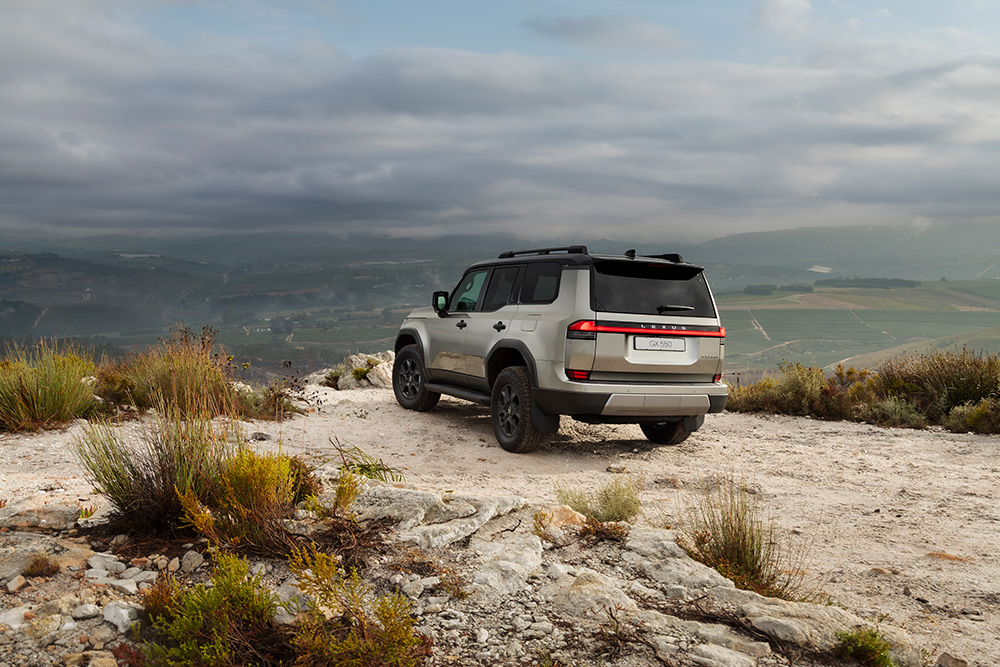
Although there are, essentially, two models of the GX – SE and Overtrail – three derivatives were introduced at launch. The Overtrail is available in a five-seater base form and a seven-seater version known as the Overtrail Bi-Tone. The third option, the SE, is the more luxurious of the trio and comes exclusively as a seven-seater. A fourth derivative, currently undergoing local development, will be launched later in 2025. This version, to be named the Overtrail Off-Road, will further enhance the GX’s trail readiness with additional accessories and bespoke off-road enhancements.
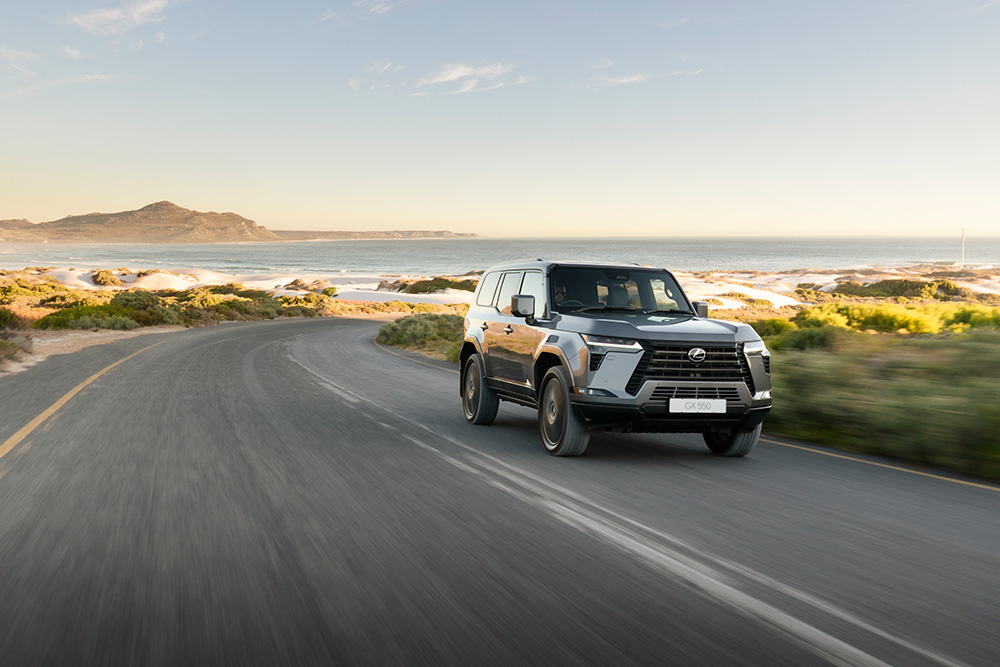
The striking difference in character between the SE and Overtrail models stood out most during the Eastern Cape drive. Fitted with 265/50 R22 tyres and Lexus’s Adaptive Variable Suspension (AVS), the SE presents itself as the urban warrior of the range. Its ride quality on tar is plush and composed, and while it showed admirable composure on Shamwari’s gravel tracks, it is clear that the SE’s brief was comfort and luxury first. A panoramic glass roof, semi-aniline leather upholstery, ventilated and massaging seats, and a 21-speaker Mark Levinson sound system all contribute to its polished, city-ready character.
By contrast, the Overtrail takes its styling and setup cues from the great outdoors. With chunkier 18″ wheels wrapped in all-terrain rubber and Toyota’s clever E-KDSS (Electronic Kinetic Dynamic Suspension System) doing duty beneath, this model thrives on rutted tracks and uneven surfaces. E-KDSS allows the stabiliser bars to disengage electronically, improving wheel articulation and traction when the trail gets properly bumpy. The Overtrail’s exterior also features blacked-out trim, a bi-tone roof (on the seven-seat variant), and robust bumper detailing that signals its off-road intentions from afar.
The interior appointments in the Overtrail are equally focused on durability over decadence. Hard-wearing synthetic leather, textured metal inserts, rubberised mats, and a black roof lining all represent a more utilitarian flavour. Of course, there’s still a full suite of infotainment and driver-assistance tech, but the ambience is more expedition than executive.
WRAPPED IN COMPETENCE
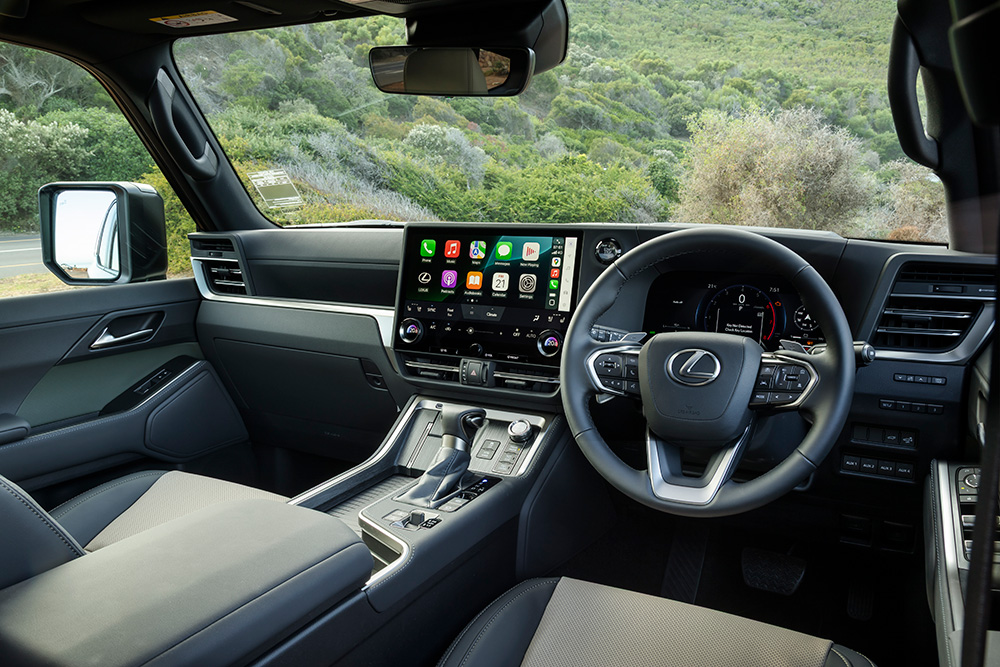
Technology is one area in which all GX derivatives impress equally. Each model features a 14″ high-definition touchscreen infotainment interface with wireless Apple CarPlay and Android Auto as standard, paired with a crisp 12.3″ digital instrument cluster that’s easy to read and customisable. The system is fast, intuitive, and free from the convoluted menus that once plagued Lexus’s older touchpad-based interface. Lexus has prioritised user-friendliness this time, resulting in a cabin that feels both modern and logically laid out.
Lexus’s Safety System+ suite is standard across the board and includes adaptive cruise control, lane keeping assist, blind spot monitoring, rear cross traffic alert, and a 360-degree surround-view camera with an under-chassis view – ideal for placing a wheel on tricky terrain. The combination of tech and visibility goes a long way in making this large SUV easier to live with, especially in tight parking situations or on narrow trails.
Interior packaging is also worth a mention. Seven-seat models (the SE and Overtrail Bi-Tone) offer powered operation for the third row, which folds completely flat into the floor, while the five-seat Overtrail benefits from generous boot space and a wide, flat load area. Cabin versatility is excellent, with 60:40 split second-row seats, ISOFIX points, and climate control zones for all three rows on SE and Overtrail Bi-Tone models. Further enhancing day-to-day usability are multiple USB-C charging points throughout the cabin, a wireless charging pad, deep centre console bins, and door pockets large enough to swallow a 1.5-litre bottle.
Materials, as expected, differ by grade. The SE’s semi-aniline leather and open-pore wood trim create a sense of calm, refined luxury. The Overtrail opts for a hardier, expedition-ready feel with synthetic leather upholstery, matte-finish dash panels, and robust rubberised floor mats designed for easy cleaning after a weekend in the wild. It’s clear Lexus has taken a tailored approach to each variant’s purpose – and for that, they deserve credit.
LAST WORD
Lexus GX pricing in South Africa begins at R1,766,000 for the five-seat Overtrail. The seven-seat Overtrail Bi-Tone commands a slight premium at R1,776,200, while the range-topping SE comes in at R1,829,000. Each model is backed by Lexus’s comprehensive seven-year/105,000 km warranty and maintenance plan.
Despite its premium positioning and thirst for unleaded, demand for the GX has been nothing short of remarkable. Lexus South Africa’s allocation of 440 units for 2025 has already been spoken for, slightly exceeding half of the brand’s total volume in 2024. It’s a testament to the pent-up demand for a proper off-road capable Lexus, and the GX delivers precisely that.
With serious trail capability, a refined on-road ride, and a cabin loaded with comfort and tech, the Lexus GX goes toe-to-toe with rivals like the Land Rover Defender 110. Yes, it’s thirsty. And yes, it’s not cheap. But for buyers who want their luxury SUV to be as comfortable heading to the office as to the Okavango, there’s finally a Lexus that can do both – and do it well.
Report by BERNIE HELLBERG JR | Images © LEXUS SOUTH AFRICA

