



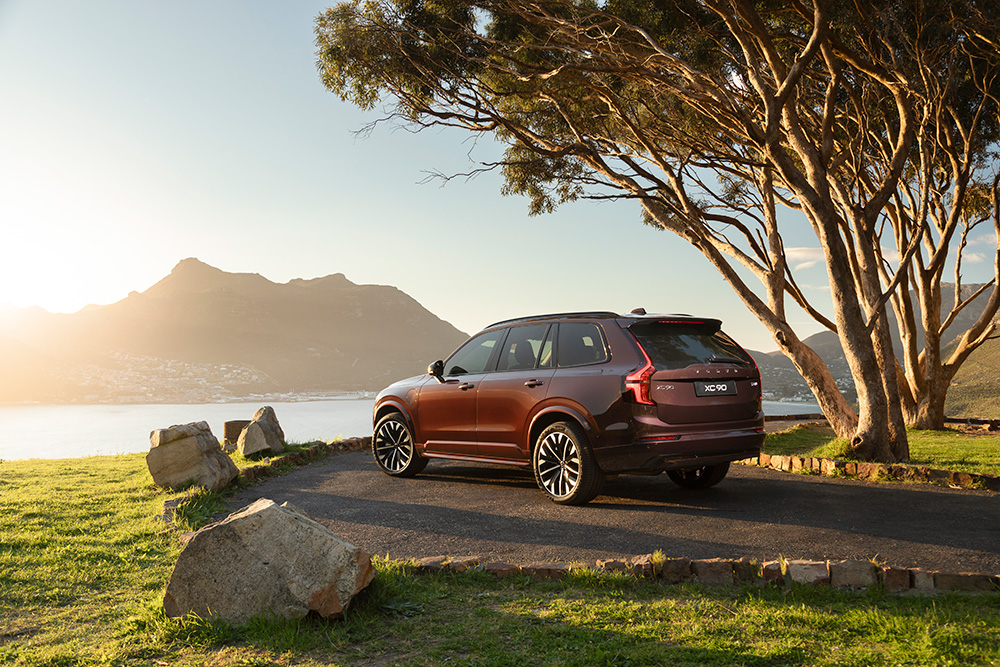
The Volvo XC90 has shouldered much of the weight for Volvo Cars’ brand revival worldwide over the past decade, its strong presence in the large luxury SUV segment helping reposition the Swedish marque as a credible premium player. Now that same model has been refreshed for South Africa, and under the leadership of the company’s new local chief, Grant Locke, the XC90 is billed as remaining central to Volvo’s global strategy well into the early 2030s.
For a solid decade, the Volvo XC90 has maintained its flagship status in the Volvo passenger car lineup with poise and presence. There is no doubt that it has been almost single-handedly responsible for the Swedish brand’s return to global prominence during this time. Now, with a significantly updated offering, the question is whether the refreshed XC90 still has the energy and relevance to fend off a growing array of luxury seven-seaters. After testing it in and around the Western Cape, I’m pleased to say that, for the most part, it remains as on point as ever.
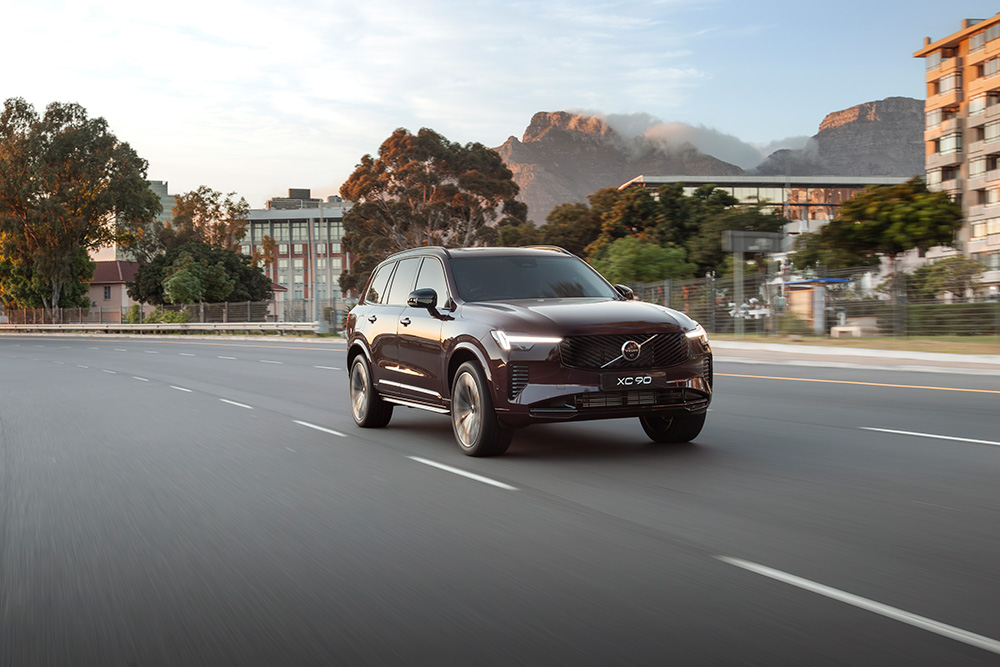
What Volvo has done with the update is subtle but meaningful. On the outside, you’ll see a redesigned grille and the latest matrix LED headlamps. Wheels start at 21 inches, with 22s also available. Beneath the skin, the second-generation XC90 continues to use its familiar drivetrain architecture – mild-hybrid B5 variants and plug-in T8 Recharge models, both with eight-speed automatics and all-wheel drive.
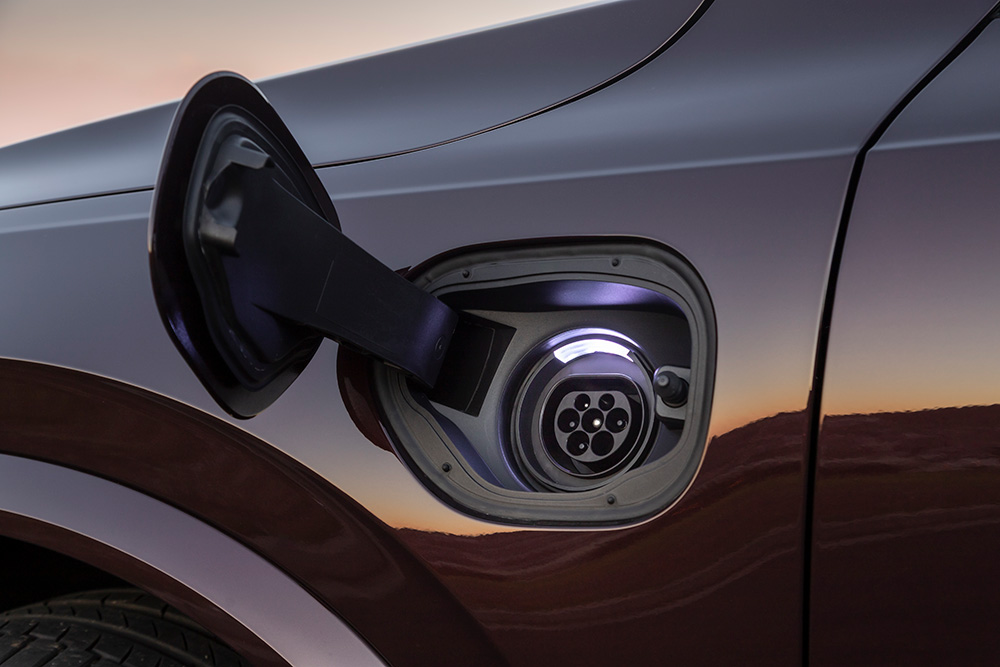
In the South African launch line-up, the B5 produces 183 kW and 350 Nm, while the T8 unit delivers 340 kW and 709 Nm, and claims up to 70 km electric-only range and more than 800 km combined range. All variants now come standard with air suspension, previously an optional extra, which helps the ride feel composed on the varied roads we tested it on during our short Western Cape launch drive.
THE ART OF MINIMALISM
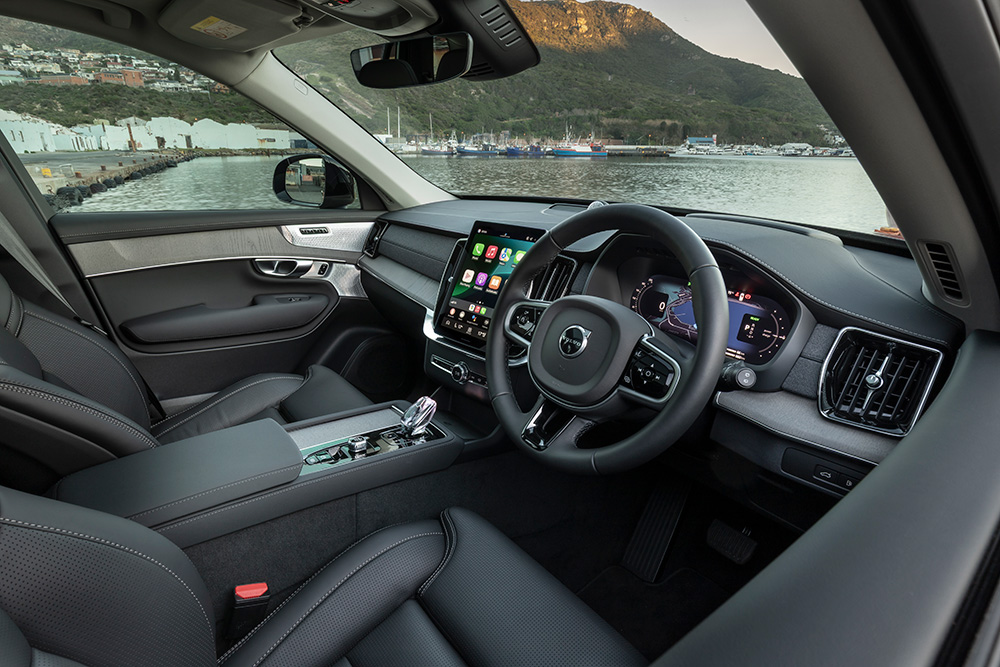
It is inside where the refresh is most apparent. Volvo has sharpened the ambience with a more minimalist cabin, a flush horizontal dashboard layout, newly positioned vertical air vents, and a large 11.2” free-standing centre screen that brings the user experience closer to that of the company’s new EV models.
Materials have received attention, too, with decorative inlays crafted from recycled woods and textiles, options such as Nordico or ventilated Nappa leather, and the familiar chrome-cut crystal gear lever for those who want a touch of Swedish flair. Practical details are not ignored. The wireless phone charger has been repositioned to free up storage space in the centre console, cup holders have been added, and the third- and second-row seats now fold flat to deliver cargo capacity up to 1,950 litres.
COMPOSED, CONFIDENT, CHARACTERFUL
On the road, the XC90 retains the comfortable, composed character that initially made it a favourite for long distances and family duty. The ride is refined, helped by the air suspension and extra sound insulation, particularly noticeable at highway speeds.
In our Western Cape drive, we found the combination of calm accessibility and suitable performance compelling. The T8 variant, in particular, still delivers the physical thrust befitting a large premium SUV, yet it also delivers the refined silence of daily commuting in electric mode. The mild-hybrid B5 is less dramatic but promises solid pace and good fuel efficiency for its size, at least on paper.
From a competitive perspective, the question remains whether the XC90 will continue to hold its ground against the likes of the BMW X7 and Mercedes-Benz GLS, which are still in the mix. In South Africa, the XC90 is priced from R1,555,500 for the B5 Plus, through to R1,936,500 for the T8 PHEV Ultra. That pricing puts Volvo squarely in premium territory.
What it brings in return is typically Volvo – seven-seat practicality, peerless focus on safety, and this refreshed interior and technology suite. The safety package remains comprehensive, with active cruise control, lane-keeping aid, blind-spot monitoring, a 360-degree camera, and the strong safety cage and airbag system that Volvo continues to emphasise.
STAYING POWER INTO THE NEXT DECADE
It is notable that Grant Locke has reaffirmed Volvo’s long-term commitment in South Africa and the brand’s electrified roadmap, saying that the company will expand its network (after shocking many with dealership closures last year), and that the local market remains an important part of its global strategy. In that context, the XC90 remains a keystone model, still relevant and high-profile, even as Volvo gradually shifts toward fully electric vehicles.
That said, the lifecycle of the current platform does raise a subtle question. The second-generation XC90 was introduced back in 2015 and has already had a long run. Volvo itself concedes this is a mature model, yet believes its update keeps it fresh for the interim. The brand’s global move toward electrification logically means that the XC90’s era of dominance may not last indefinitely, but for now, it appears to have both momentum and relevance.
LAST WORD
The refreshed XC90 remains a compelling proposition. It keeps the core DNA intact (roomy, safe, genuinely premium), while the update gives it greater technological currency and interior polish. If you are in the market for a large luxury seven-seater SUV and value a refined Scandinavian experience, the XC90 continues to perform strongly.
Whether it will remain at the very front of the segment into the early 2030s will depend on how rapidly the competition and the market shift. For now, though, Volvo has done enough to keep the flagship SUV firmly in the game.
Report by BERNIE HELLBERG JR | Images © VOLVO SOUTH AFRICA

